In the rapidly evolving landscape of modern enterprise, the hardware infrastructure chosen by a business dictates its operational velocity and capacity for innovation. As we move further into the mid-2020s, the demand for robust computing solutions has shifted from a luxury to a fundamental necessity for maintaining competitive advantage.
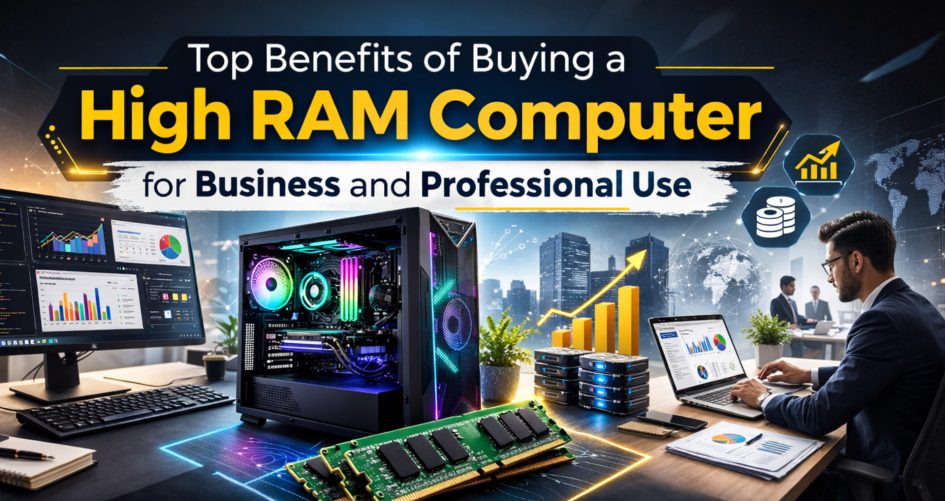
A high RAM computer serves as the backbone of this infrastructure, enabling professionals to execute complex tasks with latency-free precision. For procurement officers and IT managers, understanding the strategic value of upgrading or acquiring systems with substantial memory resources is critical for long-term scalability. This focus on hardware investment is particularly relevant for businesses looking to source through wholesale and customization channels, where the balance between cost and performance must be meticulously managed to meet specific professional workflows.
The definition of a high-performance workstation has expanded beyond raw processing power to include the critical role of random access memory (RAM) in multitasking environments. As software suites become more resource-intensive, the limitations of lower-capacity memory become bottlenecks that stifle productivity and frustrate end-users. Investing in a high RAM computer is not merely about meeting current requirements but about future-proofing assets against the impending software demands of 2026 and beyond. By prioritizing systems with superior memory specs, businesses can ensure smoother operations across data analysis, graphic design, and financial modeling sectors. This approach allows companies to maximize their return on investment (ROI) by extending the usable lifespan of their hardware fleet through strategic, customizable procurement options.
Furthermore, the market for used computer RAM has matured, offering B2B buyers a viable pathway to upgrade existing fleets without the exorbitant costs associated with brand-new flagship models. Integrating higher capacity modules into existing machines provides a tangible performance boost that often rivals the purchase of entirely new units. For organizations managing large-scale deployments, the ability to customize memory configurations at the point of wholesale purchase offers a distinct logistical and financial edge. This capability ensures that every dollar spent contributes directly to operational efficiency, avoiding the premiums often attached to pre-configured consumer-grade devices. Ultimately, the decision to prioritize memory capacity is a decisive move toward operational excellence and technological readiness.
1. Why Invest in a High RAM Computer for Scalable Business Growth
Investing in a high RAM computer is a strategic decision that directly influences a company’s ability to scale operations efficiently. As businesses grow, the complexity and volume of data they handle inevitably increase, requiring hardware that can manage larger datasets without performance degradation. Systems equipped with ample memory resources prevent the common productivity pitfalls associated with data throttling and application crashes, which can cost enterprises thousands of dollars in lost man-hours annually. By choosing customizable, high-spec solutions through wholesale channels, businesses ensure that their hardware infrastructure evolves in tandem with their expanding operational needs. This proactive approach to IT infrastructure management safeguards against the friction of hardware obsolescence.

The necessity for superior memory capabilities is driven by the escalating complexity of enterprise software environments. Modern applications, particularly those utilized in Customer Relationship Management (CRM) and Enterprise Resource Planning (ERP), rely heavily on cached data to function optimally. A high RAM computer facilitates seamless interaction with these platforms, allowing employees to switch between resource-heavy tasks instantaneously. This fluidity is essential for maintaining momentum in high-paced professional settings where time is a scarce commodity. Furthermore, wholesale suppliers offering customization services enable businesses to tailor memory specs specifically to these software requirements, ensuring optimal compatibility and performance straight out of the box.
Market insights from late 2024 indicate a significant shift in B2B procurement toward upgradable and high-memory workstations. Industry analysis projects that by 2026, over 60% of enterprise workstations will require a minimum of 32GB of RAM to handle standard AI-assisted workflows and cloud-based synchronization tasks. This statistic underscores the urgency for businesses to transition away from legacy hardware with limited memory expansion options. Investing now in a high RAM computer secures a company’s technological trajectory, preventing the need for rapid, disruptive hardware turnover in the near future. It establishes a foundation of stability that supports both current productivity and future innovation.
Moreover, the financial implications of memory-related bottlenecks extend beyond mere frustration; they impact the bottom line directly. When employees are forced to wait for systems to process information, the cumulative lag across an entire organization results in substantial revenue leakage. By leveraging used computer RAM to cost-effectively upgrade older machines, or by purchasing new high-capacity units in bulk, businesses can eliminate these inefficiencies. Customization allows for precise budget allocation, ensuring funds are directed toward memory enhancements where they matter most. This strategic deployment of capital fosters an environment of continuous improvement and sustainable business growth.
1.1. Why High RAM Computers Accelerate Workflow and Productivity
The correlation between memory capacity and workflow speed is undeniable, making a high RAM computer an indispensable tool for professionals aiming to maximize output. Random access memory (RAM) functions as the immediate workspace for the processor, storing data that is actively being used. When this workspace is cramped, the processor is forced to offload data to the slower hard drive, a process that creates visible lag and disrupts the user’s train of thought. For businesses where workflow continuity is paramount, ensuring that employees have access to computers with expansive memory is a prerequisite for maintaining high levels of productivity. This is particularly relevant for wholesale buyers looking to standardize equipment across large teams to ensure uniform performance standards.
In professional environments such as video editing studios, architectural firms, and financial trading floors, the ability to manipulate large files in real-time is non-negotiable. A high RAM computer allows these professionals to load entire project files into memory, scrub through timelines, or run complex simulations without the system freezing or stuttering. The efficiency gained here is not just about speed; it is about the cognitive ease of the user, allowing for creativity and analysis to flow uninterrupted. Customization options allow these firms to configure systems specifically for their high-bandwidth applications, eliminating the “one-size-fits-all” inefficiency of standard retail models.
Recent data from 2025 productivity benchmarks suggests that professionals utilizing workstations with 32GB or more of RAM report a 40% reduction in task completion times compared to those using 8GB or 16GB systems. This dramatic improvement highlights the tangible benefits of adequate memory resources. By utilizing used computer RAM in strategic upgrades, businesses can achieve these performance metrics at a fraction of the cost of new hardware. Wholesale procurement strategies further enhance this value, allowing departments to equip entire teams with productivity-boosting machines without exceeding budgetary constraints. The result is a streamlined operation where technology serves as an accelerator rather than a hindrance.
Furthermore, the stability offered by abundant memory resources reduces the frequency of system crashes and application timeouts, which are notorious for causing data loss and work repetition. In a B2B context, reliability is currency; clients and stakeholders depend on timely delivery of services and products. A high RAM computer provides the robustness required to meet these demands consistently. Whether through the integration of high-capacity modules or the purchase of bespoke systems, the focus on memory capacity translates directly into a more reliable, productive, and profitable workforce. This focus ensures that the technological framework of the business is an asset rather than a liability.
1.2. How Memory Capacity Impacts Data-Intensive Operations
Data-intensive operations form the core of many modern business strategies, from big data analytics to 3D rendering and machine learning model training. These processes require the rapid retrieval and manipulation of massive datasets, a task that is bottlenecked immediately by insufficient memory. A high RAM computer acts as a high-speed gateway for this information, allowing CPUs and GPUs to access data almost instantaneously. For businesses engaged in these sectors, the specification of memory is not a minor detail but a central pillar of their operational strategy. Customization in wholesale purchasing allows these businesses to spec machines with exactly the right bandwidth and capacity for their specific data workloads.
When processing large datasets, the system needs to hold as much information as possible in the volatile memory of the random access memory (RAM) to avoid the latency of disk storage. If a computer lacks adequate RAM, it engages in “thrashing,” constantly swapping data between the memory and the storage drive, which drastically slows down computation. This inefficiency renders complex operations unfeasible or impractically time-consuming. By investing in a high RAM computer, businesses eliminate this barrier, enabling faster data processing and more immediate insights. The availability of high-quality used computer RAM provides a cost-effective mechanism to retrofit existing data servers and workstations to meet these demanding standards.
The year 2025 has seen a surge in the adoption of in-memory databases, which rely entirely on storing data in RAM for millisecond response times. Market forecasts for 2026 predict that enterprises leveraging in-memory computing will outperform competitors by significant margins in decision-making speed. This trend necessitates hardware that supports terabytes of memory in server environments and gigabytes in high-end workstations. Wholesale suppliers that offer customization services are critical partners in this transition, providing the scalable hardware solutions required to implement advanced data architectures. This strategic alignment between hardware capability and data strategy is essential for maintaining a competitive edge.
Furthermore, as data privacy and security become paramount, the ability to process sensitive data locally on a high RAM computer, rather than relying solely on cloud environments, is increasingly valuable. Large memory capacities allow for robust local virtualization and sandboxing, enabling security teams to analyze threats in isolated environments without performance penalties. This capability is crucial for sectors handling sensitive intellectual property or financial records. By sourcing robust memory solutions through B2B channels, companies can build secure, high-performance data labs that adhere to strict compliance standards while maximizing processing throughput.
1.3. Which Business Sectors Benefit Most from High Memory Specifications
While nearly every business can benefit from improved hardware performance, certain sectors derive disproportionate value from a high RAM computer due to the nature of their work. Creative industries, including graphic design, video production, and animation, are prime examples where memory dictates the feasibility of projects. High-resolution textures, 4K video streams, and complex rendering layers consume memory at an extraordinary rate. For these professionals, a system with abundant random access memory (RAM) is the difference between a stalled render and a finished product. Wholesale buyers serving the creative sector must prioritize customizable solutions that allow for the maximum supported memory, ensuring their clients can deliver top-tier content.
Similarly, the financial sector relies heavily on low-latency data processing for high-frequency trading, real-time risk analysis, and algorithmic forecasting. Traders and financial analysts utilize multiple monitors and streams of real-time data, all of which require significant memory allocation to function smoothly. A high RAM computer ensures that these data streams are synthesized instantly, allowing for split-second decision-making that can result in millions of dollars in gains or avoided losses. The integration of premium, often new, or certified used computer RAM in trading floors is a standard practice to maintain these essential speed standards. Customization is key here, as financial firms often require very specific memory configurations to match their proprietary trading algorithms.
The software development and IT engineering sectors also represent a critical market for high-memory workspaces. Modern development environments involve running virtual machines, containers (like Docker), and heavy IDEs simultaneously, a combination that quickly exhausts standard memory allocations. A high RAM computer allows developers to compile code faster and run comprehensive test environments without system slowdowns. As we approach 2026, the complexity of development tools is only expected to increase, further driving the need for robust memory infrastructure. Wholesale procurement for IT departments should therefore focus on upgradable systems that can scale memory as development platforms evolve.
Healthcare and scientific research are additional sectors where high memory capabilities are transforming capabilities. From analyzing genomic sequences to processing 3D medical imaging, the computational load is immense. Research institutions often look to cost-effective solutions, such as high-capacity used computer RAM, to equip their labs within the constraints of grant funding. By partnering with suppliers who understand these specialized needs and offer deep customization, these institutions can accelerate their research timelines. The impact of high memory in these fields goes beyond productivity; it accelerates human discovery and improves patient outcomes through faster, more powerful computational analysis.
2. How to Leverage Used Computer RAM for Cost-Effective Customization
Financial prudence is a cornerstone of successful B2B management, and leveraging used computer RAM presents a strategic opportunity to achieve high performance at a fraction of the cost. For many businesses, the budget for a complete hardware overhaul is simply unavailable, yet the need for increased performance remains urgent. Utilizing certified pre-owned memory modules allows companies to upgrade their existing infrastructure to meet modern standards without the capital expenditure typically associated with new equipment. This approach is particularly effective when combined with wholesale purchasing, where bulk pricing on used components can lead to significant savings. Customization involves retrofitting existing chassis with higher capacity modules, breathing new life into aging fleets.
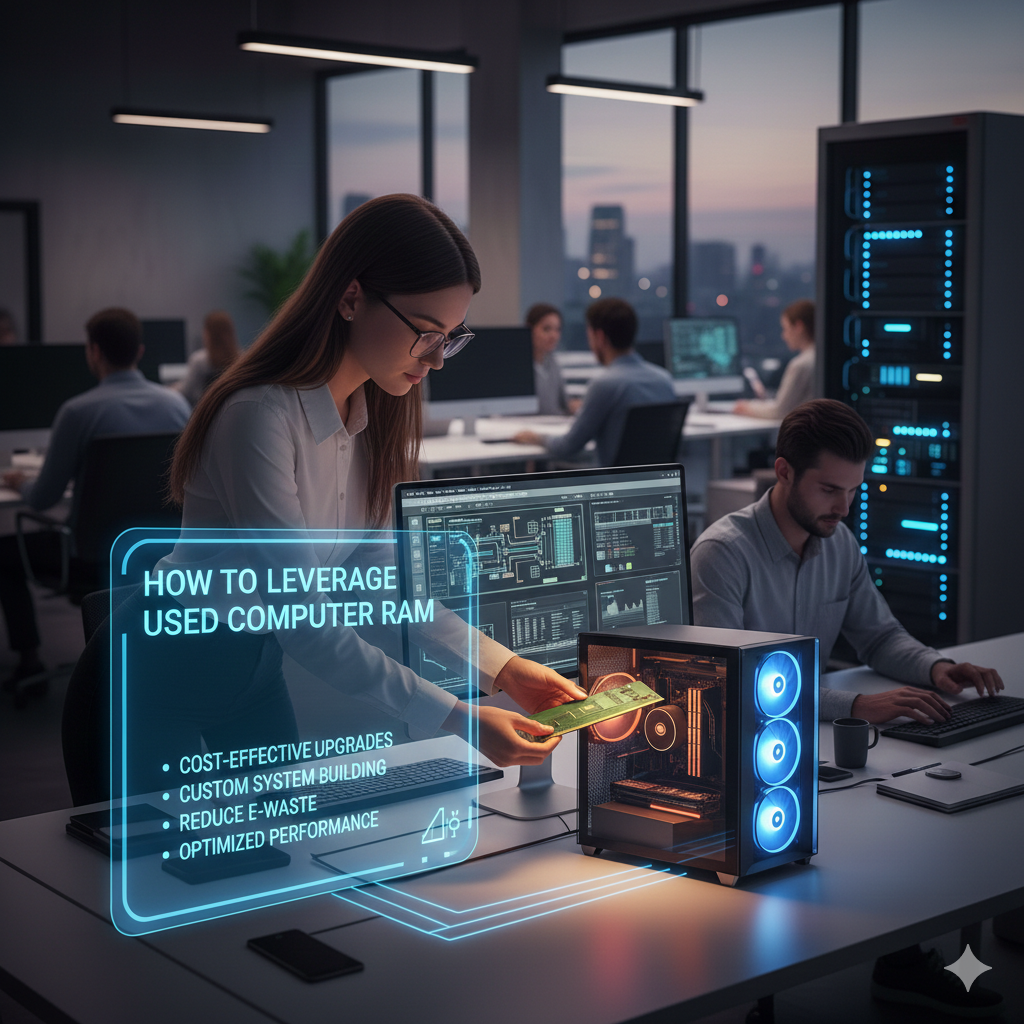
The market for used computer RAM has evolved into a highly regulated and quality-assured segment of the IT hardware industry. Reputable suppliers now rigorously test and grade memory modules, ensuring that they meet the original manufacturer’s specifications for reliability and speed. This means that businesses can acquire random access memory (RAM) that performs on par with new units, often with only minor cosmetic blemishes or negligible wear. For a high RAM computer build, integrating these trusted components can reduce the total cost of ownership by up to 40%. This fiscal efficiency enables businesses to allocate saved capital toward other critical areas, such as software licensing or employee training, thereby maximizing the overall utility of the IT budget.
Furthermore, the environmental sustainability aspect of reusing high-performance hardware cannot be overlooked. Corporate responsibility mandates are becoming stricter, and companies are actively seeking ways to reduce their electronic waste footprint. By opting for used computer RAM, businesses extend the lifecycle of functional components, aligning with circular economy principles and ESG (Environmental, Social, and Governance) goals. Wholesale suppliers specializing in refurbished hardware often provide documentation regarding the carbon footprint savings associated with these purchases. This data is invaluable for companies required to report on their sustainability initiatives, making the choice to reuse memory both a financially and ethically sound decision.
Customization strategies that incorporate used memory also allow for greater flexibility in experimental or temporary deployments. For instance, a business setting up a short-term data crunching center or a seasonal workforce can equip these stations with high-capacity used RAM at a low cost. Once the project concludes, these assets can be redeployed or resold. This agility is a hallmark of modern IT management, and the used market facilitates it perfectly. By treating memory as a flexible resource rather than a fixed asset, businesses can adapt more dynamically to market fluctuations and project demands, ensuring their infrastructure always matches their current operational scale.
2.1. How to Assess Quality and Compatibility in Pre-Owned Memory
Integrating used computer RAM into a professional environment requires a meticulous approach to quality assurance and compatibility verification. Not all memory modules are created equal, and the risk of incompatibility increases when mixing components from different manufacturers or batches. To successfully build a reliable high RAM computer using pre-owned parts, procurement teams must partner with suppliers who provide comprehensive testing data and warranties. This due diligence ensures that the memory will not only fit the physical slots but also operate at the correct voltage and speed without causing system instability. Wholesale vendors often provide detailed compatibility lists to assist in this process, ensuring a seamless integration.
The assessment of quality begins with understanding the grading standards of the refurbished hardware market. Grades typically range from “Like New” to “Scratch and Dent,” with the internal functionality being the primary concern for performance. Buyers should prioritize modules that have been professionally cleaned and tested for errors using industry-standard diagnostic tools. Ensuring that the random access memory (RAM) meets the JEDEC standards for the specific speed and latency required is crucial. By insisting on high-grade used components, businesses can enjoy the performance benefits of a high RAM computer without the reliability risks often associated with second-hand electronics. This scrutiny protects the organization from potential downtime caused by hardware failure.
Compatibility extends beyond the physical form factor, such as DDR4 or DDR5, to include the specific timing and voltage requirements of the motherboard. A customized wholesale solution must take these parameters into account to prevent the “blue screen of death” or boot failures. In 2025, as memory technologies become more advanced, the margin for error in mismatched specifications narrows. Expert wholesale suppliers act as valuable consultants in this regard, guiding businesses toward the correct memory kits for their specific machine models. This expertise is a key component of the value proposition when purchasing used computer RAM, transforming a simple transaction into a technical partnership.
Additionally, businesses should consider the warranty and return policies offered with pre-owned memory. A robust warranty signifies the supplier’s confidence in their product testing processes. For fleet-wide upgrades, this safety net is essential, as it mitigates the risk of mass component failure. By securing used computer RAM with solid service guarantees, companies can proceed with their customization projects with confidence. This security allows IT managers to aggressively upgrade their fleets to high RAM standards, knowing that their investment is protected against defects. The result is a high-performance environment achieved through calculated, risk-managed procurement strategies.
2.2. Why Custom Configurations Outperform Pre-Built Models
The argument for custom configurations over pre-built models is rooted in the principle of tailored efficiency. Pre-built consumer computers often come with a balanced but generic specification that aims to satisfy the widest possible audience. However, for a business with specific needs—such as a high RAM computer dedicated to virtualization—this generic balance often results in wasted resources on unnecessary components (like high-end gaming GPUs) and insufficient allocation to critical ones like memory. Customization allows a business to strip away the superfluous and focus the budget entirely on the components that drive their specific workflows, such as maximizing random access memory (RAM) capacity.
When businesses engage with wholesale suppliers for custom builds, they gain control over the exact bill of materials. This control is essential for creating a high RAM computer that fits perfectly into the existing IT ecosystem. For example, a company might require systems with 128GB of RAM but entry-level graphics capabilities. A custom configuration can deliver exactly this, whereas finding a pre-built model with this specific asymmetry is difficult and often overpriced. This targeted allocation of budget ensures that every dollar spent contributes directly to the user’s productivity. It eliminates the “tax” paid for unwanted features in off-the-shelf models, optimizing the financial efficiency of the procurement process.
Furthermore, custom configurations facilitate easier maintenance and future upgrades. Systems built with a focus on expandability allow for the straightforward addition of more used computer RAM or storage as needs grow. This modularity is a critical consideration for businesses planning for the 2026 fiscal year and beyond. By choosing custom-built solutions now, companies invest in a chassis and motherboard architecture that supports long-term evolution. Wholesale partners who understand this roadmap can select components that ensure longevity, reducing the frequency of total system replacements. This strategic planning turns the hardware fleet into a flexible asset rather than a depreciating liability.
The performance consistency across a fleet of custom-ordered machines is another significant advantage. By standardizing the configuration, IT departments can simplify image deployment and troubleshooting processes. When every workstation is a high RAM computer built to the exact same specifications, software behavior is predictable, and support tickets decrease. This uniformity is crucial for large-scale operations where variability leads to inefficiencies. Customization through wholesale channels is not just about the initial specs; it is about creating a stable, standardized, and high-performance environment that empowers the workforce to operate at peak efficiency.
2.3. How Wholesale Acquisition Strategies Maximize Budget and ROI
Maximizing the Return on Investment (ROI) for IT infrastructure is a primary objective for any business, and wholesale acquisition strategies are the most effective vehicle for achieving this. Purchasing a high RAM computer or individual components like used computer RAM through wholesale channels unlocks pricing tiers that are simply unavailable through retail procurement. The savings generated through volume discounts can be reinvested into acquiring higher-spec components or increasing the total number of workstations deployed. This scaling potential is vital for growing businesses that need to equip larger teams without linearly increasing their IT expenditure. Wholesale purchasing transforms hardware costs from a fixed burden into a variable, manageable expense.
Beyond the direct cost savings, wholesale relationships often come with value-added services that enhance the overall ROI. These services can include custom imaging, asset tagging, and extended warranty options that are tailored to B2B needs. For a company looking to deploy a fleet of high RAM computers, having the supplier pre-configure the systems reduces the deployment time and labor costs significantly. This “white glove” service ensures that the machines are ready to plug and play upon arrival, minimizing the gap between procurement and productivity. The integration of high-capacity random access memory (RAM) into this streamlined workflow further accelerates the time-to-value for the new hardware.
Strategic forecasting also plays a role in maximizing ROI through wholesale buying. By analyzing 2026 market insights, businesses can anticipate spikes in memory prices and stockpile essential components like used computer RAM during market lulls. Wholesale suppliers often offer flexible financing or bulk storage options, allowing businesses to execute these hedging strategies effectively. This forward-thinking approach protects the organization from supply chain disruptions and inflationary pressures. In an era where semiconductor shortages can halt operations, having a strategic reserve of critical memory components ensures business continuity and stabilizes operational costs.
Finally, the ability to mix and match new and used components through wholesale channels allows for sophisticated cost optimization. A business might choose to pair brand-new, high-warranty motherboards with cost-effective, high-capacity used computer RAM to create a potent yet affordable high RAM computer. This hybrid approach captures the reliability of new technology where it counts most while leveraging the cost savings of the secondary market for durable components like memory. Mastering this mix is the hallmark of a savvy procurement strategy, delivering uncompromising performance while strictly adhering to budgetary constraints. It is a methodology that prioritizes function and value over brand prestige.
3. Which 2026 Market Insights Define the Future of Business Computing
The trajectory of business computing is being reshaped by converging trends in artificial intelligence, cloud hybridization, and the relentless growth of data. As we look toward 2026, the definition of a standard business PC is shifting toward what was previously considered a “power user” machine. Market analysts predict that the baseline requirement for a high RAM computer in enterprise environments will double, driven largely by the memory overhead of operating system updates and background AI services. This evolution necessitates a reevaluation of current procurement cycles, urging businesses to invest in higher memory capacities today to avoid premature obsolescence tomorrow. The market is moving toward a state where memory abundance is the standard, not the exception.
The integration of AI into everyday workflow applications—often referred to as “Copilot” features or AI assistants—requires significant local memory resources to function efficiently without constant cloud dependency. While cloud processing handles the heavy lifting, the latency and bandwidth costs are reduced when local random access memory (RAM) can cache larger models and datasets. Consequently, businesses relying on standard 8GB or 16GB machines will find themselves unable to utilize these next-generation productivity tools effectively. Wholesale suppliers are already noting a surge in orders for 32GB and 64GB configurations, a trend expected to solidify as the standard by 2026. Preparing for this shift ensures that businesses remain competitive and technologically relevant.
Moreover, the distinction between “workstation” and “desktop” is blurring. Tasks that once required specialized, expensive hardware are becoming accessible on standard high RAM computers due to software optimizations and hardware advancements. This democratization of power means that even general administrative roles will benefit from enhanced memory capacity to handle multitasking across increasingly complex web-based platforms. The resale value of computers with higher memory specs also tends to hold better over time, offering a better residual value at the end of the leasing cycle. This financial insight is crucial for businesses that lease equipment, as higher-spec machines often offer better long-term value depreciation curves.
Supply chain dynamics are also influencing market insights, with a renewed focus on the circular economy. The market for used computer RAM is expected to grow substantially as enterprises upgrade their fleets, flooding the secondary market with high-quality, modern components. Smart businesses will leverage this influx to upgrade legacy systems cost-effectively. This ecosystem creates a sustainable loop where high-performance computing is accessible to startups and SMEs that might otherwise be priced out of the cutting-edge hardware market. Understanding these 2026 insights allows procurement officers to navigate the changing landscape with confidence and strategic foresight.
3.1. Why AI Integration Demands Higher Memory Bandwidth
The pervasive integration of Artificial Intelligence (AI) into business software is the single biggest driver for increased memory requirements in the coming years. AI models, particularly those running locally for privacy and speed, require substantial memory bandwidth to load inference models and process natural language queries in real-time. A standard computer with limited random access memory (RAM) will struggle to run these AI features alongside standard business applications, leading to a degraded user experience. Investing in a high RAM computer is essentially investing in the AI-readiness of the workforce. As 2026 approaches, AI will move from a novelty to a utility, and the hardware must support this transition seamlessly.
Generative AI tools, which assist in drafting emails, coding, and generating reports, function by keeping large language models in active memory. When memory is constrained, the system must offload these models to the disk, causing the AI responses to lag significantly. This delay breaks the workflow and discourages the adoption of productivity-enhancing tools. By ensuring that workstations have abundant memory, businesses can fully leverage the speed and intelligence of AI assistants. This requirement creates a direct link between memory capacity and the potential for automation-led growth. Wholesale strategies are already adapting to this, prioritizing bundles that specifically target high-bandwidth memory usage.
Furthermore, the use of AI for data analysis—automatically sifting through spreadsheets and visualizing trends—requires the entire dataset to be ideally loaded into memory for instant pattern recognition. A high RAM computer facilitates this instantaneous analysis, turning raw data into actionable insights without the wait times associated with disk-based processing. The ability to use AI to crunch numbers locally also addresses data privacy concerns, as sensitive information does not need to be uploaded to the cloud for processing. This capability is particularly attractive to finance and healthcare sectors, making high-spec memory a compliance and security tool as much as a performance one.
The trend toward AI integration also extends to the operating system level. New OS updates from major developers are increasingly embedding AI-driven background services that optimize system performance, index files for search, and manage power. These services run continuously and consume a dedicated portion of memory. Without a surplus of random access memory (RAM), these background AI features compete with user applications for resources, leading to system sluggishness. Therefore, future-proofing a business fleet against the memory demands of evolving operating systems is a critical consideration for any long-term IT strategy.
3.2. How Remote Work and Cloud Hybridization Influence Hardware Needs
The shift toward remote work and hybrid cloud environments has fundamentally altered the requirements for business computing hardware. While cloud computing offloads some processing power, it places a premium on the ability of the local machine to manage data throughput and run multiple virtualization layers efficiently. A high RAM computer is essential for remote workers who rely on virtual desktop infrastructure (VDI) or heavy cloud-based applications. These platforms cache significant amounts of data locally to ensure a smooth user experience, and insufficient memory leads to lag and disconnection. As hybrid work models solidify into 2026, the home office must be as capable as the corporate HQ.
Cloud hybridization involves the seamless synchronization of data between local storage and cloud repositories. This process consumes memory resources to manage version control, encryption, and real-time collaboration streams. Professionals using collaboration tools like video conferencing, shared whiteboards, and cloud-based document editors often have dozens of browser tabs and applications open simultaneously. Random access memory (RAM) is the critical resource that keeps these sessions active and responsive. For businesses managing a distributed workforce, equipping employees with high-memory machines is not just a perk; it is a necessity for maintaining operational coherence and culture across digital distances.
Additionally, security in a remote work environment often requires the use of virtual private networks (VPNs) and endpoint detection and response (EDR) software running in the background. These security tools are resource-intensive, constantly scanning traffic and analyzing potential threats. A high RAM computer ensures that these vital security protocols do not interfere with the employee’s primary tasks. The overlap of security software, collaboration platforms, and cloud sync tools creates a “memory tax” that only modern, high-spec machines can pay without performance penalties. Wholesale suppliers are now offering “Remote Work Ready” configurations that specifically address these cumulative memory demands.
The market also sees a trend where employees use their business computers for personal tasks during off-hours, especially in remote work scenarios. While businesses may restrict this, the reality often dictates that hardware must be robust enough to handle diverse workloads without crashing. A used computer RAM upgrade can provide the necessary headroom to handle this multitasking without compromising the integrity of the work environment. By acknowledging the realities of the hybrid workplace, businesses can make more empathetic and practical hardware decisions that support employee well-being and productivity simultaneously.
3.3. Which Upcoming Technologies Require Robust Memory Resources
Looking toward the technological horizon of 2026, several emerging technologies stand out as significant drivers for memory consumption. Augmented Reality (AR) and Virtual Reality (VR) for business training, design visualization, and remote collaboration are becoming mainstream. These technologies render high-fidelity 3D environments that require massive buffers of random access memory (RAM) to prevent motion sickness and ensure visual fidelity. A high RAM computer will be the gateway to these immersive productivity tools, enabling virtual meetings and design reviews that feel as tangible as in-person interactions. Companies adopting these early technologies need to ensure their hardware baseline supports the heavy memory load of 3D rendering.
Another burgeoning field is local edge computing, where data processing occurs on the device rather than in the cloud to reduce latency. This is particularly relevant for IoT (Internet of Things) management and real-time logistics tracking. Edge devices, essentially high-functioning PCs, need substantial memory to process data streams locally before aggregating them to the central server. This shift reduces bandwidth costs and increases responsiveness. As businesses deploy more edge computing solutions in warehouses, retail spaces, and manufacturing floors, the demand for high-memory, ruggedized computers will surge. Preparing for this infrastructure shift involves securing hardware that can handle complex, localized data processing tasks.
Blockchain and Web3 applications are also entering the enterprise space for supply chain transparency and secure contract management. Running a node or interacting with complex blockchain networks can be memory intensive, particularly as the ledgers grow in size. While often server-side tasks, developer and verification workstations require significant memory to interact with these decentralized networks efficiently. A high RAM computer ensures that developers and auditors can run these clients without impacting their other development environments. The intersection of traditional enterprise software and these decentralized technologies creates new memory burdens that proactive IT departments must plan for.
Finally, the evolution of display technology, with the proliferation of 8K monitors and ultra-wide aspect ratios, impacts memory requirements. Driving millions of pixels at high refresh rates requires a substantial frame buffer, often shared with system RAM. Professionals in graphic design and video editing are already adopting these displays, and their computers must be equipped to handle the pixel bandwidth. By utilizing used computer RAM to boost capacity, businesses can support these high-fidelity displays without investing in entirely new flagship machines. This focus on visual fidelity as a component of professional quality further cements the need for abundant memory resources in the near future.
4. Why Strategic Procurement of High Memory Systems Ensures Longevity
The concept of longevity in IT hardware is closely tied to the concept of “headroom”—the extra capacity built into a system to handle future demands. A high RAM computer inherently possesses more headroom than a standard model, making it a more durable long-term investment. Software developers consistently optimize their applications for the hardware capabilities of the current era, meaning software bloat is an inevitable reality. By purchasing systems with memory capacities that exceed current minimum requirements, businesses ensure that their hardware remains capable and relevant for a longer period. This deferment of the replacement cycle generates substantial cost savings over the lifespan of the hardware fleet.

Strategic procurement involves looking beyond the immediate price tag and evaluating the total cost of ownership (TCO) over three to five years. A machine that requires a memory upgrade after one year incurs additional labor costs and potential downtime. Conversely, a high RAM computer acquired at the outset provides stable performance throughout its lifecycle. Wholesale purchasing allows businesses to lock in specifications that anticipate future needs, such as higher capacity random access memory (RAM), at today’s prices. This forward-looking procurement strategy insulates the budget from the volatility of component pricing and the frequent necessity of incremental upgrades. It simplifies asset management by creating a more uniform and stable hardware environment.
Furthermore, the longevity of a computer also impacts employee satisfaction and retention. Working with slow, obsolete hardware is a significant source of frustration for professionals. By providing high-performance machines that age gracefully, businesses demonstrate an investment in their employees’ tools and efficiency. This contributes to a culture of excellence and respect. The inclusion of high-capacity memory ensures that the “feel” of the computer remains snappy and responsive even years into its deployment. This psychological benefit should not be underestimated, as it directly correlates with workforce morale and productivity. A strategic procurement policy, therefore, serves both technological and human resources objectives.
The secondary market value of equipment is another facet of longevity. High-spec machines, particularly those with a high RAM computer configuration, retain a higher resale value than budget models with limited upgrade paths. When the time finally comes to decommission the fleet, the return on the sale of these assets can be significant. Additionally, components like used computer RAM retain utility and can be repurposed in other machines or sold separately. By viewing hardware purchases as depreciable assets with residual value, businesses can refine their financial models and justify the initial higher expenditure for premium, high-memory configurations.
4.1. How to Balance Initial Cost with Long-Term Value
Balancing the initial capital expenditure against long-term value is the central challenge of IT procurement. While a high RAM computer commands a higher upfront price, its extended useful life and superior productivity output often result in a lower cost per year of service. To achieve this balance, businesses should utilize wholesale channels to reduce the initial premium associated with high-spec components. By negotiating bulk rates for memory-rich configurations, the gap between standard and high-performance machines narrows, making the long-term value proposition irrefutable. This financial calculus is essential for CFOs and procurement managers aiming to optimize budget allocation.
One effective strategy is to employ a tiered procurement approach based on role requirements. Not every employee needs a top-tier machine, but power users should be equipped with a high RAM computer to prevent bottlenecks in critical workflows. For the remainder of the staff, standard machines can be augmented with cost-effective used computer RAM to boost performance to acceptable levels. This mix-and-match strategy optimizes the spend, distributing high-performance resources where they generate the most ROI while managing costs elsewhere. Customization is key to this balanced approach, ensuring that each department receives hardware that matches its specific intensity of use without overspending on unnecessary capabilities.
The concept of “future-proofing” also plays a critical role in this balance. Investing in a motherboard and chassis that support memory expansion beyond current needs allows for staggered upgrades. A business might install 16GB initially and add another 16GB of random access memory (RAM) two years later when prices drop. This modular approach defers cost while maintaining the path to longevity. Wholesale suppliers can assist in selecting platforms with the longest upgrade roadmaps, ensuring that the investment remains viable for as long as possible. This flexibility transforms the hardware purchase from a static sunk cost into a dynamic, scalable asset.
Moreover, the cost of downtime and lost productivity due to slow hardware must be factored into the equation. The hidden costs of frustration—missed deadlines, unhappy clients, and employee turnover—often far exceed the price difference between a standard and a high RAM computer. By quantifying these productivity risks, businesses can build a compelling business case for investing in higher memory capacities upfront. This perspective shifts the conversation from “spending more” to “saving more” through operational efficiency. It aligns the procurement strategy with the broader financial goals of the organization, ensuring that IT investments directly support profitability.
4.2. Why Customization Services Are Essential for Wholesale Buyers
Wholesale buyers operate on a scale where generic solutions rarely fit perfectly. This is where customization services become an essential differentiator. Off-the-shelf computers are designed for the average consumer, often lacking the specific memory configurations or expansion slots required by professional B2B applications. A wholesale supplier offering customization can build a high RAM computer to exact specifications, ensuring that the fleet meets the precise needs of the workforce. This bespoke service eliminates the need for post-purchase modifications, reducing deployment time and technical complexity. It streamlines the supply chain, delivering ready-to-use assets that integrate seamlessly into the existing IT environment.
Customization services extend beyond simply installing more random access memory (RAM). They involve selecting the right mix of components to avoid bottlenecks—for instance, ensuring that the processor and storage speed are capable of keeping up with the high memory throughput. A balanced high RAM computer requires a holistic approach to system architecture. Experienced wholesale partners provide consultancy on these component relationships, guiding buyers toward configurations that offer the best real-world performance. This expertise is invaluable for businesses that may not have specialized in-house hardware engineers. It acts as an extension of the IT team, providing professional-grade insight.
For buyers looking to incorporate used computer RAM into new builds, customization services are even more critical. The compatibility testing and validation of mixed-component systems require technical rigor. A wholesale provider that specializes in these hybrid builds can offer certified configurations that combine the reliability of new platforms with the cost-efficiency of refurbished memory. This service mitigates the risk of interoperability issues and provides a single point of accountability for warranty and support. It empowers businesses to be adventurous with their cost-saving strategies without sacrificing stability or performance standards.
Furthermore, customization allows for the inclusion of business-specific features such as advanced security chips, specific I/O ports, or tool-less chassis designs for easier maintenance. When combined with a high memory capacity, these features create a machine that is tailor-made for the business’s operational rhythm. The ability to dictate every aspect of the hardware build ensures that the final product is not just a computer, but a strategic tool optimized for the organization’s success. In a competitive market, this level of tailored efficiency can be a significant operational advantage, making the choice of a customization-focused wholesale partner a strategic decision in itself.
4.3. How to Plan for Future Scalability in Current Purchases
Planning for future scalability requires a vision that extends well beyond the current fiscal quarter. When purchasing a high RAM computer today, buyers must ask how the system will accommodate the software and workload demands of 2026 and beyond. Scalability is not just about adding more memory later; it is about the inherent capability of the system architecture to support higher performance metrics. This involves selecting motherboards with sufficient memory slots, high-quality power supplies to handle additional components, and robust cooling solutions. Wholesale purchasing strategies should prioritize these “scalable foundations” to ensure the hardware can evolve alongside the business.
One key consideration is the transition between memory generations. As DDR5 becomes the standard, businesses must decide whether to adopt early or wait. However, a high RAM computer using the current stable DDR4 standard still offers immense value, especially when capacity is maximized. Procurement plans should account for the installed base of used computer RAM that might be repurposed. By standardizing on a platform that supports backward compatibility or easy migration, businesses can protect their investment in existing inventory. This long-term view minimizes e-waste and maximizes the utility of every component purchased. It requires a partnership with a supplier who understands the technology roadmap and can guide purchases accordingly.
Scalability also encompasses the ability to virtualize. As businesses move toward desktop virtualization, the physical host machines need substantial memory to host multiple guest operating systems. A current purchase of a high RAM computer can serve as a robust host machine in the future, extending its useful life by changing its role in the infrastructure. This versatility is a hallmark of a scalable investment. By buying high-spec machines now, businesses gain the flexibility to redeploy assets into different roles as their IT strategy evolves, from individual workstations to local servers or render nodes. This adaptability significantly enhances the ROI of the initial capital outlay.
Finally, planning for scalability involves logistical considerations. Partnering with a wholesale vendor who offers consistent inventory over time allows for easy expansion of the fleet. If a business orders 50 high RAM computers in 2025, they need to be able to order 50 more identical or compatible units in 2026 to maintain standardization. Supply chain consistency is often overlooked but is vital for scalable IT management. Establishing a reliable supply chain for high-capacity random access memory (RAM) and complete systems ensures that growth never outpaces the infrastructure, allowing the business to scale operations smoothly without hardware-induced friction.
Conclusion
In the contemporary business landscape, the strategic importance of a high RAM computer cannot be overstated. It is the linchpin of productivity, the enabler of complex data operations, and the foundation for future technological adoption. From the immediate benefits of accelerated workflows to the long-term advantages of scalability and AI readiness, the value proposition of high memory capacity is clear. By leveraging wholesale channels and customization services, businesses can access these powerful tools in a cost-effective manner, balancing initial expenditure with substantial long-term gains. The intelligent integration of used computer RAM further enhances this strategy, offering a sustainable and budget-friendly path to high performance.
The insights from 2025 and projections for 2026 paint a picture of a future where memory abundance is the standard for professional computing. Businesses that recognize this trend and act now will find themselves ahead of the curve, equipped with hardware that empowers their workforce to innovate without constraint. The focus on random access memory (RAM) is not merely a technical specification; it is a business decision that impacts every facet of operations, from employee satisfaction to client delivery. As software demands grow and workloads become more complex, the high RAM computer stands as a resilient and capable partner in business growth.
For procurement officers, IT managers, and business leaders, the call to action is to evaluate current hardware assets against the rising tide of software requirements. Embracing wholesale procurement, exploring the viability of certified used components, and insisting on custom configurations are the steps necessary to build a robust IT infrastructure. By prioritizing memory capacity today, businesses invest in a smoother, more efficient, and more profitable tomorrow. The future of business computing is high-memory, high-performance, and highly customizable, and the time to prepare is now.
Ready to upgrade your business infrastructure with high-performance, customizable solutions? Contact our wholesale team today to discover how we can tailor a high RAM computer fleet to your exact specifications, utilizing the best in new and certified used technology. Let us help you build the foundation for your 2026 success.
Frequently Asked Questions
1. Why is a high RAM computer considered essential for modern business workflows?
A high RAM computer is essential because modern business software, from CRMs to complex data analysis tools, requires significant memory to run smoothly without lag. Random access memory (RAM) allows your processor to access data instantly, meaning employees can switch between heavy applications seamlessly. As workflows become more multitasking-intensive, having ample memory prevents the system bottlenecks that cause delays and frustration, ensuring that the hardware complements the speed of business operations rather than hindering it.
2. How does increasing random access memory (RAM) impact overall system longevity?
Increasing the memory in a system extends its usable life by providing the “headroom” needed to handle future software updates and more demanding applications. A high RAM computer today is less likely to become obsolete tomorrow, as it can accommodate the increasing “bloat” of operating systems and software features. By investing in higher capacity now, businesses defer the need for costly hardware replacements, ensuring that their fleet remains reliable and performant for a longer period, which maximizes the return on investment.
3. Can buying used computer RAM really provide the same performance as new modules?
Yes, certified used computer RAM can provide performance virtually indistinguishable from new modules. Reputable wholesale suppliers rigorously test and grade pre-owned memory to ensure it meets the manufacturer’s original specifications for speed and latency. When sourced from a trusted B2B partner, used RAM offers a cost-effective way to achieve the high performance of a high RAM computer without the premium price tag of new components, making it a smart strategy for budget-conscious upgrades.
4. Why should businesses choose wholesale and customization options over pre-built models?
Wholesale and customization options allow businesses to tailor hardware specifications precisely to their operational needs, avoiding the cost of unwanted features found in generic pre-built models. By working with a wholesaler, a company can configure a high RAM computer that prioritizes memory capacity over, for example, high-end graphics cards that may not be needed for their specific tasks. This targeted approach ensures that every dollar spent directly enhances productivity and that the fleet is standardized for easier maintenance.
5. How much RAM is sufficient for a professional workstation in 2025 and beyond?
While standard office tasks may run on 16GB, the shift toward AI-integrated applications and heavy multitasking is pushing the standard requirement upward. For a future-proofed professional workstation, investing in a high RAM computer with 32GB to 64GB is increasingly recommended. This capacity ensures that the machine can handle current workloads comfortably while remaining prepared for the more memory-intensive software updates and AI features projected to become standard by 2026.
6. How does utilizing used computer RAM contribute to a company’s sustainability goals?
Incorporating used computer RAM into IT infrastructure is a practical application of the circular economy, significantly reducing electronic waste. By extending the life of functional components through reuse, businesses decrease the demand for new manufacturing and the associated carbon footprint. For companies with Environmental, Social, and Governance (ESG) targets, procuring high-quality refurbished memory to build a high RAM computer is a tangible way to demonstrate environmental responsibility while maintaining high performance standards.
7. Which specific business sectors benefit the most from high memory configurations?
Sectors that deal with large file sizes and complex calculations benefit the most from high memory configurations. This includes creative industries like video editing and 3D design, as well as financial sectors that rely on real-time data analysis and high-frequency trading. Additionally, software development and scientific research require a high RAM computer to run virtual machines and compile code efficiently. These professionals see immediate productivity gains when memory bottlenecks are removed through high-capacity configurations.
8. Why is memory capacity critical for the integration of AI tools in business?
AI tools, particularly those running locally for speed and privacy, require substantial memory bandwidth to load and process large language models. A computer with insufficient random access memory (RAM) will struggle to run these AI assistants alongside daily business applications, leading to system lag. A high RAM computer ensures that these advanced AI features can function seamlessly in the background, providing the intelligent assistance and data analysis capabilities that are becoming vital for competitive business operations.
9. How can businesses verify the compatibility and quality of pre-owned memory upgrades?
Businesses should partner with wholesale suppliers who provide comprehensive testing data, warranties, and compatibility lists for their pre-owned components. Verifying that the used computer RAM meets JEDEC standards and matches the specific timing and voltage requirements of the existing motherboard is crucial. Reliable suppliers will often assist in auditing current hardware to recommend the exact high-capacity modules needed, ensuring that the upgrade to a high RAM computer is stable, safe, and effective.
10. What are the cost benefits of procuring high-memory systems through wholesale channels?
Procuring through wholesale channels unlocks volume pricing that significantly lowers the cost per unit, making high-spec configurations more affordable. Wholesale suppliers often offer hybrid solutions, such as combining new chassis with used computer RAM, to further drive down costs without sacrificing performance. This strategic approach allows businesses to deploy a fleet of high RAM computers across their organization, staying within budget while securing the powerful hardware necessary for growth and efficiency.