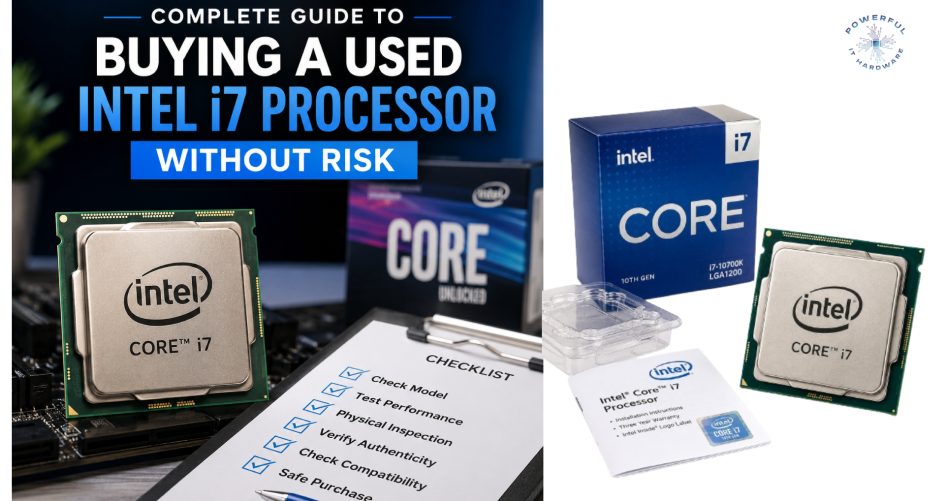
1. Why Assessing a Used Intel i7 Processor is Critical for Wholesale Success
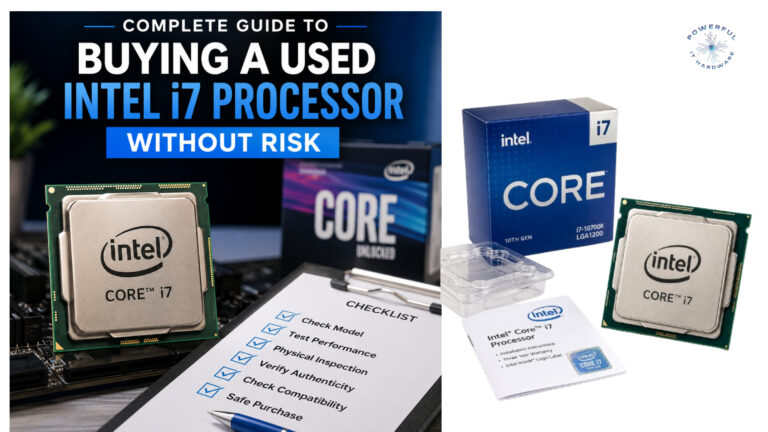
The wholesale procurement of computer components demands rigorous assessment protocols, particularly when dealing with high-performance silicon. A used intel i7 processor represents a significant capital investment for system integrators and B2B solution providers aiming to balance performance with cost efficiency. Failing to properly evaluate these chips before bulk purchasing can lead to catastrophic system failures, increased return merchandise authorization rates, and severe damage to a brand’s reputation. Comprehensive assessment acts as the foundational barrier against these operational risks.
Understanding the exact operational history of a second hand i7 processor is inherently difficult, which makes standardized testing the only reliable metric for safety. Wholesale buyers cannot rely on the word of the seller alone, as previous operating conditions such as prolonged thermal stress or voltage irregularities can degrade the silicon invisibly. Implementing strict diagnostic workflows ensures that only chips meeting original equipment manufacturer specifications enter the custom build pipeline, thereby securing the long-term reliability of the deployed infrastructure.
Recent 2025 statistics from leading hardware analysts indicate that bulk buyers who skip multi-stage stress testing experience up to a twenty-eight percent higher hardware failure rate within the first six months of deployment. This data underscores why a meticulous approach to evaluating a refurbished intel i7 cpu is not merely an option, but a strict business necessity. For B2B buyers, the cost savings derived from used components are instantly nullified if those parts cause widespread client downtime or require immediate, costly replacements.
The financial implications extend beyond the immediate cost of the chip to encompass labor costs, warranty fulfillment, and lost business opportunities. By establishing a robust assessment framework, wholesale distributors can confidently offer custom solutions built on a foundation of verified reliability. This proactive stance transforms the procurement of a used intel i7 processor from a risky gamble into a strategic, profit-generating advantage that scales effectively across large enterprise contracts.
1.1 How Supply Chain Shifts Impact Second Hand i7 Processor Availability
Global semiconductor supply chains have undergone massive transformations over the past few years, directly influencing the inventory levels of off-lease enterprise equipment. As large corporations aggressively refresh their fleets to adopt newer architectures, a massive wave of high-tier silicon has flooded the secondary market. This influx provides wholesale buyers with an unprecedented opportunity to source a second hand i7 processor at highly competitive price points, provided they understand the underlying supply chain dynamics driving these volumes.

The transition toward cloud computing and decentralized IT infrastructure has accelerated the decommissioning of traditional on-premises workstations. Many of these decommissioned machines housed powerful multi-core architectures, making the secondary market exceptionally rich in capable hardware. B2B buyers can leverage this shift by establishing direct relationships with enterprise liquidators, ensuring early access to bulk quantities of a used intel i7 processor before these lots are fragmented and sold to retail consumers.
Navigating these supply chain shifts requires a deep understanding of regional market variations and logistical bottlenecks. Certain geographic regions may experience a surplus of specific generations due to localized corporate upgrades, while others face artificial scarcity created by hoarding or export restrictions. Successful wholesale operations actively monitor these localized trends to optimize their sourcing strategies for a refurbished intel i7 cpu, ensuring a steady and predictable supply chain that supports continuous custom manufacturing.
The strategic integration of these supply chain insights allows B2B firms to forecast pricing and availability with greater accuracy. By analyzing decommissioning cycles and aligning them with custom build schedules, procurement teams can secure the most favorable contracts. This proactive alignment with supply chain realities ensures that the acquisition of a second hand i7 processor remains a highly efficient, cost-effective pillar of modern IT hardware distribution.
1.2 Why Quality Control Mitigates Risk in Bulk Purchases
Quality control in the secondary silicon market serves as the ultimate differentiator between a successful B2B deployment and a logistical nightmare. When purchasing a used intel i7 processor in bulk, the statistical probability of encountering a degraded unit increases exponentially compared to single-unit retail purchases. A rigorous, multi-tiered quality control process systematically identifies and isolates these defective units, ensuring that the final inventory delivered to the customization facility adheres to the strictest industry standards.
The anatomy of an effective quality control protocol for a refurbished intel i7 cpu involves far more than a simple power-on test. It requires sophisticated automated testing rigs capable of simulating maximum thermal design power loads for extended periods. These stress tests reveal underlying weaknesses in the silicon or the integrated heat spreader that would otherwise remain hidden until the processor is deployed under actual enterprise workloads, thereby protecting the end-user from unexpected downtime.
Implementing such rigorous standards directly impacts the total cost of ownership for B2B clients. While highly vetted second hand i7 processor batches may carry a slight premium over untested lots, they dramatically reduce the overhead associated with technical support and hardware replacement. For custom PC builders catering to corporate clients, this translates into stronger service level agreements and a measurable increase in customer retention rates over the lifecycle of the deployed systems.
Establishing an in-house or third-party verified quality control standard also provides a powerful marketing advantage in the wholesale sector. B2B buyers are increasingly demanding verifiable proof of component reliability, often requesting detailed stress test reports and burn-in certificates. Suppliers who can consistently provide this level of transparency for every used intel i7 processor naturally command higher market trust, securing larger and more lucrative enterprise contracts.
1.3 Which Testing Protocols Validate a Refurbished Intel i7 CPU
Validating the operational integrity of a refurbished intel i7 cpu requires a specific sequence of diagnostic protocols designed to stress every aspect of the architecture. The initial phase involves a physical inspection under magnification to identify any bent pins, damaged substrate traces, or irregularities in the thermal paste application. This foundational step prevents obviously damaged components from entering the more time-consuming and resource-intensive digital testing phases.
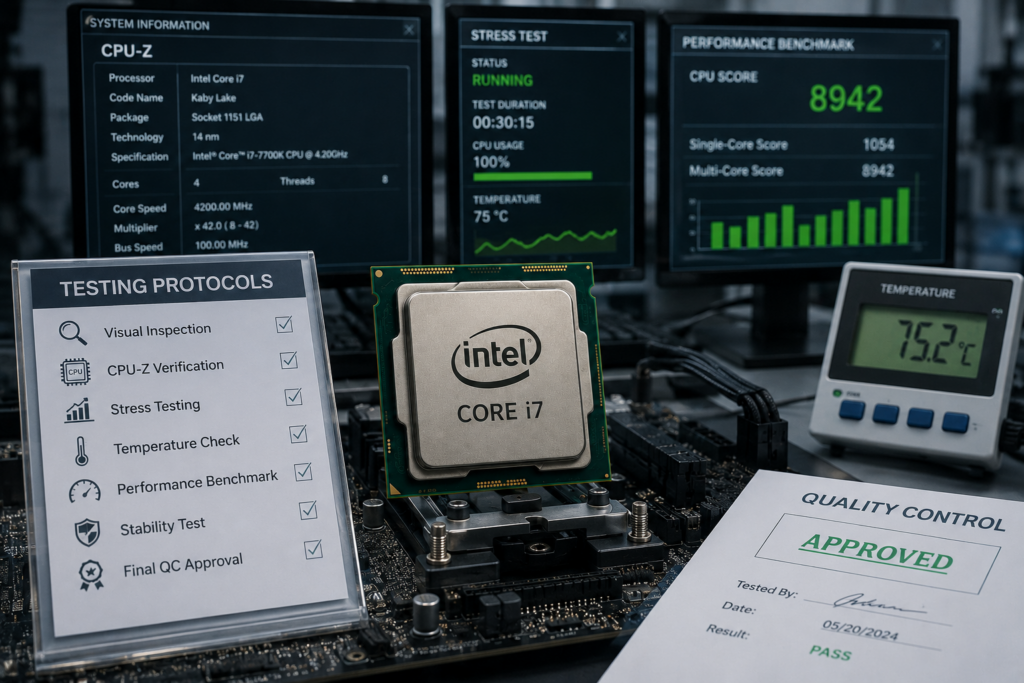
Following the physical inspection, the processor must undergo a comprehensive memory controller test utilizing high-density RAM modules. The memory controller is often the first subsystem to fail in an aging second hand i7 processor, and instability here can cause intermittent data corruption that is notoriously difficult to diagnose in the field. By running exhaustive memory stress algorithms, technicians can conclusively verify the integrity of the silicon pathways connecting the CPU to the system memory.
The most critical phase of validation involves prolonged multi-core stress testing using industry-standard synthetic workloads. Specialized software tools are utilized to push a used intel i7 processor to its maximum thermal and electrical limits for a minimum of twenty-four to forty-eight hours. This extended duration is vital, as certain silicon degradation issues only manifest after hours of sustained heat exposure, ensuring that only the most resilient chips pass the validation process.
Finally, advanced thermal profiling is conducted to ensure the chip can maintain optimal clock speeds without triggering aggressive thermal throttling. A refurbished intel i7 cpu that overheats and slows down provides a sub-optimal experience for end-users, particularly in custom workstation environments designed for sustained computational tasks. Verifying the thermal response curve guarantees that the processor will perform exactly as expected within the specific thermal constraints of the custom-built chassis.
2. How to Navigate the 2025 Market for a Second Hand i7 Processor
The landscape for secondary silicon has matured significantly, with 2025 marking a pivotal year for enterprise adoption of pre-owned components. Recent 2025 statistics reveal that the global market for refurbished enterprise hardware has grown by twenty-two percent year-over-year, driven by corporate sustainability mandates and tightened IT budgets. For B2B buyers, this growth means the market for a second hand i7 processor is no longer an unregulated frontier, but a sophisticated, high-volume sector requiring strategic navigation to maximize profitability.
Navigating this evolved market requires a shift from reactive purchasing to proactive market forecasting. Wholesale buyers must track the decommissioning schedules of major tech firms and financial institutions, as these events release massive, homogeneous batches of hardware. Securing a used intel i7 processor from a single decommissioned batch ensures hardware uniformity, which is a critical requirement for B2B clients deploying large fleets of identical custom workstations where driver conflicts and hardware variance are unacceptable.
The pricing dynamics in 2025 have also become more transparent, thanks to the emergence of specialized B2B trading platforms dedicated to bulk silicon. However, this transparency also means that margins are increasingly competitive. To maintain profitability, wholesale buyers must optimize their logistics and testing workflows, reducing the turnaround time between acquiring a refurbished intel i7 cpu and integrating it into a ready-to-ship custom solution.
Understanding these market mechanics allows procurement specialists to time their purchases perfectly, capitalizing on seasonal dips in pricing. By treating the acquisition of a second hand i7 processor as a strategic commodity trade rather than a simple purchasing task, B2B firms can secure the best possible pricing tiers. This calculated approach to market navigation is what separates highly profitable system integrators from those struggling with razor-thin margins.
2.1 Why Enterprise Downgrades Are Fueling the Used Intel i7 Processor Market
A fascinating trend driving the current secondary market is the phenomenon of enterprise hardware downgrades, where companies replace high-end workstations with streamlined, cloud-dependent terminals. As businesses shift heavy computational tasks to remote servers, the need for localized, extreme processing power diminishes. This strategic shift releases a massive volume of previously high-end silicon into the secondary market, creating a surplus of highly capable, lightly used inventory for wholesale buyers.
These enterprise downgrades represent a unique opportunity to acquire a used intel i7 processor that has spent its lifecycle in a highly controlled, pristine office environment. Unlike consumer-grade hardware, which may have suffered from poor ventilation, power surges, or overclocking abuse, corporate hardware is typically maintained under strict IT governance. This provenance makes these chips exceptionally valuable to B2B custom builders looking for reliable components that carry a lower inherent risk of prior misuse.
The economic rationale behind these corporate downgrades is firmly rooted in the total cost of ownership calculations favored by modern financial officers. By moving to thinner clients and virtualized desktops, enterprises reduce their local power consumption, cooling requirements, and IT support tickets. The discarded hardware, including every second hand i7 processor, is liquidated at highly aggressive rates, providing a lucrative arbitrage opportunity for wholesale distributors capable of purchasing and repurposing these assets at scale.
This trend is expected to persist as remote work infrastructures become permanently entrenched in corporate culture. B2B buyers who establish reliable pipelines to capture this specific segment of off-lease hardware will enjoy a sustained competitive advantage. Sourcing a refurbished intel i7 cpu from these downgrade cycles ensures a consistent supply of premium-tier silicon that perfectly meets the performance requirements of mid-market custom PC builds.
2.2 How 2026 Market Insights Shape Bulk Procurement Strategies
Looking ahead, 2026 market insights from leading semiconductor analysts suggest that the availability of specific generations of pre-owned silicon will begin to tighten. As the transition to newer proprietary socket architectures accelerates, the influx of legacy hardware will naturally decelerate. Forward-thinking wholesale buyers are adjusting their bulk procurement strategies now, securing long-term supply agreements for a used intel i7 processor to insulate their custom manufacturing operations from future inventory shortages and price spikes.
These 2026 projections also indicate a significant shift in how B2B buyers will need to manage their component lifecycles. The concept of just-in-time inventory, while efficient, becomes highly vulnerable in a tightening secondary market. Procurement teams are therefore shifting toward strategic stockpiling of verified, high-demand SKUs, ensuring that a second hand i7 processor is always available on-hand to fulfill immediate custom build orders without relying on the volatility of spot-market purchases.
Furthermore, upcoming regulatory changes regarding electronic waste and carbon footprints are expected to further incentivize the use of refurbished hardware in enterprise environments. By proactively integrating a refurbished intel i7 cpu into their 2026 product catalogs, system integrators can position themselves as compliant, eco-conscious partners for large institutional clients. This regulatory alignment transforms a cost-saving measure into a powerful sales tool for winning government and corporate contracts.
The data clearly points toward a future where secondary silicon is not just a budget alternative, but a strategic necessity. B2B firms that analyze these 2026 market insights and adapt their procurement models accordingly will capture significant market share. Securing a reliable pipeline for a used intel i7 processor today is the foundational step required to capitalize on the demand dynamics of tomorrow.
2.3 Which Customization Options Add Value to Refurbished Intel i7 CPUs
In the B2B sector, selling a bare chip is rarely the most profitable strategy, as adding targeted customization services significantly increases the perceived and actual value of the hardware. One of the most highly sought-after customizations for a refurbished intel i7 cpu is professional delidding and the application of premium thermal interface materials. This service dramatically lowers operating temperatures, allowing the processor to sustain higher clock speeds under heavy multi-threaded workloads, which is a major selling point for custom workstation clients.
Another valuable customization involves pre-configuring the processor with a matched memory kit and validating the system as a complete, drop-in computing module. Many B2B buyers prefer to purchase a second hand i7 processor already integrated with compatible RAM and a verified cooling solution. This turnkey approach reduces the assembly time and technical overhead for the end-user, allowing the wholesale distributor to command a premium price for a fully validated, ready-to-deploy subsystem.
Custom binning is an additional service that caters to highly specialized B2B markets, such as edge computing or embedded systems. By testing a batch of used intel i7 processor units and separating them based on their specific voltage requirements and thermal characteristics, suppliers can offer low-power, high-efficiency bins. These specially curated chips are incredibly attractive to original equipment manufacturers building compact, fanless systems where thermal management and power draw are the primary design constraints.
Offering extended, tiered warranty packages tailored to the specific customization performed is the final piece of the value-add puzzle. A refurbished intel i7 cpu that has been delidded, binned, and paired with matching components represents a highly engineered solution, not just a spare part. Providing a robust, multi-year warranty that covers the entire customized assembly gives B2B buyers the confidence to specify these parts in large-scale, mission-critical deployments.
3. Which Sourcing Channels Offer the Safest Used Intel i7 Processor Batches
Identifying the most secure and reliable sourcing channels is the most critical step in mitigating risk when procuring secondary silicon. The wholesale market is fragmented, ranging from highly professional, certified refurbishers to unverified, informal brokers operating out of makeshift warehouses. For a B2B buyer, selecting the wrong channel introduces the risk of purchasing counterfeit, stolen, or heavily degraded hardware, making channel verification an absolute priority.
The safest channels are invariably those that maintain a direct, traceable chain of custody from the original equipment manufacturer or large-scale enterprise lease returns. When a used intel i7 processor can be traced back to a specific corporate decommissioning event, the buyer gains immediate assurance regarding its operational history. This traceability is nearly impossible to achieve through generic online marketplaces or unvetted broker networks, making direct partnerships with certified liquidators the superior choice.
Evaluating the infrastructure of the sourcing channel itself provides deep insights into the quality of the second hand i7 processor batches they produce. Facilities that invest in automated testing equipment, climate-controlled storage, and anti-static handling protocols demonstrate a commitment to preserving the integrity of the silicon. B2B buyers should actively audit these facilities to ensure that the supplier’s operational standards align with their own strict quality requirements.
Ultimately, the safest sourcing channels act as strategic partners rather than mere transactional vendors. They provide detailed testing data, allow for custom sorting criteria, and stand firmly behind the authenticity of every refurbished intel i7 cpu they ship. Building a portfolio of these trusted, vetted channels is the most effective way to ensure a consistent, risk-free supply of high-performance components for custom integration projects.
3.1 How Direct OEM Partnerships Reduce Procurement Risks
Establishing direct relationships with original equipment manufacturers or their authorized disposal partners represents the gold standard in secondary silicon procurement. These entities possess the technical expertise and the logistical infrastructure to handle components according to strict industry guidelines. Sourcing a used intel i7 processor through these official channels virtually eliminates the risk of encountering counterfeit products, which have become increasingly sophisticated in the broader consumer electronics market.
OEM partnerships also grant B2B buyers access to massive, homogeneous lots of hardware. When an enterprise client returns thousands of identical machines at the end of a three-year lease, the resulting batch of a second hand i7 processor units will share the exact same manufacturing date, stepping, and firmware revision. This uniformity is incredibly valuable for wholesale buyers who need to guarantee hardware consistency across hundreds of custom-built enterprise workstations.
Negotiating directly with OEM disposal channels often allows for customized grading criteria tailored to specific B2B requirements. Instead of accepting a generic refurbished classification, buyers can specify exact thresholds for thermal performance, cosmetic condition of the integrated heat spreader, and allowable voltage leakage. This level of granular control ensures that every refurbished intel i7 cpu acquired meets the precise performance metrics demanded by the end-use application.
The logistical efficiencies gained through direct OEM partnerships further reduce procurement risks by minimizing the number of times the hardware changes hands. Each transfer between middlemen increases the likelihood of physical damage, anti-static discharge, or mix-ups in inventory tracking. By shortening the supply chain, B2B buyers ensure that a used intel i7 processor arrives at their facility in the exact same condition it was in when it left the secure OEM testing bench.
3.2 Why Authorized Refurbishers Provide Superior Second Hand i7 Processors
Authorized refurbishers operate under strict regulatory and contractual obligations that dictate how they handle, test, and resell pre-owned technology. These organizations invest heavily in proprietary diagnostic software and automated testing sleds that far exceed the capabilities of standard retail testing tools. Consequently, a second hand i7 processor sourced from an authorized refurbisher has been subjected to a level of scrutiny that effectively restores its reliability to near-factory conditions.
The operational protocols enforced within authorized facilities are designed specifically to identify subtle forms of silicon degradation that plague the secondary market. Technicians are trained to look for specific error codes, voltage anomalies, and thermal throttling behaviors that indicate a compromised chip. By filtering out these marginal units, authorized refurbishers ensure that the used intel i7 processor batches they supply to wholesale buyers are composed exclusively of top-tier, fully functional silicon.
Beyond technical testing, authorized refurbishers provide a layer of financial security that is crucial for B2B procurement strategies. They typically offer robust, tiered warranty programs and high replacement ratio guarantees, absorbing the risk of early-life failures themselves. For a wholesale buyer integrating a refurbished intel i7 cpu into a complex custom build, this warranty backing protects the entire margin of the project from being eroded by an unexpected, isolated hardware defect.
The reputation of authorized refurbishers is built entirely on their ability to consistently deliver reliable components to the B2B sector. This reputational stake means they are highly motivated to maintain strict quality control standards, unlike informal brokers who may simply disappear after a problematic transaction. Partnering with these established entities provides wholesale buyers with long-term stability and peace of mind in an otherwise volatile secondary market.
3.3 Which Red Flags Indicate a Risky Refurbished Intel i7 CPU Supplier
Identifying dangerous supplier red flags is an essential skill for any B2B procurement professional operating in the secondary hardware space. The most glaring warning sign is a supplier’s inability or unwillingness to provide comprehensive, verifiable testing data for a refurbished intel i7 cpu. Vendors who rely on vague assurances or generic working labels without detailed stress test logs are actively hiding the true condition of their inventory.
Questionable packaging and handling practices serve as immediate physical indicators of a high-risk supplier. A used intel i7 processor is a highly sensitive piece of electronics that can be permanently damaged by electrostatic discharge or physical shock. If a supplier ships bulk silicon in non-anti-static bags, without individual protective trays, or loosely packed in oversized boxes, it demonstrates a profound lack of understanding regarding proper hardware handling, signaling that the internal testing is likely equally negligent.
Pricing that drastically undercuts the established market average is another significant red flag that should trigger immediate suspicion. While secondary market pricing is inherently variable, a second hand i7 processor priced at a fraction of its true wholesale value often indicates the presence of counterfeit chips, pulled-from-scrap hardware, or units that have failed basic quality control. B2B buyers must remember that in the semiconductor industry, prices that seem too good to be true almost always are.
Finally, a lack of transparent business infrastructure—such as a verifiable physical address, dedicated customer service channels, and clear warranty terms—indicates a transient operation. Reputable suppliers of a refurbished intel i7 cpu operate with full corporate transparency, understanding that B2B transactions require legal and financial accountability. Avoiding suppliers who obscure their operational details is the most effective way to protect a wholesale business from catastrophic supply chain failures.
4. How to Integrate a Refurbished Intel i7 CPU into Custom B2B Solutions
The true value of secondary silicon is realized only when it is seamlessly integrated into well-engineered, custom B2B solutions. System integrators must approach the deployment of a refurbished intel i7 cpu not as a compromise, but as a highly efficient component choice that requires specific architectural considerations. This integration process involves carefully matching the processor’s specific capabilities with the exact performance requirements of the end-user’s workflow.
Successful integration begins with a deep analysis of the target application, whether it is a high-density rendering node, a standard office workstation, or an edge computing gateway. Understanding these use cases allows engineers to properly pair a second hand i7 processor with the appropriate motherboard chipset, memory speed, and storage interface. This holistic design approach ensures that the processor acts as a highly optimized component in a larger, perfectly balanced machine.
The physical integration of a used intel i7 processor into custom chassis designs also demands meticulous attention to airflow management and cooling capacity. Because pre-owned processors may have slightly different thermal characteristics than brand-new silicon, relying on standard, generic cooling solutions is often insufficient. B2B builders must utilize custom-tuned fan curves and high-quality thermal solutions to guarantee sustained performance under continuous enterprise workloads.
Ultimately, the integration of a refurbished intel i7 cpu into a custom solution is a value-adding engineering process. By treating the component with the same level of design rigor applied to new hardware, system integrators can deliver a final product that feels premium, performs flawlessly, and meets the stringent expectations of corporate IT departments. This level of engineering excellence is what drives repeat business in the competitive B2B hardware market.
4.1 Why Thermal Profiling is Essential for Custom Workstations
Thermal profiling is the practice of mapping the exact heat generation and dissipation characteristics of a specific processor within a defined chassis environment. For a custom B2B workstation, this process is non-negotiable, as localized hot spots can lead to premature silicon degradation and sudden system crashes. Conducting rigorous thermal profiling on a used intel i7 processor ensures that the custom cooling solution is perfectly calibrated to handle the specific thermal output of that exact chip.
The necessity of thermal profiling stems from the fact that no two silicon dies age in exactly the same way. A refurbished intel i7 cpu that has operated in a poorly ventilated tower for three years may have slightly degraded thermal transfer capabilities compared to a unit pulled from a well-maintained data center. By profiling the chip under load, engineers can identify these subtle differences and adjust the custom liquid or air cooling loop accordingly to maintain optimal operating temperatures.
In high-density custom workstation deployments, such as rendering farms or financial modeling clusters, the cumulative heat output of multiple processors can easily overwhelm standard environmental cooling systems. Accurately profiling a second hand i7 processor allows system integrators to provide clients with precise environmental requirements, preventing facility-level cooling failures. This data-driven approach to thermal management protects the client’s physical infrastructure as well as their digital data.
Advanced thermal profiling also involves testing the processor under sustained, real-world workloads rather than just synthetic benchmarks. This ensures that the used intel i7 processor will not experience thermal throttling during critical, hours-long rendering or compilation tasks. Delivering a custom workstation with a guaranteed, profiled thermal ceiling provides B2B clients with the performance predictability required to meet their own strict project deadlines.
4.2 How Compatibility Matching Ensures Stable Used Intel i7 Processor Performance
Compatibility matching goes far beyond verifying that a processor fits into a specific motherboard socket. It involves a comprehensive analysis of the motherboard’s power delivery design, BIOS microcode support, and memory controller interoperability. Ensuring strict compatibility between a used intel i7 processor and the surrounding infrastructure is the primary method for guaranteeing absolute system stability in demanding B2B environments.
The voltage regulator module on a motherboard is responsible for delivering clean, stable power to the CPU under heavy load. A refurbished intel i7 cpu, particularly from older generations, can exhibit different transient power spikes compared to newer architectures. By carefully matching the processor with a motherboard featuring a robust, high-quality power phase design, integrators prevent voltage droops that can cause hard system resets during complex computational tasks.
BIOS microcode compatibility is another critical, yet frequently overlooked, aspect of hardware matching. A second hand i7 processor may require a specific BIOS version to properly initialize its power states and integrated features. B2B integrators must verify that the chosen motherboard not only physically supports the chip but also ships with, or can be easily updated to, the necessary firmware to ensure flawless out-of-the-box functionality.
Furthermore, memory compatibility must be validated at the bin level to prevent subtle data corruption. While a used intel i7 processor may officially support certain memory speeds, degraded memory controllers on older silicon may struggle to maintain stability at those maximum speeds. Rigorous compatibility matching and subsequent memory testing ensure that the final custom configuration operates with enterprise-grade reliability, completely eliminating the guesswork from the integration process.
4.3 Which Warranties Protect Wholesale Buyers of Second Hand i7 Processors
Structuring the right warranty package is the ultimate safety net for B2B buyers investing heavily in secondary silicon. A robust warranty for a second hand i7 processor must clearly define the terms of coverage, the process for initiating a claim, and the specific replacement ratio guaranteed by the supplier. This contractual protection is essential for preserving the profit margins of custom system integrators who cannot afford to absorb the cost of unexpected component failures.
The most effective warranties in the wholesale sector are those that offer advance cross-shipment replacements rather than standard return-and-wait policies. When a refurbished intel i7 cpu fails in a deployed custom workstation, the B2B client experiences immediate downtime that impacts their business operations. A warranty that ships a verified replacement unit before the defective unit is returned minimizes this downtime, transforming a potential crisis into a minor, managed inconvenience.
Warranty terms should also be specifically tailored to the operational environment of the custom build. A used intel i7 processor deployed in a standard office environment may carry a standard three-year warranty, while the same chip integrated into an industrial edge computing kiosk might require specialized terms covering extreme temperatures or continuous operation. B2B buyers must negotiate these environmental parameters to ensure their warranty coverage remains valid under actual use conditions.
Ultimately, a strong warranty serves as a powerful testament to the confidence the supplier has in their own testing and quality control procedures. Wholesale distributors who offer comprehensive, hassle-free warranties on a second hand i7 processor implicitly guarantee the integrity of their sourcing and validation processes. For the B2B buyer, this warranty is not just a document, but a foundational pillar of their overall risk management strategy.
Securing a reliable supply of high-performance secondary silicon requires a strategic, highly disciplined approach to procurement, testing, and integration. The secondary market offers immense financial advantages for B2B custom solution providers, provided they navigate the landscape with a strict adherence to quality control and supply chain transparency. By understanding the market forces at play and implementing rigorous validation protocols, businesses can safely leverage these components to build exceptional, cost-effective infrastructure.
To eliminate the risks associated with sourcing pre-owned silicon and to secure the most reliable components for your custom enterprise builds, establishing a partnership with a verified, wholesale-focused supplier is essential. Contact our team today to discuss your specific hardware requirements, explore our extensive inventory of rigorously tested components, and discover how our customized integration solutions can elevate your next B2B deployment. Let us provide the verified silicon foundation your business needs to scale confidently and profitably.
Frquently Asked Questions
1. Why is bulk assessment critical when purchasing a used Intel i7 processor?
Purchasing a used intel i7 processor in bulk inherently increases the statistical probability of encountering a degraded unit. For B2B buyers and system integrators, failing to assess these chips properly can lead to a domino effect of system failures, increased return merchandise authorization rates, and severe damage to brand reputation. Rigorous, multi-stage assessment protocols act as the foundational barrier against these risks, ensuring that only silicon meeting original equipment manufacturer specifications enters the custom build pipeline.
2. How do 2025 enterprise downgrade trends affect the second hand i7 processor market?
As corporations shift heavy computational tasks to cloud environments and adopt thinner client terminals, they are decommissioning powerful local workstations. This massive release of lightly used, highly controlled corporate hardware has flooded the secondary market. For wholesale buyers, this 2025 trend provides a unique opportunity to acquire a second hand i7 processor that has spent its lifecycle in a pristine, strictly governed IT environment, offering exceptional reliability at highly competitive price points.
3. What specific testing protocols are required to validate a refurbished Intel i7 CPU?
Validating a refurbished intel i7 cpu requires a strict sequence of diagnostic protocols. The process begins with a magnified physical inspection of the substrate and pins, followed by exhaustive memory controller testing to detect hidden data corruption pathways. The most critical phase involves 24 to 48 hours of sustained, multi-core synthetic stress testing to reveal thermal or electrical weaknesses, culminating in advanced thermal profiling to verify the chip can maintain optimal clock speeds without throttling.
4. Which sourcing channels offer the safest environment for buying a used Intel i7 processor in bulk?
The safest sourcing channels are those that maintain a direct, traceable chain of custody from the original equipment manufacturer or large-scale enterprise lease returns. Authorized refurbishers and OEM disposal partners operate under strict regulatory guidelines, utilizing sophisticated automated testing rigs. These channels virtually eliminate the risk of counterfeit products and provide the hardware uniformity required for large-scale B2B custom deployments.
5. How can B2B integrators add value to a second hand i7 processor through customization?
Selling bare chips leaves significant margin potential on the table. B2B integrators can add substantial value by offering services such as professional delidding with premium thermal interface materials to lower temperatures. Additional customizations include pre-configuring the processor with matched memory kits for drop-in integration, and custom binning the silicon to isolate low-power units specifically for edge computing or embedded systems.
6. Why is thermal profiling specifically necessary for a refurbished Intel i7 CPU in custom workstations?
No two silicon dies age in exactly the same way, meaning a refurbished intel i7 cpu may have slightly different thermal transfer capabilities than a new unit. Thermal profiling maps the exact heat generation of that specific chip within the custom chassis. This ensures the cooling solution is perfectly calibrated, preventing localized hot spots, thermal throttling, and premature silicon degradation during sustained, real-world enterprise workloads.
7. What are the major red flags when evaluating a supplier for a used Intel i7 processor?
The most glaring red flag is a supplier’s inability to provide comprehensive, verifiable stress test logs for a used intel i7 processor. Additional warning signs include improper, non-anti-static packaging, pricing that drastically undercuts established market averages—which often indicates counterfeit or scrap hardware—and a lack of transparent business infrastructure such as verifiable physical addresses and clear warranty terms.
8. How should B2B buyers adjust their procurement strategies based on 2026 market insights?
Industry insights for 2026 project a tightening in the availability of specific legacy silicon generations as the industry transitions to new proprietary socket architectures. B2B buyers should shift away from vulnerable just-in-time inventory models and move toward strategic stockpiling of verified, high-demand SKUs. Securing long-term supply agreements now will insulate custom manufacturing operations from future inventory shortages and spot-market price spikes.
9. Why does socket compatibility alone not guarantee a stable second hand i7 processor integration?
True compatibility extends far beyond physical socket fitment. A second hand i7 processor can exhibit different transient power spikes compared to newer architectures, requiring a motherboard with a highly robust voltage regulator module (VRM) to prevent system resets. Additionally, older silicon requires specific BIOS microcode versions to properly initialize power states, making comprehensive firmware and power delivery matching essential for absolute stability.
10. Which warranty structures best protect wholesale buyers of a refurbished Intel i7 CPU?
Standard return-and-wait warranties are insufficient for enterprise environments where downtime equates to financial loss. Wholesale buyers must prioritize contracts offering advance cross-shipment replacements, ensuring a verified replacement unit arrives before the defective unit is returned. Furthermore, the warranty should be specifically tailored to the deployment environment, covering the unique thermal and operational stresses of the custom build, whether it is an office workstation or an industrial edge device.