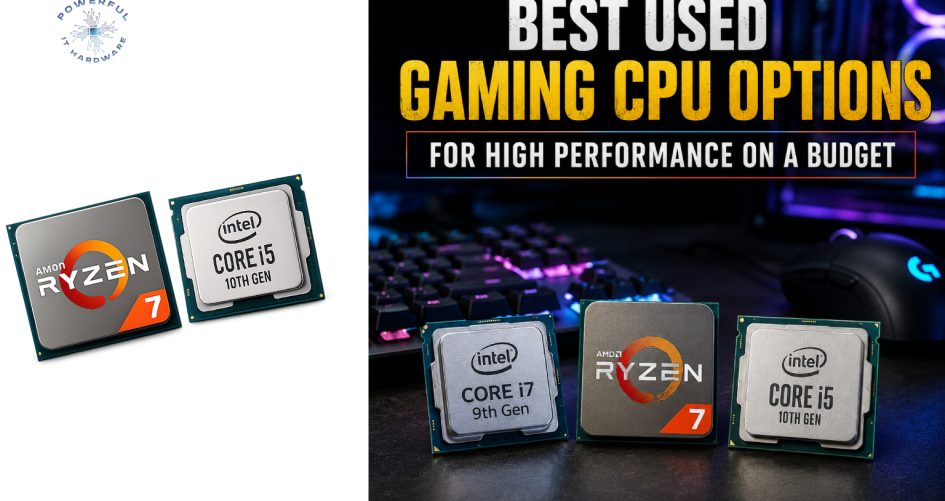
1. Why the Market for a Used Gaming CPU is Expanding in 2025
The secondary silicon market has experienced an unprecedented surge, with 2025 industry reports indicating a 24% year-over-year growth in the trade of pre-owned processors. This expansion is primarily driven by the diminishing marginal performance returns of new consumer chips, prompting system integrators and bulk buyers to seek alternative sourcing strategies. The economic rationale is clear, as businesses recognize that previous-generation flagship architectures still offer immense processing power at a fraction of the original cost.
Corporate buyers and regional builders are shifting their procurement models because maintaining high profit margins in a competitive PC market requires aggressive cost control. Sourcing a used gaming cpu allows these businesses to undercut retail pricing while still delivering high-framerate experiences to end consumers. The sheer volume of off-lease equipment and individual upgrades hitting the resale market has created a highly liquid, reliable supply chain for enterprise buyers.
This shift significantly affects wholesale procurement strategies, forcing distributors to establish dedicated divisions for pre-owned hardware testing and logistics. Traditional retail channels are no longer the sole focus, as B2B transactions now dominate the volume of high-end processor trades. Wholesale buyers are actively bypassing middlemen to secure large lots directly from recycling partners and corporate liquidators.
Customization plays a pivotal role in this expanding market, as B2B clients rarely purchase raw processors without specific integration requirements. Buyers frequently request custom thermal profiling, specific silicon stepping batches, or processors pre-matched with compatible motherboards. Offering these tailored hardware solutions transforms a simple resale transaction into a high-value B2B partnership.
1.1 How Supply Chain Shifts Make a Used Desktop CPU Viable for Bulk Orders
Global semiconductor supply chains have fundamentally restructured themselves following the severe disruptions of recent years, leading to an oversupply of legacy architectures. Foundries have maximized yields on mature nodes, meaning that older processors are incredibly robust and readily available in the secondary market. This abundance ensures that sourcing a used desktop cpu in bulk no longer carries the scarcity risks associated with newer, heavily allocated silicon.
The economic viability of bulk orders is further enhanced by the stabilization of logistics networks specializing in sensitive electronic components. Freight forwarders have developed specialized antistatic packaging and climate-controlled shipping methods that minimize the risk of physical damage during transit. Consequently, the total cost of ownership for bulk pre-owned processors has dropped significantly, making them highly attractive for large-scale deployment.
Quality assurance has evolved from a manual, individualized process into a highly scalable industrial operation. Advanced automated testing rigs now allow wholesale suppliers to stress-test hundreds of processors simultaneously, verifying silicon health with scientific precision. This industrialization of testing guarantees that bulk orders meet strict enterprise-grade reliability standards.
Custom testing protocols have become a standard offering for wholesale clients who require specific performance baselines. A distributor might sort a batch of ten thousand processors into various performance tiers, ensuring that each custom build receives a chip capable of supporting its intended workload. This granular approach to quality control is what makes large-scale adoption of pre-owned silicon a secure investment.
1.2 Which Wholesale Buyers Benefit Most from Sourcing Used Gaming CPU Stock
Regional system integrators and boutique PC builders represent the primary beneficiaries of this wholesale market shift. These businesses operate on thin margins and rely on the ability to configure high-performance machines that appeal to budget-conscious gamers. By integrating a used gaming cpu into their mid-range and entry-level custom builds, these integrators can offer specifications that would otherwise be financially unfeasible with new retail components.
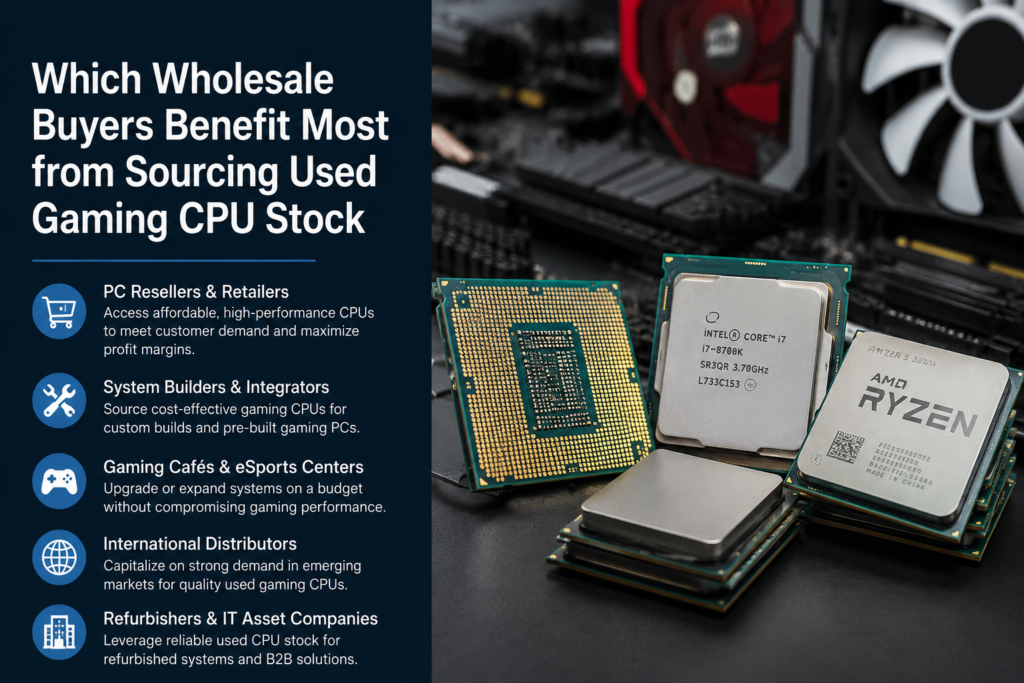
Esports arena operators and internet cafe franchise owners also derive immense value from bulk pre-owned processor procurement. These commercial entities require hundreds of identical or similarly specced machines to ensure uniform competitive performance across their facilities. Sourcing matching batches of pre-owned high-core-count processors allows them to standardize their fleet rapidly and cost-effectively.
The ability to customize these bulk orders allows buyers to target highly specific niche segments within the gaming community. For instance, a builder focusing on streaming rigs can request processors with high multi-threaded capabilities, while another targeting pure eSports can request chips binned for maximum single-core frequency. This targeted sourcing ensures that the end product perfectly aligns with the marketing narrative of the builder.
The profit margins associated with these B2B transactions provide a compelling incentive for distributors who sell used cpu inventory. By purchasing raw silicon at bottom-dollar prices and applying custom testing, branding, and bundling services, wholesalers can command a significant premium. This value-added approach creates a sustainable, highly profitable ecosystem for all parties involved in the supply chain.
2. How to Evaluate a Used Desktop CPU for High-Performance Custom Builds
Evaluating pre-owned silicon requires a rigorous methodology that goes far beyond simple POST (Power-On Self-Test) checks. Wholesale buyers must establish strict criteria regarding core counts, clock speeds, cache sizes, and microarchitectural generations to ensure the chips meet modern gaming demands. A processor that struggles with current instruction sets will ultimately result in high return rates and damaged B2B relationships.
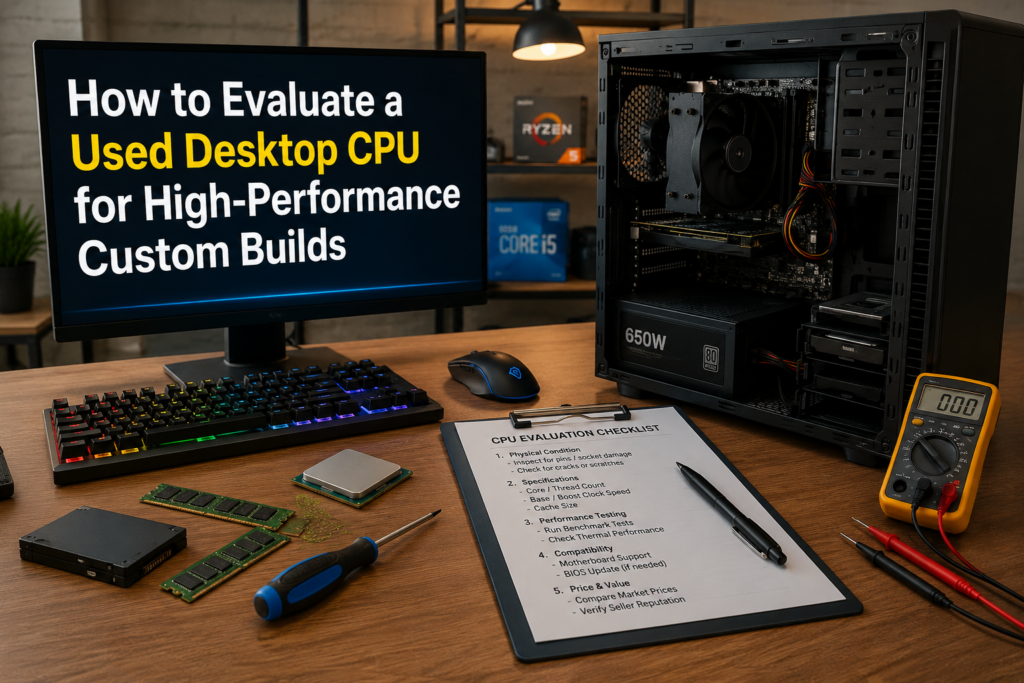
Benchmarking at scale is the only reliable way to assess the true capability of a used desktop cpu in a wholesale environment. Distributors utilize automated software suites that run synthetic workloads, simulating intense gaming scenarios to identify thermal throttling or clock instability. These benchmarks generate comprehensive data sheets for each processor, providing buyers with undeniable proof of performance prior to bulk purchase.
Physical inspection remains a critical, albeit labor-intensive, component of the evaluation process. Trained technicians examine the substrate for hairline cracks, check the contact pads for oxidation, and ensure the integrated heat spreader is perfectly flat. Even microscopic physical defects can lead to catastrophic failure under sustained computational loads, making visual triage non-negotiable.
Matching evaluated processors to specific custom build tiers is the final step in maximizing their utility. A chip that fails to achieve top-tier frequencies but maintains excellent thermal characteristics might be redirected to a budget-friendly home office build rather than a high-end gaming rig. This strategic allocation ensures that every piece of silicon is monetized effectively according to its actual performance envelope.
2.1 Which Testing Protocols Ensure Reliability When You Sell Used CPU Inventory
Implementing a multi-tiered stress testing protocol is essential for any operation looking to sell used cpu stock to discerning B2B clients. The first tier typically involves a prolonged idle burn-in to verify basic electrical stability and motherboard compatibility. This foundational step quickly weeds out processors with fundamental silicon defects that would otherwise slip through rapid testing procedures.
The second tier demands sustained multi-core workloads, utilizing industry-standard tools like Prime95 or AIDA64, to push the thermal limits of the processor. Monitoring the temperature curves during these tests reveals the true thermal health of the silicon and the effectiveness of the integrated heat spreader. Processors that exhibit erratic temperature spikes or fail to maintain base clocks under load are immediately disqualified from enterprise-grade inventory.
Rigorous testing directly correlates with a drastic reduction in field failure rates, which is the foremost concern for wholesale buyers. When a system integrator deploys thousands of custom machines, a single bad batch of processors can result in catastrophic warranty claims and logistical nightmares. Comprehensive testing protocols effectively transfer the risk from the buyer to the supplier, justifying higher wholesale price points.
Documentation and warranty customization serve as the final layer of reliability assurance for B2B transactions. Suppliers often provide customized spreadsheets detailing the exact benchmark scores, thermal maximums, and stress-test durations for every individual processor in a bulk order. This transparency allows the purchasing business to confidently pass tailored warranties onto their end consumers.
2.2 Why Custom Bulk Packaging Matters for Used Gaming CPU Distribution
The physical distribution of delicate silicon requires specialized packaging solutions that standard retail boxes simply cannot provide. A used gaming cpu transported in inadequate packaging is highly susceptible to bent pins, substrate scratches, or electrostatic discharge damage. Custom-engineered bulk packaging utilizes precision-cut anti-static foam and specialized trays that immobilize the processors completely during global transit.
Beyond physical protection, custom bulk packaging presents a significant opportunity for white-label branding and distributor recognition. Wholesale suppliers can print custom logos, batch numbers, and handling instructions directly onto the shipping trays. This level of professional presentation reinforces the B2B buyer’s confidence in the supplier’s operational maturity and attention to detail.
Scaling packaging solutions to accommodate varying order sizes is a logistical challenge that requires significant forethought. A supplier must be equipped to securely package an order of fifty units just as efficiently as an order of five thousand units. Utilizing modular packaging designs that can be consolidated into standard pallet dimensions ensures that shipping costs remain predictable and minimized.
The unboxing experience for a B2B client, while different from a consumer, still heavily influences their perception of the supplier’s quality. Receiving a neatly organized, clearly labeled pallet of processors expedites the receiving department’s inventory checks and streamlines the integration into the buyer’s own assembly lines. This operational efficiency is a highly valued, yet frequently overlooked, component of wholesale distribution.
3. Which Used Gaming CPU Models Offer the Best ROI for 2025 and 2026
The AMD Ryzen 5000 series, particularly the Ryzen 7 5700X and Ryzen 5 5600X, currently represents the gold standard for high-performance ROI in the secondary market. These Zen 3 architectures provide exceptional single-core speeds that translate directly to high framerates in modern titles. Their dominance in the pre-owned market is a direct result of the massive consumer adoption rates they enjoyed during their retail lifecycle.
Intel’s 11th and 12th generation Core processors, specifically the i5-11600K and i5-12400F, offer a highly competitive alternative for custom build budgets. These chips feature robust integrated graphics in some SKUs and strong single-thread performance, making them incredibly versatile for mixed-use builds. The sheer volume of these chips entering the secondary market has kept their wholesale prices exceptionally low.
Looking toward 2026 market insights, industry analysts project that AM4 and LGA 1700 platforms will maintain substantial relevance due to ongoing BIOS updates and peripheral compatibility. The premature obsolescence once feared for older sockets has not materialized, extending the viable lifecycle of these processors. Buyers investing in these architectures today can expect a stable used market and reliable part availability for at least another three to four years.
Pricing these specific models requires a delicate balance between current market demand and anticipated future depreciation. Wholesale buyers must locked in favorable pricing now before the anticipated flood of next-generation used hardware hits the market in late 2026. Securing large lots of current-generation used chips positions B2B buyers to maximize their margins throughout the upcoming transitional period.
3.1 How to Structure Wholesale Pricing When You Sell Used CPU Batches
Structuring wholesale pricing demands a tiered model based on rigorous benchmark classifications rather than a flat rate per socket. A processor that achieves a top-percentile score in stress tests commands a premium over a lower-binned chip of the exact same model. This binning strategy allows the seller to capture maximum value from high-yield silicon while still monetizing average-performing units.
Volume discount frameworks are essential for incentivizing large-scale enterprise commitments and fostering long-term B2B relationships. A buyer purchasing a single lot of one hundred units will naturally pay a higher per-unit price than a client committing to monthly deliveries of ten thousand units. These tiered pricing schedules must be clearly documented to facilitate transparent budgeting for the purchasing organization.
The residual impact of cryptocurrency mining fluctuations continues to subtly influence the pricing structures of certain high-core-count processors. While the mining boom has subsided, the massive influx of previously abused chips still creates pricing anomalies in the secondary market. Educated wholesale buyers now demand verifiable thermal histories and strict stress-test documentation to justify paying standard rates for these specific SKUs.
Forecasting 2026 depreciation rates is a critical analytical task that prevents wholesalers from holding overvalued inventory. As newer architectures become the new standard for used hardware, the value of current-generation chips will inevitably compress. Successful distributors utilize predictive analytics to adjust their bulk pricing proactively, ensuring they sell used cpu inventory before significant market depreciation occurs.
3.2 Which Customization Services Increase the Value of a Used Desktop CPU
Offering pre-applied, premium thermal interface materials (TIM) is a highly effective customization service that significantly enhances the perceived value of a used desktop cpu. Replacing dried-out factory thermal paste with high-end aftermarket compounds improves thermal dissipation immediately out of the box. This service saves system integrators considerable assembly time and provides a tangible, measurable improvement to the end user.
Bin-matching services cater to the specific needs of clients building multi-GPU rendering stations or specialized dual-processor gaming servers. By testing and grouping processors with identical voltage-frequency curves, suppliers enable seamless multi-socket synchronization. This niche customization transforms standard resale inventory into specialized, high-margin engineering solutions.
Creating pre-tested motherboard and processor bundles is another value-added service that streamlines the procurement process for custom builders. Pairing a compatible motherboard with a verified processor eliminates the guesswork and compatibility issues that often plague individual component sourcing. Wholesale buyers are willing to pay a premium for the guaranteed interoperability and reduced technical support burden these bundles provide.
Developing bespoke gaming workstation kits that include the processor, customized cooling solutions, and specific firmware profiles represents the pinnacle of hardware customization. These comprehensive kits allow smaller regional builders to compete with larger manufacturers by offering uniquely optimized systems. By assembling these complex solutions at the wholesale level, suppliers empower their B2B clients to capture a larger share of their local markets.
4. How to Build a Sustainable B2B Model Around Used Gaming CPU Sales
Establishing a sustainable business model in this sector requires a deep alignment with the principles of the circular economy. Electronic waste is a growing global concern, and businesses that can repurpose high-performance silicon directly contribute to environmental sustainability goals. This ecological narrative is increasingly becoming a powerful marketing tool in B2B sales cycles.
Developing robust reverse logistics networks is the foundational pillar of a sustainable secondary market operation. Suppliers must establish reliable channels to acquire end-of-life corporate fleets, damaged retail returns, and obsolete inventory from major OEMs. Without a consistent, inbound flow of raw materials, the ability to fulfill large-scale wholesale orders grinds to a halt.
Corporate Environmental, Social, and Governance (ESG) initiatives are now heavily influencing IT procurement decisions at the enterprise level. Companies are actively seeking out hardware suppliers who can provide verifiable data regarding the carbon footprint reduction achieved through using pre-owned components. Positioning a processor resale business as an ESG-compliant partner unlocks lucrative contracts with massive, ethically conscious corporations.
Future-proofing this business model for 2026 and beyond requires continuous investment in automated testing technology and scalable data infrastructure. As the volume of processed silicon increases, manual logistics and testing will become insurmountable bottlenecks. Businesses that successfully digitize their inventory management and quality assurance workflows will emerge as the undisputed leaders in the secondary hardware space.
4.1 Why Partnerships Matter When You Buy or Sell Used CPU Stock
Strategic alliances with large-scale corporate IT refresh programs provide the most reliable source of high-quality pre-owned hardware. Corporations typically replace their employee workstations on a three-to-four-year cycle, generating a predictable, massive influx of mid-to-high-range processors. Securing contracts to purchase these retired assets ensures a steady supply of clean, non-abused silicon.
Navigating the complexities of cross-border wholesale logistics and international e-waste compliance requires experienced local partnerships. Different nations impose wildly varying regulations regarding the importation of used electronics, which can easily derail an international shipment. Collaborating with established global freight forwarders and local compliance experts mitigates these legal and logistical risks.
Strategic supply chain alliances directly reduce procurement costs by eliminating intermediary brokers and unnecessary handling fees. When a wholesale buyer can establish a direct pipeline from a corporate decommissioning facility to their own testing warehouse, the cost savings are substantial. These efficiencies allow the buyer to offer more competitive pricing to their own downstream clients.
Building long-term trust in the secondary market is impossible without cultivating transparent, mutually beneficial partnerships. The stigma historically associated with used electronics is only overcome through consistent reliability and open communication between buyers and sellers. Businesses that treat their supply chain partners as extensions of their own operations will enjoy prioritized access to the best inventory.
4.2 How to Market Your Used Desktop CPU Offerings to Enterprise Clients
Marketing pre-owned hardware to enterprise clients requires a fundamental shift in messaging from novelty to total cost of ownership (TCO) savings. IT directors are less concerned with benchmark-breaking performance than they are with maximizing their departmental budgets. Demonstrating that a fleet of custom-built machines using pre-owned processors can deliver 90% of the performance at 60% of the cost is a highly persuasive argument.
Developing and publishing detailed case studies of successful bulk deployments provides the social proof necessary to secure large corporate contracts. These documents should outline the specific testing protocols utilized, the performance metrics achieved in real-world enterprise applications, and the overall ROI realized by the client. Verifiable success stories dismantle the lingering skepticism surrounding the reliability of secondary market components.
Utilizing targeted B2B channels, specialized industry trade shows, and private procurement networks is far more effective than broad consumer advertising. Decision-makers in the enterprise IT space congregate in specific professional forums and industry events focused on infrastructure and cost optimization. A focused marketing strategy that targets these specific channels yields a much higher conversion rate for high-volume orders.
Crafting outreach campaigns that emphasize operational reliability, comprehensive warranty structures, and dedicated technical support resonates strongly with risk-averse procurement officers. The marketing narrative must reassure the buyer that choosing a used desktop cpu is not a compromise, but rather a strategically sound, data-driven procurement decision. This authoritative tone establishes the supplier as a trusted advisor rather than a mere liquidator.
5. How to Get Started with Your Next Wholesale Used Gaming CPU Order
The strategic advantages of integrating pre-owned silicon into custom build operations are mathematically undeniable in the current economic landscape. Businesses that leverage the robust performance of previous-generation architectures can drastically reduce their bill of materials without sacrificing end-user satisfaction. This operational leverage is the key to capturing market share in an increasingly saturated PC building industry.
Initiating a custom bulk order begins with a comprehensive consultation to define the specific performance tiers, thermal limits, and budget constraints of the project. A reputable wholesale partner will analyze these requirements and curate a bespoke inventory lot tailored precisely to those parameters. This collaborative sourcing process ensures that the buyer receives exactly the silicon profile needed for their specific custom builds.
The value of engaging with an expert wholesale supplier extends far beyond the simple transaction of buying and selling physical components. Experienced distributors provide crucial market intelligence, advising buyers on which architectures offer the best current value and which SKUs to avoid due to impending market shifts. This consultative approach protects the buyer’s investment and optimizes their long-term procurement strategy.
Securing your supply chain today by investing in a high-quality used gaming cpu inventory will position your business for maximum profitability through 2025 and 2026. The window to acquire premium, thoroughly tested legacy silicon at rock-bottom prices is finite as market dynamics continue to evolve. Contact our wholesale division today to discuss your custom testing requirements, volume pricing tiers, and upcoming inventory availability to elevate your next custom build fleet.
Frequently Asked Questions
1. Why consider a used gaming cpu for wholesale custom builds?
Sourcing a used gaming cpu allows system integrators to drastically reduce bill of materials costs while maintaining high-framerate performance. With 2025 industry reports showing a 24% year-over-year growth in secondary silicon markets, the supply chain for these processors has matured significantly. This economic viability enables B2B buyers to offer competitive custom builds without sacrificing their profit margins. The ability to deliver high performance on a budget is a decisive advantage in a saturated PC market.
2. How does bulk testing ensure the reliability of a used desktop cpu?
Wholesale suppliers utilize automated, multi-tiered stress testing protocols that push processors to their thermal limits using synthetic gaming workloads. This industrialized evaluation process verifies silicon health, checks for clock instability, and generates comprehensive data sheets for every unit. By implementing rigorous benchmarking and physical substrate inspection, distributors can guarantee enterprise-grade reliability. This meticulous approach effectively transfers the risk from the B2B buyer to the supplier.
3. Which processor models offer the best ROI for 2025 and 2026?
The AMD Ryzen 5000 series and Intel’s 11th and 12th generation Core processors currently represent the highest return on investment in the secondary market. These architectures provide the single-core speeds required for modern titles at a fraction of their original retail cost. Market insights for 2026 indicate that AM4 and LGA 1700 platforms will maintain substantial relevance due to ongoing BIOS updates and peripheral compatibility. Procuring these specific models now secures inventory before anticipated depreciation hits when next-generation hardware enters the used market.
4. How can businesses safely sell used cpu inventory at scale?
Organizations can safely sell used cpu stock by partnering with established wholesale distributors who possess specialized reverse logistics networks. These partners provide verifiable data destruction, standardized grading systems, and immediate bulk liquidation payments. Aligning with a professional buyer also supports corporate ESG (Environmental, Social, and Governance) initiatives by keeping functional electronic waste out of landfills. This strategic alliance turns obsolete IT assets into a measurable, reliable revenue stream.
5. Why is custom packaging important for used desktop cpu distribution?
Custom-engineered bulk packaging utilizes precision-cut anti-static foam to immobilize processors, preventing bent pins or substrate scratches during global transit. Beyond physical protection, customized trays offer white-label branding opportunities that reinforce the supplier’s professional image to the end buyer. Modular packaging designs also streamline the receiving department’s inventory checks for B2B clients. A secure, well-organized unboxing experience directly enhances operational efficiency on the assembly line.
6. Which customization services add the most value to wholesale processor orders?
Pre-applying premium thermal interface materials (TIM) is a highly requested service that immediately improves thermal dissipation out of the box. Bin-matching processors with identical voltage-frequency curves is another valuable service for clients building multi-GPU rendering stations or specialized servers. Creating pre-tested motherboard and processor bundles eliminates compatibility guesswork and reduces technical support burdens for system integrators. These tailored solutions transform standard resale inventory into high-margin, bespoke hardware kits.
7. How should wholesale pricing be structured for bulk pre-owned silicon?
Effective wholesale pricing relies on a tiered model based on rigorous benchmark classifications rather than a flat rate per socket. Processors that achieve top-percentile stress test scores command a premium over lower-binned chips of the exact same model. Volume discount frameworks must also be implemented to incentivize large-scale enterprise commitments and foster long-term B2B relationships. This structured approach allows buyers to select inventory that perfectly matches their specific performance-to-budget requirements.
8. Why are corporate ESG goals driving the demand for used gaming cpu stock?
Corporate Environmental, Social, and Governance (ESG) initiatives now heavily influence IT procurement decisions across the enterprise sector. Companies are actively seeking hardware suppliers who can demonstrate measurable carbon footprint reductions through the repurposing of high-performance silicon. Utilizing pre-owned components directly supports the circular economy and prevents functional electronic waste from entering landfills. This ecological alignment allows IT directors to justify hardware purchases through both financial and ethical narratives.
9. How do cross-border logistics affect international used desktop cpu transactions?
International transactions require careful navigation of wildly varying e-waste regulations and importation laws regarding used electronics. Experienced wholesale distributors mitigate these risks by partnering with specialized global freight forwarders and local compliance experts. These partnerships ensure that all necessary documentation, environmental certifications, and customs clearances are handled flawlessly. Establishing these secure logistical pipelines is essential for executing uninterrupted, high-volume international orders.
10. Which B2B buyers benefit the most from sourcing pre-owned processors?
Regional system integrators and boutique PC builders benefit immensely by using pre-owned silicon to undercut retail pricing while maintaining high specifications. Esports arena operators and internet cafe franchises also rely on bulk orders to standardize massive fleets of competitive gaming machines. The ability to purchase custom-binned, heavily tested processors allows these businesses to guarantee uniform performance across hundreds of stations. This strategic sourcing is the key to maintaining profitability in highly competitive, margin-sensitive markets.