The market for pre-owned hardware is evolving rapidly, driven by the demand for high-performance computing at reduced costs. For gamers and system integrators alike, the prospect of acquiring a high-end CPU without the premium price tag is enticing. However, navigating this landscape requires a keen understanding of market dynamics to avoid common pitfalls. This guide explores the strategic advantages of purchasing second-hand silicon, specifically tailored for wholesale buyers and those seeking customized solutions.
Recent 2025 market analysis indicates a significant shift towards the circular economy in electronics, with the refurbished CPU market growing by approximately 15% year-over-year. This trend is largely fueled by the release of next-generation consoles and processors, causing a flood of previous-generation flagship models to enter the secondary market. For wholesale buyers, this presents a unique opportunity to source powerful components that still hold considerable value for 1080p and 1440p gaming rigs. By leveraging this trend, businesses can offer competitive custom builds that undercut new hardware prices while delivering exceptional frame rates.
The economic rationale extends beyond simple savings; it encompasses the ability to configure diverse system builds for specific customer segments. When businesses understand the depreciation curves of silicon, they can time their purchases to maximize margins. This section delves into the economic forces that make the best used processor for gaming a viable asset for inventory, rather than a liability. It establishes the foundation for why sourcing pre-owned CPUs is a critical strategy for staying competitive in a saturated custom PC market.
Furthermore, the focus on wholesale acquisition allows for bulk customization of gaming setups, which is increasingly popular in cyber-cafes and e-sports arenas. These high-volume environments require reliable performance without the exorbitant cost of cutting-edge tech. By capitalizing on the secondary market, wholesalers can provide tailored solutions that meet the rigorous demands of competitive gaming. The strategic procurement of used processors is not merely a cost-saving measure; it is a sophisticated approach to resource allocation in the gaming hardware industry.
1. Why the Market for Second-Hand Silicon is Expanding in 2025
The trajectory of the semiconductor industry has created a distinct gap between flagship releases and the actual needs of the average gamer. As manufacturers push for higher core counts and advanced architectures, previous-generation chips remain incredibly capable for the vast majority of gaming titles. This disconnect is the primary driver behind the expanding market for second-hand silicon. For businesses engaged in wholesale and system building, recognizing this shift is essential for catalog planning.

Industry data from early 2025 suggests that over 40% of gaming PCs sold in the value segment now incorporate refurbished or previously owned components. This statistic underscores a changing consumer sentiment where value and performance-per-dollar take precedence over shrink-wrapped novelty. The wholesale sector has responded by increasing imports and bulk trades of reliable SKUs, ensuring a steady supply for custom integrators. This movement is not just about individual savings but about a structural change in how gaming rigs are architected and sold to budget-conscious consumers.
Market insights projecting into 2026 indicate that the supply of viable used processors will stabilize, creating a more predictable pricing model for bulk buyers. This predictability is crucial for businesses that rely on fixed margins when offering customized gaming solutions. The expansion is also driven by corporate refresh cycles, where enterprise-grade servers are decommissioned, flooding the market with high-quality silicon. Understanding these supply chain mechanics allows wholesalers to source the best second hand processor inventory before prices fluctuate due to scarcity or new product launches.
The environmental aspect cannot be overlooked, as both corporate and individual buyers are increasingly prioritizing sustainability. Extending the lifecycle of processors reduces e-waste and aligns with the corporate social responsibility goals of many modern businesses. By integrating used processors into custom builds, companies can market their products as eco-friendly alternatives without sacrificing gaming performance.
1.1. Why Corporate Decommissioning Drives Bulk Availability
The lifecycle of enterprise equipment plays a pivotal role in the availability of high-performance used processors. Large corporations and data centers frequently refresh their server infrastructure every three to five years to maintain efficiency and warranty coverage. This cycle results in a massive influx of enterprise-grade processors hitting the secondary market, often with thousands of units entering the channel simultaneously. For wholesale buyers, this decommissioning wave is the primary source for bulk inventory, offering a chance to acquire high-spec silicon at fractions of the original retail cost.
These enterprise-grade parts, often featuring higher core counts and robust thermal tolerances, are frequently repurposed for high-end gaming workstations. The volume of parts available during a single decommissioning event allows wholesalers to negotiate significantly lower prices per unit. This bulk availability is essential for businesses looking to standardize their custom builds on a specific chipset, ensuring consistency across their product lines. The ability to purchase hundreds of identical units streamlines the customization process, as BIOS settings and cooling solutions can be optimized once and applied across the fleet.
Furthermore, the reliability of processors sourced from controlled corporate environments is typically superior to those harvested from individual consumer PCs. Enterprise hardware usually operates within strict thermal and power limits, reducing the likelihood of electrical stress or overclocking damage. When sourcing the best used processor for gaming from these corporate channels, buyers gain access to components that have been professionally maintained rather than subjected to the variable abuse of consumer usage. This reliability is a key selling point when marketing customized rigs to business clients or gaming cafes.
The trend is expected to continue through 2026, with legacy server platforms being retired in favor of cloud-native architectures. This shift will release even more Xeon and high-end desktop chips into the wild, further driving down costs. Wholesalers who establish relationships with IT asset disposition firms can secure first access to these batches, ensuring their inventory is stocked with the most viable options. Understanding the source of the supply is critical for predicting market trends and capitalizing on the volume of hardware entering the recycling stream.
1.2. How Economic Factors Influence Buyer Behavior in 2025
Economic pressures are reshaping the purchasing decisions of both individual gamers and commercial enterprises. Inflationary trends and the rising cost of new hardware have pushed buyers to seek alternative avenues for upgrading their systems. The “how” of this influence is seen in the shift towards “good enough” computing, where the marginal performance gains of new flagship chips do not justify the exponential price increase. For the wholesale market, this means that a well-priced, high-performance used CPU is no longer a compromise but a preferred choice for value-oriented customers.
In the B2B sector, specifically for cyber-cafes and educational institutions, budget constraints are stricter than ever. These entities require fleets of computers capable of running modern software, but they must adhere to fixed capital expenditure budgets. The best second hand processor fits this requirement perfectly, offering the necessary IPC (Instructions Per Clock) performance to handle current titles without the overhead of new generation pricing. This economic reality drives demand for bulk customization services, where integrators provide cost-effective solutions using pre-owned components to meet institutional needs.
The 2025 market data reflects a 20% increase in the sales of mid-range previous-generation processors compared to the previous year. This statistic highlights a pragmatic approach to hardware consumption, where the focus is on the total system balance rather than just the CPU. Buyers are more willing to allocate saved funds from the CPU purchase towards better graphics cards or faster SSDs. Wholesalers can respond to this behavior by offering curated bundles that pair specific used CPUs with complementary hardware, maximizing the perceived value for the buyer.
Looking ahead to 2026, analysts predict that the price-to-performance ratio of new chips will plateau, further solidifying the used market as a permanent fixture. Businesses that position themselves as experts in cost-effective system building will capture a significant share of this budget-conscious demographic. By understanding the economic “how,” wholesalers can tailor their marketing messages to emphasize financial prudence and smart spending, resonating deeply with their target audience.
1.3. Which Market Trends are Defining the Value of Used Silicon
Several key trends are currently establishing the valuation metrics for used processors in the gaming sector. One major trend is the decoupling of gaming performance from core count. Modern game engines rely heavily on single-core speed and instruction sets like AVX-512, which means that older high-frequency chips often outperform newer, slower multi-core models in gaming scenarios. This trend dictates the market value, making certain older i5 and i7 models more expensive and sought after than newer entry-level i3s. Wholesalers must understand these nuances to accurately price their inventory for custom builds.
Another defining trend is the scarcity of older motherboards and chipsets. As the supply of compatible motherboards dwindles, the value of the processors that fit them often increases due to the installed base effect. This creates a niche market for “refresh” kits, where wholesalers supply used processors along with refurbished motherboards to support the upgrade cycle. The best used processor for gaming is only valuable if it can be easily integrated into a stable platform, making the motherboard ecosystem a critical consideration for valuation.
The rise of streaming and content creation alongside gaming has also influenced demand. Chips that offer strong multi-threading capabilities, such as AMD’s Ryzen 5000 series or Intel’s 12th Gen, are commanding higher premiums because they serve dual purposes. This trend affects wholesale strategy, encouraging the stocking of versatile processors that can be marketed to both gamers and semi-professional content creators. The ability to customize a system for both work and play adds a layer of value that justifies a higher price point in the secondary market.
Finally, the geopolitical landscape affecting semiconductor supply chains has made the secondary market a buffer against volatility. With new chip availability sometimes unpredictable due to trade restrictions or manufacturing delays, the used market provides a reliable stopgap. This stability is highly valued by system integrators who need to fulfill orders without delay. By tracking these trends, businesses can anticipate which CPUs will retain their value and which will depreciate, allowing for smarter inventory management and dynamic pricing strategies.
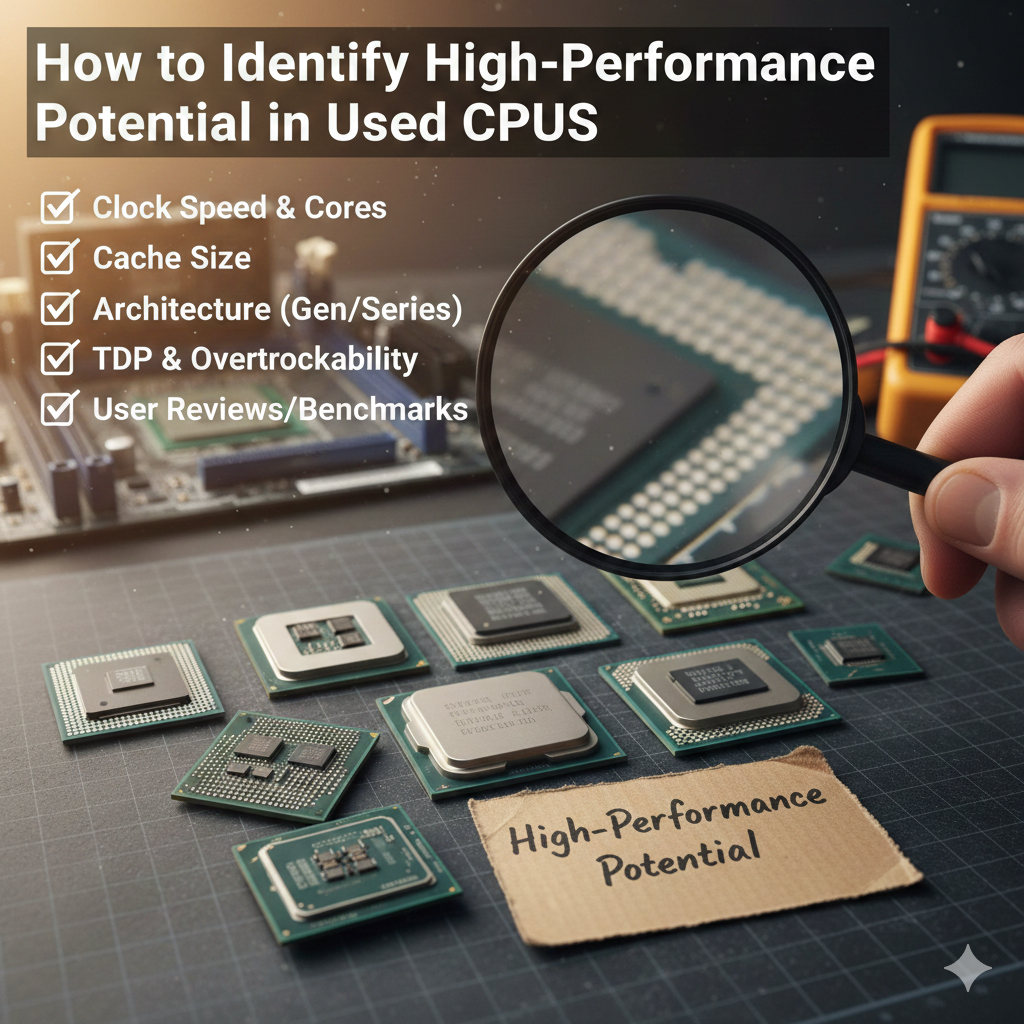
2. How to Identify High-Performance Potential in Used CPUs
Identifying a CPU that offers longevity requires looking beyond base clock speeds and understanding the architecture’s specific gaming capabilities. Not all processors age gracefully, and some older models may bottleneck modern graphics cards due to lack of instruction set support or insufficient PCIe lanes. The “how” involves a technical assessment of the chip’s compatibility with current platforms and its ability to handle multi-threaded workloads found in modern AAA titles. For wholesale buyers, ensuring the best used processor for gaming means vetting batches for consistent performance across various titles.
A critical factor in this assessment is the thermal history of the processor. Chips that have been subjected to extreme overclocking or voltage tweaking for extended periods may suffer from degraded silicon, leading to instability. Wholesale suppliers must implement rigorous testing protocols to verify that each unit can handle sustained loads without thermal throttling. This involves stress testing under conditions that simulate the demanding environments of modern gaming. By filtering out thermally compromised units, businesses ensure the reliability of their custom builds and reduce return rates.
The physical condition of the CPU is also a telltale sign of its potential performance. Signs of excessive thermal paste residue, bent pins on the underside, or scratches on the heat spreader can indicate rough handling or poor maintenance. For B2B transactions, where reputation is paramount, supplying cosmetically clean and technically sound components is non-negotiable. The inspection process should be standardized, with every processor undergoing a visual check before being approved for integration into wholesale custom solutions.
Furthermore, identifying potential requires looking at the roadmap for software optimization. Game developers are constantly optimizing engines for newer instruction sets, which can render some older CPUs obsolete faster than others. Selecting a processor that has a forward-compatible architecture ensures that the custom builds sold today will remain capable for years to come. This foresight is crucial for maintaining customer satisfaction and minimizing the obsolescence of the inventory stocked in 2025 and beyond.
2.1. How to Verify Architecture and Gaming Benchmarks
Verifying the architectural capability of a processor is the first step in ensuring it meets modern gaming standards. The architecture determines the efficiency of the chip and its ability to process instructions from current game engines. For example, architectures that support hardware virtualization and advanced vector extensions offer better performance in simulation and strategy games. Wholesale buyers should prioritize chips from architectures that are known for high IPC (Instructions Per Clock) rates, as this metric correlates strongly with gaming performance regardless of the core count.
Benchmarks provide the quantitative data necessary to compare different used processors objectively. However, relying on a single benchmark source can be misleading due to optimization biases. A comprehensive verification process involves cross-referencing results from multiple synthetic benchmarks like Cinebench and real-world gaming tests like Cyberpunk 2077 or Counter-Strike 2. This multi-faceted approach ensures that the best second hand processor selected for inventory delivers consistent performance across a variety of workloads and engine types.
In the context of wholesale and customization, creating an internal database of benchmark results for specific SKUs is highly beneficial. This database allows for precise matching of processors to customer requirements, whether they need high frame rates for competitive shooters or stability for open-world exploration. By having this data at hand, sales teams can confidently recommend specific processors for custom builds, backed by empirical evidence rather than marketing claims. This level of detail builds trust with B2B clients who rely on the supplier’s technical expertise.
As we look towards 2026, gaming benchmarks are increasingly incorporating AI performance metrics. Processors with strong neural processing capabilities or compatibility with AI upscaling technologies like DLSS and FSR will see their value hold longer. Verifying if a used processor supports these features can significantly enhance its appeal in the market. Ensuring that the inventory is vetted for these future-facing technologies guarantees that the custom solutions provided today remain relevant as the gaming landscape evolves.
2.2. Why Thermal History is a Critical Quality Indicator
Thermal history is arguably the most accurate predictor of a used processor’s remaining lifespan. Processors that have consistently operated at high temperatures, often due to poor cooling or overclocking, may experience electromigration, a phenomenon that degrades the internal pathways of the chip. This degradation can lead to system crashes, data corruption, and eventual failure. For businesses building custom PCs, using components with a questionable thermal history is a risk that can lead to costly warranty claims and damage to the brand’s reputation.
To assess thermal history, buyers should look for physical signs such as discoloration on the circuit board or the heat spreader, which indicates prolonged exposure to heat. Additionally, asking the seller for the usage context—whether the chip was used in a server farm or a casual gaming rig—can provide valuable insights. Processors pulled from well-maintained enterprise environments are generally safer bets than those from unknown individual sources. This scrutiny is vital when selecting the best used processor for gaming to ensure it can withstand the thermal loads of marathon gaming sessions.
Advanced verification can also involve monitoring the CPU’s behavior under load using software tools that report voltage and temperature spikes. Chips that require unusually high voltage to maintain stable boost clocks are likely nearing the end of their usable life. Wholesale suppliers should establish a threshold for acceptable voltage requirements and reject units that exceed these limits. This quality control step is essential for maintaining a standard of excellence in the components offered for wholesale and custom integration.
Market trends in 2025 show a growing demand for “graded” used processors, where units are categorized based on their cosmetic and thermal condition. Implementing such a grading system allows wholesalers to price their inventory more accurately and manage customer expectations regarding longevity. A processor graded as “Excellent” with a clean thermal history can command a premium, justifying the higher price point with the promise of durability and reliability, which is a key concern for B2B buyers.
2.3. Which Compatibility Checks Are Essential for Custom Builds
Compatibility is the cornerstone of successful custom PC building, especially when dealing with used components. A powerful processor is useless if it cannot be paired with a motherboard that supports its socket type, memory speed, and power delivery requirements. The “which” in this context refers to the specific checks that must be performed to ensure a seamless integration. For wholesalers offering customization services, maintaining a diverse inventory of compatible motherboards and BIOS updates is just as important as stocking the CPUs themselves.
One essential check is the motherboard’s VRM (Voltage Regulator Module) quality. High-performance used processors, particularly older flagship models, can draw significant power. A motherboard with an insufficient VRM may fail to deliver stable power, resulting in throttling or system shutdowns during intense gaming sessions. When sourcing the best used processor for gaming, it is crucial to pair it with a motherboard that has a robust power phase design. This ensures that the custom build delivers the expected performance without instability caused by the supporting hardware.
Another critical check involves the BIOS version. Older motherboards often require a BIOS update to recognize newer processors that were released after the motherboard’s manufacturing date. In a wholesale context, ensuring that motherboards are flashed to the latest stable BIOS before assembly saves significant time and reduces technical support overhead. This proactive approach streamlines the customization process, allowing for faster turnaround times on custom orders. It highlights the importance of technical preparedness when dealing with the interoperability of used hardware.
Finally, future expandability must be considered. Clients investing in custom builds often appreciate the ability to upgrade components later. Ensuring that the chosen processor and platform support technologies like NVMe SSDs, high-speed DDR4/DDR5 RAM, and multiple PCIe lanes adds long-term value to the build. By performing these comprehensive compatibility checks, wholesalers can assure their clients that the custom systems are not just functional today, but are also viable platforms for future upgrades, securing customer loyalty in a competitive market.
3. Which Used Processors Offer the Best Value for Gaming in 2025
Navigating the landscape of available processors requires specific knowledge of which SKUs provide the highest return on investment. The “which” focuses on identifying the specific models that bridge the gap between cost and performance. In 2025, the market is saturated with options ranging from consumer-grade Intel Core and AMD Ryzen chips to enterprise-grade Xeons. Understanding the specific strengths of each lineage allows businesses to curate a product catalog that appeals to a broad spectrum of gaming needs, from entry-level rigs to high-end workstations.

The best used processor for gaming is not always the absolute fastest one on the market, but rather the one that offers the best frame rates per dollar. Currently, the AMD Ryzen 5000 series and Intel’s 12th and 13th Gen processors are leading the value segment due to their high IPC and multi-core efficiency. These chips have fallen in price significantly since their release, making them accessible for wholesale procurement. Their popularity also means there is a wealth of documentation and community support available, aiding in troubleshooting and optimization for custom builds.
For those seeking even greater value, the secondary market for server and workstation processors presents a unique opportunity. These chips often feature massive cache sizes and high core counts, which can significantly smooth out gaming performance in titles that are CPU-bound. While they may lack the raw clock speed of some consumer chips, their stability and throughput make them excellent candidates for specialized custom builds, such as streaming rigs or multi-purpose game servers. Identifying these hidden gems is a hallmark of a savvy hardware supplier.
Looking towards 2026, the value proposition will shift as newer architectures become mainstream. However, the current mid-range champions of today will likely become the budget kings of tomorrow. By establishing supply chains for these specific processors now, businesses can lock in favorable pricing. This forward-thinking approach ensures that the inventory remains attractive to price-sensitive buyers who prioritize effective gameplay over cutting-edge technology.
3.1. Which Intel Core Models Hold the Top Spots
Intel’s extensive history in the CPU market has left a rich trail of capable processors that are now available on the used market. The top spots for value in 2025 are firmly held by the 12th, 13th, and 14th Generation “Core” series, specifically the i5 and i7 variants. These processors introduced hybrid architectures with Performance-cores and Efficient-cores, offering a significant leap in gaming performance. For wholesale buyers, the i5-12600K and i5-13600K are particularly attractive due to their reputation as the “sweet spot” for gaming, balancing six or more powerful P-cores with efficiency.
Older generations, such as the 9th and 10th Gen i7s (like the i7-9700K and i7-10700K), also retain strong value for entry-level to mid-range builds. While they lack the architectural advancements of the newer hybrid chips, their high clock speeds make them more than capable of pushing high frame rates in esports titles. These models are often the centerpiece of budget-friendly custom builds aimed at competitive gamers. Their abundance in the market makes them a staple for wholesalers looking to move high volumes of cost-effective inventory.
The Core i9 models from previous generations, while powerful, often present a lower value proposition due to their higher initial price and diminishing returns in gaming compared to i7s. However, for clients requiring systems that double as content creation workstations, the best second hand processor might indeed be a decommissioned i9-10900K or similar. These chips allow for a “one-stop-shop” custom PC that handles heavy rendering and gaming with ease, justifying their higher cost through versatility.
Market intelligence suggests that as Intel moves towards new socket types, the supply of LGA 1700 processors will increase, driving prices down further. Wholesalers should prepare to capitalize on this by acquiring these SKUs in bulk. By focusing on the i5 and i7 tiers, businesses can offer a range of systems that cater perfectly to the gaming market’s needs, ensuring every dollar spent by the customer translates directly into tangible gaming performance.
3.2. Why Ryzen and AMD Options Are Dominating the Budget Sector
AMD’s Ryzen processors have fundamentally altered the value proposition in the CPU market, and their presence in the used sector is undeniable. This means that a motherboard purchased years ago can often run a brand-new processor with a simple BIOS update. Consequently, the used market is flooded with high-performance Ryzen chips that are easy to integrate into existing or refurbished systems, making them a favorite for custom builders.
The Ryzen 5000 series, particularly the Ryzen 5 5600 and Ryzen 7 5700X, are currently the undisputed champions of the budget gaming sector. These chips offer gaming performance that rivals newer, more expensive entries due to their high IPC and cache design. For a wholesale operation, sourcing these processors provides a competitive edge, as they are the go-to recommendation for price-conscious gamers. Their efficiency also allows for simpler cooling solutions in custom builds, reducing the overall bill of materials for the system.
Furthermore, the “Zen 2” and “Zen 3” architectures have aged exceptionally well. Unlike some competitors that saw significant performance regressions in older generations, Ryzen chips maintain their potency. The best used processor for gaming in the absolute entry-level tier is often a Ryzen 5 3600, a CPU that refuses to die and continues to power millions of gaming rigs worldwide. This longevity creates a reliable standard for wholesalers who need consistent performance out of their refurbished inventory.
As 2026 approaches, the release of newer Ryzen generations will push the 5000 and 7000 series prices down further. This downward trend creates a perfect storm for value buyers. By aggressively stocking these AMD options, wholesalers can position themselves as the premier destination for high-value, AMD-powered custom gaming rigs. The ecosystem’s maturity ensures that motherboards, RAM, and coolers are readily available and affordable, simplifying the supply chain for complete system builds.
3.3. How to Leverage the Best Used Xeon Processor for Custom Workstations
While consumer chips get the spotlight, the best used Xeon processor offers a unique value proposition for specific market segments. Xeons are designed for server and workstation environments, emphasizing reliability, error correction code (ECC) memory support, and multi-core processing power. For businesses building custom workstations for game development, 3D rendering, or streaming, Xeons provide a level of stability and throughput that consumer chips often lack. Leveraging these processors allows wholesalers to tap into the professional and prosumer markets.
The strategy for leveraging Xeons involves sourcing them from decommissioned server racks. Platforms such as LGA 2011-v3 and LGA 2066 host a variety of Xeons that, while lacking the high clock speeds of gaming CPUs, offer massive core counts (12, 16, 20+ cores). When paired with a capable discrete graphics card, these processors handle the background tasks of streaming or compiling code effortlessly, freeing up the GPU to focus on rendering game graphics. This division of labor creates a smooth, lag-free experience that is highly valued by content creators.
In 2025, the cost of a high-core-count Xeon setup is often comparable to that of a mid-range consumer CPU setup. However, the productivity potential is vastly higher. Wholesalers can market these custom Xeon rigs as “Power Stations” for users who need a machine that works as hard as it plays. The narrative shifts from pure gaming FPS to multitasking capability and system responsiveness, appealing to a demographic that views their PC as a tool for business and entertainment.
Looking to 2026, as virtual production and real-time rendering become more prevalent in game development, the demand for multi-core workstations will rise. By establishing expertise in Xeon-based custom builds now, businesses can capture a niche market that requires more than just standard gaming performance. The key is to pair these processors with sufficient cooling and fast storage, ensuring the system is balanced and ready for heavy workloads, thereby maximizing the utility of the investment in used Xeon technology.
4. How to Avoid Common Scams and Defects in the Wholesale Market
The secondary market for electronics, while lucrative, is rife with risks ranging from counterfeit components to misrepresented hardware defects. Navigating this landscape requires a defensive strategy centered on verification and trusted relationships. The “how” of avoiding scams involves establishing a rigorous due diligence process that every component must pass before it is approved for inventory integration. For a wholesale business, a single bad batch can ruin profit margins and damage client relationships, making this process a critical operational necessity.
One of the most prevalent scams is the sale of “engineering samples” or pre-production processors as retail units. These chips often have unlocked multipliers that make them look attractive on paper, but they frequently suffer from stability issues, lack proper microcode updates, and may not support all features of the retail version. Avoiding these requires checking the CPU’s s-spec codes and visual inspection of the labeling to ensure it matches retail specifications. Maintaining a catalog of known legitimate s-spec codes is a vital resource for quality control teams.
Another common issue is the misrepresentation of a processor’s condition, such as selling a chip that has been delidded or physically damaged. Delidding, the process of removing the integrated heat spreader, is sometimes done to improve cooling but often voids warranties and risks damaging the die. For businesses aiming to provide professional custom builds, using delidded components introduces an unacceptable level of risk. Strict visual inspection protocols must be in place to identify any signs of tampering or physical alteration to the best used processor for gaming candidates.
Finally, the threat of “fake” CPUs—pieces of plastic or ceramic painted to look like a processor—exists, particularly in unregulated marketplaces. While less common with high-end gaming chips due to their complexity, lower-end models are sometimes counterfeited. The only defense against this is sourcing from reputable suppliers who can provide provenance documentation. Building a network of reliable suppliers who understand the stringent requirements of the B2B gaming market is the most effective long-term strategy for avoiding these scams.
4.1. How to Detect Counterfeit and Modified Processors
Detecting counterfeit processors requires a keen eye for detail and a deep understanding of the component’s physical characteristics. Counterfeiters often go to great lengths to replicate the look of a high-end CPU, including laser etching and topcoat finishing. However, subtle discrepancies often exist, such as misspelled words on the IHS (Integrated Heat Spreader), incorrect font sizes, or slightly off-color metal. Quality control personnel must be trained to spot these microscopic imperfections that indicate a counterfeit unit.
Modified processors, such as those that have been remarketed or relabeled, pose a more insidious threat. Unscrupulous sellers may attempt to pass off a lower-tier model as a higher-tier one by sanding down the original laser markings and laser-etching new ones. Detecting this fraud involves using specialized lighting to check for sanding marks or inconsistencies in the texture of the IHS surface. The best used processor for gaming investments must be protected against such deception, as a relabeled i3 running as an i5 will fail to meet performance expectations.
Advanced detection methods include using software tools like CPU-Z to read the internal CPUID. This identifier is hardcoded into the silicon and cannot be altered by physical modifications. If the external markings do not match the internal CPUID, the processor has been tampered with. For wholesalers sourcing the best used processor for gaming, integrating this software verification step into the intake workflow is essential for ensuring inventory authenticity. This automated check serves as a final gatekeeper against fraudulent components entering the supply chain, especially when verifying the best used processor for gaming units that are in high demand.
Statistics from 2025 indicate a rise in sophisticated counterfeiting operations targeting the mid-range CPU market due to increased demand for the best used processor for gaming. As a countermeasure, industry leaders are advocating for blockchain-based tracking of component history to improve transparency. Until such standards are widely adopted, physical inspection and software-based CPUID verification remain the primary defenses. By investing in proper training, diagnostic tools, and authentication workflows, businesses can confidently supply the best used processor for gaming, safeguard their reputation, and ensure customers receive genuine, high-performance hardware.
4.2. Why Establishing Trusted Supplier Relationships is Crucial
In the volatile world of used electronics, the supplier relationship is the strongest defense against scams and quality issues—especially when sourcing the best used processor for gaming. A trusted supplier acts as a strategic partner, thoroughly vetting the hardware before it even reaches the wholesaler’s facility. This is particularly important when dealing with high-demand products like the best used processor for gaming, where counterfeit or downgraded units are common in secondary markets.
The reason this relationship is so crucial lies in the cost of recall; returning a batch of 500 defective CPUs to an overseas supplier is a logistical nightmare that can financially cripple a small business. When businesses specialize in supplying the best used processor for gaming, maintaining strict quality assurance standards becomes even more critical. Establishing direct lines of communication, implementing pre-shipment testing protocols, and defining clear quality agreements with suppliers significantly mitigates these risks and protects long-term profitability.
Building these relationships requires time and due diligence. It involves visiting supplier facilities, reviewing their testing protocols, and starting with small trial orders before committing to bulk purchases. Suppliers who specialize in corporate off-lease equipment are often the most reliable sources for the best second hand processor inventory. They understand the provenance of their hardware and can often provide usage logs or asset tags that verify the equipment’s history. This transparency is invaluable for risk assessment.
Moreover, trusted suppliers are more likely to offer warranties or return policies that act as a safety net. In the B2B sector, the ability to return a batch of processors that fails internal stress testing is a critical component of the purchasing agreement. This commercial leverage is only available when there is a strong, ongoing business relationship. It transforms the transaction from a simple purchase into a collaborative effort to maintain quality standards across the supply chain.
The market forecast for 2026 suggests that supply chain consolidation will continue, meaning fewer but larger suppliers will dominate the used hardware market. Aligning with these major players now ensures priority access to the best inventory. As demand for used gaming components grows, suppliers will prioritize partners who pay on time and maintain clear communication. Cultivating these relationships is not just about avoiding scams; it is about securing a steady flow of high-quality stock in a competitive market.
4.3. Which Quality Assurance Protocols Prevent Fraudulent Purchases
Implementing robust Quality Assurance (QA) protocols is the only way to guarantee that inventory meets the high standards required for custom gaming builds. These protocols should be a multi-layered defense, starting from the moment the shipment arrives and ending only when the component is installed in a system. The “which” refers to the specific tests and checks that constitute this protocol. A comprehensive QA process covers visual inspection, electrical testing, thermal stress testing, and compatibility verification.
The first line of defense is a standardized visual inspection checklist. This checklist includes verifying the physical condition of the pins, the integrity of the substrate, and the authenticity of the markings on the IHS. Any unit showing signs of bent pins, corrosion, or thermal damage is immediately flagged for return or recycling. This physical filter prevents obviously damaged units from ever being powered on, protecting the testing equipment from potential shorts. It is the most basic yet effective step in securing the best used processor for gaming stock.
Following the visual check, functional testing using software suites like Prime95, AIDA64, and MemTest86 is mandatory. These tools push the processor to its limits, checking for stability errors, memory controller issues, and thermal anomalies. For wholesale operations, automating this process using test benches that can run multiple units simultaneously increases throughput and efficiency. A processor that passes a 24-hour stress test at 100% load is statistically proven to be reliable for gaming use.
Documentation is the final, critical layer of the QA protocol. Every processor should have a “birth certificate” tracking its test results, the date of testing, and the technician who performed the check. This traceability is vital for B2B clients who may require proof of quality for their own compliance or warranty purposes. By maintaining rigorous records and testing standards, wholesalers can confidently offer warranties on their custom builds, transforming the perceived risk of buying used hardware into a selling point backed by data and diligence.
5. How to Maximize Profits through Wholesale and Customization
The business of selling used processors extends beyond simple arbitrage; it is about creating value through service and configuration. To attract customers looking for the best used processor for gaming, a seller must move past basic listings and offer value-added services like multi-point testing, performance benchmarking, and system optimization.
When you position yourself as someone who can reliably deliver the best used processor for gaming with verified performance, bundled warranties, and installation support, you avoid the relentless price wars that plague auction sites and classified ads. Ultimately, the way to maximize profits is by transforming a commodity component into a tailored solution that gives buyers confidence they are getting the best used processor for gaming, along with a complete, tested, and optimized system that meets their specific needs.

One effective strategy is bundling. Rather than selling a standalone CPU, wholesalers can create “gaming kits” that pair the processor with a compatible motherboard, RAM, and a cooling solution. These bundles simplify the purchasing process for system integrators and retail buyers, who often struggle with the compatibility of used parts. By pre-validating the compatibility of the bundle, businesses can charge a premium for the convenience and assurance of a plug-and-play package. This approach increases the average order value and moves inventory faster.
Customization services also play a pivotal role in profit maximization. Offering services such as professional delidding (for advanced users), custom BIOS flashes, or overclock tuning adds significant value. A best used processor for gaming that has been professionally tuned to run at optimal speeds is worth more than a stock unit. These technical services leverage the expertise of the business, creating a moat against competitors who merely box and ship parts. It positions the company as a technology provider rather than just a reseller.
Furthermore, targeting B2B clients like internet cafes, educational institutions, and small businesses creates a steady stream of high-volume orders. These clients require uniformity and reliability, which used processors can provide at a fraction of the cost of new ones. By establishing contracts for fleet upgrades using refurbished hardware, businesses secure long-term revenue. The key to success in this arena is consistency; ensuring that every unit in a bulk order performs identically to the others is paramount for client satisfaction.
5.1. Why Bundling Components Increases Margins and Sales Volume
Bundling is a powerful psychological and logistical tool in the hardware resale market. For a buyer looking for the best second hand processor, the fear of buying a CPU that doesn’t fit their motherboard is a major barrier to entry. By offering a tested bundle, the wholesaler removes this fear, making the purchase decision easier and faster. This friction reduction directly correlates to higher conversion rates.
From a logistical standpoint, bundling allows for the efficient clearance of older or slower-moving inventory. For example, if a wholesaler has an excess of a specific motherboard model, pairing it with a popular CPU creates a desirable product that clears both stock items. This strategy is essential for managing inventory turnover, ensuring that capital is not tied up in dormant assets. It turns potential write-offs into profitable revenue streams by creating a cohesive package that addresses a specific market need, such as a budget 1080p gaming build.
Moreover, bundles protect the margin by obscuring the individual price of components. While the market price for a specific CPU might be commoditized and visible on various forums, the price of a unique, pre-configured bundle is harder to compare. This opacity allows the seller to maintain healthier margins. The value is perceived in the combination and the testing service provided, rather than the sum of the individual parts. This is particularly effective in the wholesale market, where time savings are often valued more than marginal cost differences.
As we move into 2026, the complexity of PC building is likely to increase with new standards and form factors. This complexity will make bundles even more attractive to novice and intermediate builders. Wholesalers who invest in creating standardized, well-branded bundles—such as the “Esports Starter Pack” or the “Streamer Special”—will capture significant market share. These products simplify the sales conversation and allow for scalable marketing efforts that focus on the end-user experience (gaming) rather than the technical specs.
5.2. How to Implement Tiered Customization for Different Client Needs
Implementing tiered customization involves categorizing products and services into distinct levels that cater to different performance requirements and budgets. The “how” starts with segmenting the inventory into Good, Better, and Best tiers. The “Good” tier might feature the best used xeon processor or older i5 models, aimed at budget buyers and basic office upgrades. The “Better” tier includes mainstream gaming chips like the Ryzen 5 5600X, targeting entry-level gamers. The “Best” tier offers high-end previous-gen flagships for enthusiasts and professionals.
This tiered approach simplifies the sales process and allows for precise inventory management. It also enables the business to upsell customers by clearly demonstrating the performance leap between tiers. For instance, a client initially looking for a basic office PC might be persuaded to upgrade to the gaming tier if the price difference and performance benefits are presented effectively. By customizing the pre-installed software, drivers, and BIOS settings for each tier, the business ensures that every system is optimized right out of the box, enhancing the perceived value.
Customization also extends to the physical build. For B2B clients, offering branded chassis or specific internal layouts (e.g., for better airflow) can be a decisive factor. A cyber-cafe owner might prioritize compact size and low noise, while a design firm might prioritize expandability and raw multi-core performance. By offering tiered customization options that address these specific needs, the wholesaler moves from being a commodity supplier to a strategic partner. This deepens the business relationship and increases customer retention.
Data from 2025 indicates that personalized hardware configurations are commanding a 15-20% price premium over stock configurations. This trend highlights the willingness of customers to pay for solutions that are tailored to their specific use cases. By developing a flexible customization framework that can scale from single-unit orders to bulk fleet deployments, businesses can maximize their addressable market. The key is to have a modular workflow that allows for rapid reconfiguration of assembly lines based on the chosen tier.
5.3. Which B2B Strategies Secure Long-Term Revenue Growth
Securing long-term revenue growth in the used hardware market requires moving beyond one-off transactions and fostering ongoing partnerships with B2B clients. The “which” strategies are most effective involve creating recurring revenue streams and embedding the business into the client’s operations. One such strategy is offering Hardware-as-a-Service (HaaS) models. Instead of selling a batch of PCs to a school, the business leases them, including maintenance and eventual refresh cycles with newer used hardware. This ensures a predictable monthly income and client loyalty.
Another vital strategy is providing comprehensive warranty and support packages specifically for used equipment. B2B clients are often risk-averse and may be hesitant to use refurbished gear due to fears of failure. By offering a “platinum” support package that includes advance replacement and on-site technician support, the wholesaler mitigates this risk. This confidence allows the client to adopt the best used processor for gaming and workstations in their critical infrastructure, knowing they are protected against downtime. The service contract itself becomes a profitable revenue center.
Strategic alliances with software vendors and integrators can also drive growth. For example, partnering with a company that provides gaming cafe management software allows the wholesaler to offer a complete “turnkey” solution. The hardware comes pre-loaded with the necessary software, optimized for the specific silicon installed. This holistic approach makes it very difficult for competitors to dislodge the wholesaler, as the client would have to replace both hardware and software to switch providers.
Looking toward 2026, the market will favor suppliers who can act as consultants, advising clients on how to optimize their IT spending through smart hardware lifecycle management. By positioning the business as an expert in sustainable and cost-effective computing, the wholesaler becomes an indispensable advisor. Regularly reviewing the client’s hardware performance and suggesting upgrades when the best second hand processor prices are favorable creates a proactive sales cycle that drives long-term growth and stability.
Conclusion
Navigating the market for used processors in 2025 and beyond offers immense potential for profitability and growth, provided it is approached with diligence and strategy. From understanding the economic drivers behind the secondary market to implementing rigorous quality assurance protocols, success relies on attention to detail. The best used processor for gaming is not merely a component; it is the foundation of a high-value custom solution that meets the exacting needs of modern gamers and businesses alike.
By focusing on the strengths of specific lineups like the best used Xeon processor and consumer favorites from Intel and AMD, wholesalers can curate an inventory that appeals to a wide audience. The integration of these processors into bundled and customized systems transforms them from commodities into essential tools for entertainment and productivity. This value-added approach is the key to differentiating a brand in a crowded marketplace and securing higher margins.
The landscape of 2026 promises further evolution in how hardware is sourced, valued, and deployed. Businesses that establish trusted supply chains, master the art of detection against fraud, and embrace a service-oriented model will thrive. The shift towards sustainability and economic efficiency ensures that the market for second-hand silicon will remain robust, offering opportunities for those prepared to seize them.
To maximize your success in this dynamic sector, it is essential to partner with suppliers who prioritize quality and transparency. Whether you are building fleet workstations or high-performance gaming rigs, the right processor choice can make all the difference. Take the next step towards optimizing your inventory and custom solutions by exploring our wholesale programs today, and secure the components that will power your customers’ success tomorrow.
Frequently Asked Questions
1. Why are used processors considered a viable option for high-performance gaming builds in 2025? Used processors are considered a top-tier option because the gaming performance of previous-generation flagships remains exceptionally high for modern titles like Call of Duty or Cyberpunk 2077. With the release of newer architectures, the price of older high-end chips has dropped significantly, creating a high value-per-dollar ratio. For businesses and individuals, this means accessing frame rates and responsiveness typically found in expensive new builds, but at a fraction of the cost. Market trends in 2025 show that the raw power of these older chips is more than sufficient to handle demanding gaming workloads without bottlenecking modern graphics cards.
2. How does purchasing a used processor benefit wholesale and custom PC businesses? For wholesale buyers, purchasing used processors significantly lowers the Bill of Materials (BOM), allowing for higher profit margins or more competitive pricing on custom rigs. It enables businesses to offer a wider range of system configurations, from budget-friendly entry-level machines to powerful workstations, without relying solely on volatile new component supplies. Additionally, the availability of bulk used stock allows for fleet standardization, which is crucial for cyber-cafes and institutions that require uniform hardware performance across hundreds of units.
3. Which specific features should I look for to identify the best used processor for gaming? When identifying the best used processor for gaming, you should prioritize high single-core clock speeds and modern instruction sets (like AVX2) over just core count, as most games still rely heavily on single-threaded performance. You should also look for chips with unlocked multipliers (e.g., Intel “K” series or AMD “X” series) which offer greater flexibility for optimization. Furthermore, ensuring the processor has a sufficient cache size (L3 cache) is vital, as this greatly impacts gaming smoothness and minimum frame rates in open-world titles.
4. Why is the “best used Xeon processor” a smart choice for custom workstations? The best used Xeon processor is a smart choice because enterprise-grade silicon is built for 24/7 reliability and features higher core counts and larger memory caches than consumer counterparts. For custom workstations used in game development, streaming, or 3D rendering, Xeons offer the multi-threading power necessary to handle heavy background tasks while gaming. Their ability to support Error Correction Code (ECC) memory also ensures data integrity, making them ideal for business environments where system stability is paramount.
5. How can I avoid buying counterfeit or defective processors in the wholesale market? To avoid scams, always purchase from reputable suppliers who provide verification of the CPU’s internal ID using software like CPU-Z, which should match the external laser markings. Physically inspect the heat spreader for signs of sanding, relabeling, or poor laser etching quality, which are common indicators of counterfeits. Additionally, implement a strict quality assurance protocol that includes stress testing every single unit upon arrival to detect instability or thermal throttling before integrating it into a custom build or reselling it.
6. What are the risks associated with buying the best second hand processor, and how can they be mitigated? The primary risks include purchasing hardware with degraded silicon due to overclocking, hidden physical damage, or incompatible architectures. These can be mitigated by verifying the thermal history of the chip (checking for discoloration or excessive voltage requirements) and ensuring the motherboard’s BIOS is compatible. Buying graded stock that has been professionally tested and verified by the supplier also significantly reduces these risks, ensuring the components are reliable for long-term use.
7. Which Intel and AMD models currently offer the best value for custom gaming builds? Currently, the Intel Core i5-12600K and i7-13700K offer incredible value due to their hybrid architecture combining Performance and Efficient cores. On the AMD side, the Ryzen 5 5600 and Ryzen 7 5700X are dominant in the value sector, providing excellent gaming performance that rivals newer, more expensive chips. These models are widely available in the used market, making them perfect candidates for standardized wholesale builds that aim to balance cost with high-fidelity gaming experiences.
8. How does the 2026 market outlook affect the pricing of used processors today? The 2026 market outlook suggests a stabilization in the supply of used silicon as corporate refresh cycles accelerate. This means that prices for current mid-range used processors are likely to hold steady or decrease slightly, making now a safe time to buy in bulk. Understanding this forecast allows businesses to plan their inventory procurement strategically, locking in current prices before the anticipated demand for budget gaming rigs spikes in the coming year.
9. Why is pairing the best used processor for gaming with the right motherboard critical? Pairing the CPU with the correct motherboard is critical because the motherboard’s VRM (Voltage Regulator Module) must be robust enough to deliver stable power to the processor, especially under load. A mismatched motherboard can cause throttling, system crashes, or prevent the CPU from boosting to its maximum gaming speeds. Furthermore, motherboard compatibility determines the ability to use fast memory and NVMe storage, which are essential for maximizing the overall performance of a custom gaming system.
10. How can businesses leverage component bundling to increase sales of used processors? Businesses can leverage bundling by pairing the best second hand processor with compatible motherboards, RAM, and cooling solutions to create “plug-and-play” kits. This simplifies the buying process for customers who may be overwhelmed by compatibility research, effectively reducing sales friction. Bundles also allow sellers to move older inventory more effectively and increase the average order value, as customers perceive higher value in a complete, tested package compared to purchasing individual components separately.