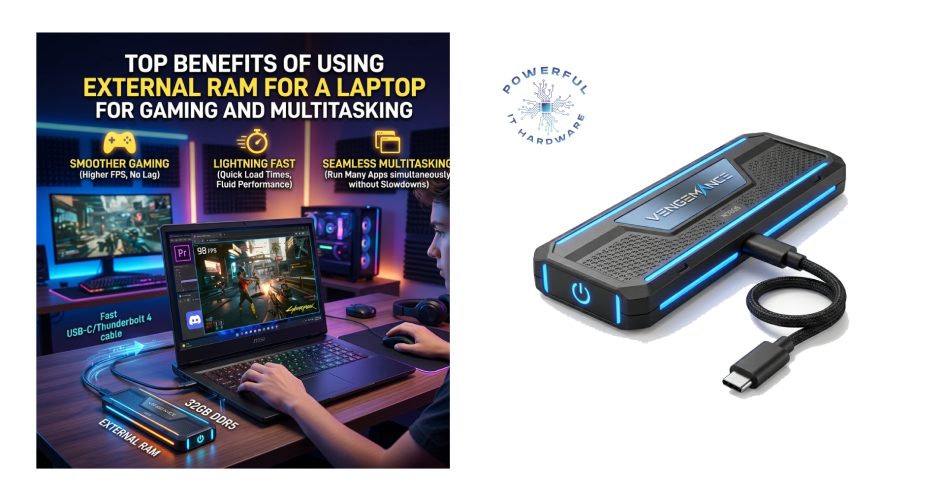
1. What Is External RAM for a Laptop and How Does It Work?
1.1. How Volatile Memory Facilitates High-Speed Processing
Dynamic RAM in computer systems serves as the short-term workspace for the CPU, allowing for the rapid retrieval and storage of data currently in use. Unlike long-term storage drives, which rely on mechanical movement or slower flash memory, dynamic RAM provides the bandwidth necessary for seamless execution of complex instructions. For gaming and multitasking, this speed is non-negotiable, as it dictates how quickly a system can access game assets or switch between active applications. The latency of this memory type directly impacts the user experience, making high-quality DRAM a cornerstone of modern computing performance. As software demands increase, the efficiency of volatile memory becomes the differentiating factor between a sluggish system and a responsive powerhouse.
1.2. Why Data Bandwidth Determines Gaming Success
In the realm of high-performance gaming, the bandwidth provided by dynamic RAM in computer architectures is the primary constraint on frame rates and texture loading. Modern games require massive amounts of data to be transferred to the GPU every second, and insufficient memory bandwidth creates bottlenecks that lead to stuttering and visual artifacts. Wholesale suppliers focusing on high-frequency memory modules enable system integrators to build machines that can handle the data throughput demands of AAA titles. This emphasis on bandwidth is not merely about capacity but about the speed at which data flows through the system. Consequently, businesses that prioritize high-bandwidth memory solutions in their inventory are better positioned to meet the rigorous standards of the gaming industry in 2025.
1.3. Which RAM Technologies Are Dominating the 2026 Market
The memory market is currently undergoing a significant transformation with the adoption of DDR5 and the impending release of even faster iterations expected to dominate by 2026. These advanced forms of dynamic RAM in computer systems offer doubled data rates compared to previous generations, providing the headroom needed for next-gen multitasking and 8K gaming. Market analysis suggests that the demand for these newer modules will surge as software becomes increasingly memory-hungry. For wholesalers and custom solution providers, staying ahead of this curve is essential for maintaining relevance. By stocking the latest memory technologies, suppliers ensure that their B2B clients can deliver cutting-edge performance to end-users.
1.4. How Customization Enhances B2B Procurement
Businesses procuring dynamic RAM in computer builds often require tailored solutions to fit specific chassis designs or performance targets. Customization allows for the selection of specific heat spreaders, CAS latencies, and voltage requirements that align with the intended use case, whether it be compact office laptops or high-end gaming rigs. This level of detail is crucial for OEMs and system builders who differentiate their products through performance metrics and reliability. A wholesale partner that offers extensive customization options empowers these businesses to optimize their supply chain and product offerings. The ability to source exactly the right specification of memory module solidifies the value proposition for B2B buyers looking for precision engineering.
2. How Does External RAM for a Laptop Function in Modern Systems?
2.1. Why Upgradability Extends Device Lifecycle
The concept of external RAM for a laptop largely revolves around the modularity of memory components, allowing users and service centers to upgrade capacity without replacing the entire machine. In many business environments, extending the lifecycle of existing hardware is a cost-effective strategy, and memory upgrades are the most efficient way to achieve this. By offering high-quality SO-DIMM modules, wholesalers provide a pathway for enterprises to boost the performance of their aging fleets. This adaptability is particularly relevant as operating systems and applications become more resource-intensive over time. Facilitating these upgrades ensures that laptops remain viable for professional tasks and gaming for years beyond their initial release.
2.2. How External Storage Solutions Mimic RAM Functionality
While traditional internal RAM is fixed, certain advanced external solutions using high-speed Thunderbolt or USB4 interfaces can act as virtual memory extensions. In scenarios where internal slots are limited, utilizing high-performance external SSDs as a swap file can alleviate memory pressure, effectively functioning as a form of external RAM for a laptop. This approach is gaining traction in the mobile workstation market, where portability must not compromise the ability to run massive datasets. Although not as fast as internal DRAM, the gap is closing with the advent of Gen 4 and Gen 5 external storage technologies. Suppliers of these high-speed drives can market them as essential complementary components for memory-constrained systems.
2.3. Which Wholesale Options Exist for Memory Expansion
For B2B buyers, the market for external RAM for a laptop encompasses not just the modules themselves, but the entire ecosystem of upgrade kits and tools. Wholesale distributors now offer comprehensive bundles that include memory modules, installation tools, and management software, catering to IT departments and repair shops. This holistic approach simplifies the procurement process for businesses that need to deploy upgrades at scale. By providing these all-in-one solutions, wholesalers can increase their average order value while providing greater convenience to their clients. The focus is on creating a seamless upgrade path that requires minimal technical expertise for the end-user.
2.4. How Customization Addresses Specific Gaming Needs
Gamers and creators often have very specific requirements regarding memory timings and capacity, driving the need for customizable external RAM for a laptop solutions. A B2B supplier that can provide branded, high-performance memory with optimized timings allows system builders to create niche products for the gaming market. This might include low-latency modules for competitive e-sports or high-capacity kits for content creation and rendering. Understanding these distinct segments allows wholesalers to tailor their inventory and marketing strategies effectively. Customization in this context is not just about the hardware, but about delivering a specific performance characteristic that appeals to a targeted audience.
3. Why Gamers Are Demanding More External RAM for a Laptop?
3.1. How High Frame Rates Depend on Memory Capacity
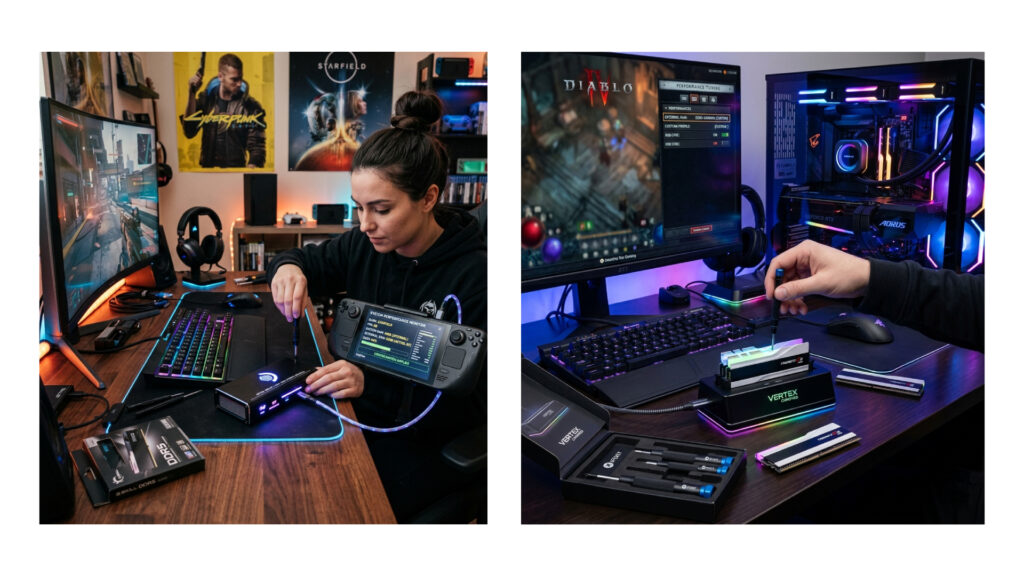
Modern gaming titles are rapidly expanding in size and complexity, requiring vast amounts of memory to maintain high frame rates and smooth gameplay. When a laptop runs out of physical memory, it resorts to paging data to the storage drive, which causes severe stuttering and input lag—issues that are unacceptable in competitive gaming. Increasing the capacity through external RAM for a laptop upgrades ensures that the game assets remain in the fast volatile memory, allowing for consistent performance. This direct correlation between memory capacity and frame stability is a primary driver behind the upgrade market. Gamers are willing to invest significantly in memory upgrades to gain a competitive edge, creating a robust niche for wholesalers.
3.2. Why Multitasking Performance Needs a Boost
The modern gamer rarely uses their device solely for gaming; activities such as streaming, voice chat, and background recording run simultaneously. This multitasking creates a heavy load on system resources, necessitating more than just the baseline memory configuration. By expanding memory, users can run these auxiliary applications without encroaching on the resources allocated to the game itself. The demand for external RAM for a laptop is therefore fueled by the need for a holistic entertainment hub rather than a single-purpose device. B2B suppliers can capitalize on this by marketing high-capacity modules as essential tools for the modern content creator and streamer.
3.3. Which 2025 Trends Are Driving Gaming Hardware Specs
The year 2025 has seen a surge in “Ray Tracing” and AI-driven upscaling technologies, both of which place additional strain on system memory. These technologies require larger buffers to store lighting data and neural network information, pushing the standard requirements for gaming laptops upward. As these trends become mainstream, the installed base of older laptops becomes obsolete unless they are upgraded. This creates a continuous cycle of demand for performance-enhancing components like external RAM for a laptop. Market data indicates that the gaming peripherals and components market is projected to grow by over 12% annually through 2026, driven largely by these technological advancements.
3.4. How Resellers Can Capitalize on the Gaming Boom
Resellers and wholesalers have a unique opportunity to bundle memory upgrades with gaming laptops or sell them as standalone performance boosters. By educating their B2B clients on the specific benefits of additional memory for gaming, they can foster trust and drive sales volume. The key is to frame the product not just as a component, but as a gateway to a premium gaming experience. Marketing materials should highlight the tangible improvements in load times and system responsiveness. This strategic positioning allows sellers to tap into the lucrative enthusiast market where performance per dollar is a critical metric.
4. Which Compatibility Factors Influence Laptop RAM Use in Desktop Scenarios?
4.1. How Form Factor Differences Affect Supply Chains
While typically distinct, the lines between laptop and desktop memory are blurring with the rise of small form factor (SFF) PCs and mini-PCs. These compact desktop systems often utilize the same SO-DIMM memory modules found in laptops, creating a unique crossover in the supply chain. Understanding the nuances of laptop RAM use in desktop scenarios allows wholesalers to optimize their inventory for maximum versatility. Instead of stocking separate inventories for strictly mobile or strictly stationary computing, a unified approach for SO-DIMMs can be adopted. This efficiency reduces overhead and ensures that components are available for the growing market of compact, powerful desktop builds.
4.2. Why Cross-Platform Compatibility Is a B2B Advantage
The ability to use a single SKU of memory for both laptops and small form factor desktops simplifies the logistics for system builders and OEMs. When a specific type of laptop RAM use in desktop builds is standardized, it reduces the complexity of procurement and quality control processes. This compatibility is particularly advantageous for B2B clients who manufacture a range of computing devices, allowing them to bulk purchase a single high-quality memory module. Suppliers that highlight this cross-compatibility can position themselves as strategic partners capable of simplifying the supply chain. It demonstrates a deep understanding of hardware trends and provides tangible cost savings to the buyer.
4.3. Which Adapters Enable Flexible Hardware Usage
Although physical compatibility is common in SFF systems, there are also technical scenarios where adapters allow for laptop RAM use in desktop motherboards that traditionally require full-sized DIMMs. While this is a niche market, it represents a vibrant segment of the enthusiast and tinkerer community. Wholesalers catering to this demographic can find a loyal customer base by providing these specialized interconnect solutions alongside the memory modules themselves. These products enable the repurposing of older, high-performance laptop memory for custom desktop projects, aligning with sustainability initiatives. It is a prime example of how flexibility in product offerings can open up new revenue streams in the component market.
4.4. How Inventory Management Simplifies with Standard Parts
For a distributor, managing stock levels is significantly easier when the products serve multiple functions and form factors. The trend of laptop RAM use in desktop configurations means that high-volume SO-DIMM orders are no longer seasonal or limited to the mobile sector. This steady demand allows for better forecasting and stronger negotiating power with memory manufacturers. B2B clients appreciate suppliers who can provide consistent availability of parts that fit a wide array of builds. By promoting the versatility of these memory modules, wholesalers can ensure a faster turnover of inventory and a more resilient business model amidst fluctuating market demands.
5. How Will the 2026 Market Evolve for Memory Solutions?
5.1. Why AI Integration Will Drive Memory Requirements
The integration of artificial intelligence into everyday applications is set to explode by 2026, with operating systems requiring dedicated memory pools for AI tasks. This shift will necessitate a re-evaluation of current memory standards, pushing capacities higher than ever before. The concept of external RAM for a laptop will likely evolve to include specialized AI accelerators that connect via high-speed ports, sharing the system memory load. B2B buyers must prepare for this shift by sourcing memory modules that are not only fast but also optimized for the data吞吐 patterns of AI algorithms. Staying ahead of this trend will be crucial for maintaining a competitive edge in the hardware supply industry.
5.2. How Sustainability Will Shape Manufacturing
Sustainability is becoming a core purchasing criterion for businesses, influencing the manufacturing processes of dynamic RAM in computer components. By 2026, expect a significant increase in demand for memory modules produced using recycled materials and energy-efficient methods. Wholesale suppliers that prioritize eco-friendly manufacturing partners will attract B2B clients looking to meet their own corporate social responsibility goals. This shift also extends to the longevity of the products; modules that are durable and upgradable reduce electronic waste. Highlighting the environmental credentials of memory products will become a key differentiator in a crowded marketplace.
5.3. Which Global Supply Chains Will Prevail
Geopolitical factors and trade agreements will continue to influence the availability and pricing of dynamic RAM in computer markets. Smart wholesalers are diversifying their supply chains to mitigate risks associated with reliance on a single manufacturing region. This diversification ensures a steady supply of critical components like external RAM for a laptop regardless of global disruptions. For B2B clients, a supplier with a robust, resilient logistics network is invaluable. The focus will be on agility and the ability to navigate complex trade landscapes while keeping costs stable. Supply chain resilience will be as important as the technical specifications of the memory itself.
5.4. How Strategic Partnerships Will Define Success
As the market becomes more complex, the relationship between wholesalers and their B2B clients will shift from transactional to strategic partnership. Suppliers will be expected to provide consultancy on market trends, such as the optimal use of laptop RAM use in desktop upgrades or the best configurations for AI workloads. These value-added services foster long-term loyalty and higher retention rates. Success in 2026 will belong to those who can offer comprehensive solutions, backed by deep technical knowledge and reliable inventory management. The future of the memory business lies in being an indispensable advisor to the builder and integrator.
Conclusion
The landscape of computer memory is rapidly shifting, driven by the insatiable demands of gaming, multitasking, and emerging AI technologies. Understanding the intricacies of dynamic RAM in computer systems, the versatile application of external RAM for laptops, and the cross-platform potential of memory modules is essential for B2B success. As we look toward 2026, the opportunities for wholesalers and custom solution providers are vast, provided they can adapt to trends in sustainability, supply chain resilience, and technological evolution.
Frequently Asked Questions
1. Why is upgrading dynamic RAM in computer systems considered a cost-effective strategy for businesses?
Upgrading dynamic RAM in computer systems allows businesses to extend the lifecycle of their existing hardware significantly. Rather than investing in entirely new fleets of laptops or workstations, companies can simply enhance the memory modules to handle modern software demands. This approach reduces capital expenditure and e-waste. For B2B procurement, offering high-quality DRAM upgrades provides a scalable solution for IT departments looking to boost productivity without the logistical burden of total equipment replacement.
2. How does external RAM for a laptop improve gaming performance compared to integrated solutions?
External RAM, typically in the form of high-speed SO-DIMM upgrades or advanced virtual memory via high-bandwidth external drives, provides the necessary data throughput that integrated solutions often lack. Gaming requires rapid access to large texture files and game assets. By increasing the memory capacity and speed, the system reduces reliance on slower storage drives for data retrieval, minimizing stuttering and ensuring smoother frame rates during intensive gameplay.
3. In which scenarios is laptop RAM use in desktop builds a viable option?
Laptop RAM use in desktop scenarios is primarily viable in Small Form Factor (SFF) PCs, mini-PCs, and all-in-one computers where physical space is at a premium. These compact systems often utilize the same SO-DIMM memory modules found in laptops to save space. For wholesalers and system builders, stocking these versatile modules allows them to serve both the mobile laptop market and the growing niche of compact, powerful desktop computing with a single inventory SKU.
4. Why is the demand for dynamic RAM in computer architectures expected to rise in 2026?
The demand for dynamic RAM in computer architectures is projected to rise due to the increasing integration of Artificial Intelligence (AI) and machine learning into consumer and business operating systems. These technologies require substantial memory bandwidth to process data efficiently. As software becomes more complex and resource-heavy, standard memory capacities will no longer suffice, driving a market shift toward higher-capacity, high-performance modules.
5. How can wholesalers leverage the trend of external RAM for a laptop to increase B2B sales?
Wholesalers can leverage this trend by offering comprehensive upgrade kits that include memory modules, installation tools, and optimization software. By marketing these bundles as essential solutions for extending device performance, they cater to IT service providers and repair shops. Furthermore, highlighting the cross-compatibility of certain memory modules for both laptops and small desktops can encourage bulk orders from system builders looking for versatile inventory options.
6. Which specific features should B2B buyers look for when sourcing dynamic RAM in computer components?
B2B buyers should prioritize modules that offer low latency, high frequency (such as DDR5 standards), and robust thermal management solutions. Customization options are also crucial, allowing buyers to select specific branding or heat spreader designs that align with their client requirements. Ensuring the memory is optimized for multitasking and high-bandwidth applications will guarantee the products meet the rigorous demands of professional and gaming environments.
7. How does the flexibility of laptop RAM use in desktop configurations benefit inventory management?
Utilizing memory modules that support both laptop and specific desktop builds simplifies inventory management by reducing the number of distinct Stock Keeping Units (SKUs) a distributor needs to maintain. This versatility means that a single high-volume product can serve multiple market segments, improving stock turnover rates. It also provides a buffer against market fluctuations, as the same components can be redirected to whichever sector—mobile or desktop—is experiencing higher demand.
8. Why is customization important when supplying external RAM for a laptop to enterprise clients?
Enterprise clients often have specific hardware requirements dictated by their existing chassis designs or software ecosystems. Customization allows suppliers to provide memory modules with exact specifications regarding voltage, speed, and physical form factor. This precision ensures compatibility and stability, which are paramount for business-critical operations. Offering tailored solutions also positions the wholesaler as a strategic partner capable of solving complex technical challenges rather than just a parts vendor.
9. What role does sustainability play in the manufacturing of dynamic RAM in computer products?
Sustainability is becoming a key differentiator in the procurement of computer components. Manufacturers utilizing eco-friendly materials, energy-efficient production processes, and recyclable packaging are increasingly preferred by B2B buyers aiming to meet Corporate Social Responsibility (CSR) goals. Furthermore, producing durable, upgradable memory modules contributes to the circular economy by reducing the frequency of electronic waste generated by replacing entire devices.
10. How will the integration of AI in operating systems impact the market for external RAM for a laptop?
The integration of AI into operating systems will create a baseline requirement for higher memory capacity to manage local AI processing and caching. This will drive a surge in demand for external RAM upgrades as older devices struggle to cope with the new resource demands. Suppliers that anticipate this shift by stockpiling high-capacity, high-speed modules will be well-positioned to capture the market of users looking to upgrade their existing hardware rather than purchasing new AI-ready machines.