1. Why a Refurbished Mini Computer Drives Modern Workplace Efficiency
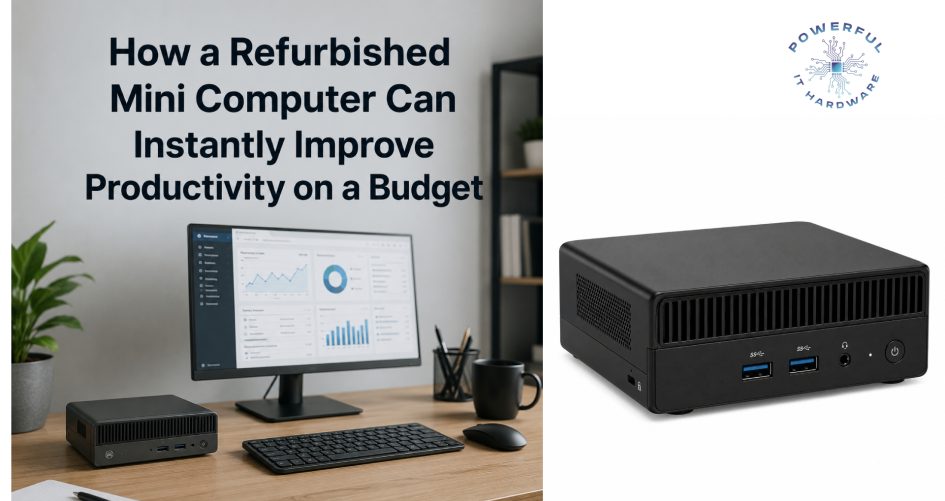
The modern corporate landscape demands agile technology solutions that do not compromise on processing power while remaining exceptionally cost-effective. A refurbished mini computer provides exactly this balance by offering enterprise-grade performance in a highly compact form factor. Recent 2025 industry statistics indicate that the global market for mini PCs has experienced an 8.5% year-over-year growth, largely driven by businesses seeking to maximize desk space and minimize energy consumption without paying the premium associated with brand-new hardware. This shift represents a fundamental change in how organizations view their IT infrastructure, moving away from bulky traditional towers toward streamlined, efficient deployments.
This trend directly affects procurement managers and IT directors by fundamentally altering the total cost of ownership for hardware refreshes. When a business chooses a refurbished mini computer, it bypasses the steep initial depreciation that plagues new equipment, allowing capital to be reallocated toward critical operational initiatives. The efficiency gains are not merely theoretical. These compact machines routinely handle complex multitasking, cloud-based applications, and heavy spreadsheet processing just as effectively as their larger, first-hand counterparts. The result is a workforce that experiences fewer bottlenecks and system lag, translating directly into higher daily output.
For wholesale buyers and IT procurers, the true advantage lies in the deep customization options available in the secondary market. Rather than accepting generic, off-the-shelf specifications, bulk buyers can work directly with certified refurbishers to tailor each refurbished mini computer to meet exact departmental requirements. This might involve configuring specific RAM allocations for data analysis teams or integrating advanced solid-state drives for creative departments. Wholesale customization ensures that every dollar spent directly contributes to the specific productivity metrics the organization is trying to improve, eliminating the waste of paying for unnecessary hardware capabilities.
Looking ahead to 2026 market insights, analysts project that over 40% of mid-sized enterprises will have adopted some form of miniaturized, refurbished hardware into their standard IT roadmaps. This projection is fueled by the increasing stability of modern processors, which means a three-year-old processor today still holds immense operational value. Businesses that align their procurement strategies with this trajectory now will find themselves with a highly agile, future-ready workforce infrastructure built around a refurbished mini computer, acquired at a fraction of traditional capital expenditure.
1.1 How Space-Saving Hardware Impacts Daily Operational Output
Physical workspace optimization has become a critical metric for commercial real estate management and employee productivity alike. The implementation of a refurbished mini computer drastically reduces the physical footprint on employee desks, freeing up valuable real estate for critical tasks. In high-density environments such as call centers, trading floors, and co-working spaces, the cumulative space saved by transitioning from traditional desktop towers to miniaturized units can be immense. This spatial efficiency allows facility managers to accommodate more staff without expanding the physical footprint of the building, directly impacting the bottom line.
The operational output improves because a less cluttered workspace inherently promotes better focus and organization. Employees utilizing a refurbished mini computer can utilize VESA mounting to attach their primary processing unit directly behind their monitors, completely clearing the desktop surface. This custom mounting capability is highly sought after in wholesale orders, as it standardizes the aesthetic and functional setup across an entire office. When employees are no longer navigating around tangled cables and bulky hardware boxes, their physical movements become more efficient, reducing micro-interruptions that fragment their attention throughout the workday.
Furthermore, the reduced physical footprint opens up new possibilities for specialized operational environments. Industrial settings, healthcare clinics, and retail point-of-sale systems often struggle to integrate standard computing hardware due to space constraints. By utilizing a customized refurbished mini computer, system integrators can design bespoke enclosures or mount the hardware inside existing machinery. This level of spatial flexibility means that computing power can be deployed directly at the point of need, rather than forcing employees to walk to a centralized terminal, thereby streamlining workflow and saving valuable minutes per transaction.
The integration of these space-saving devices also impacts IT maintenance and operational downtime. When hardware is mounted securely and kept off the floor, it is significantly less susceptible to accidental damage, liquid spills, and dust accumulation. For wholesale buyers managing hundreds of endpoints, this translates to a measurable reduction in hardware failure rates. Less time spent by IT staff replacing damaged towers means more time dedicated to strategic, revenue-generating initiatives, ultimately boosting the overall productivity of the entire technology department. Investing in a refurbished mini computer strategy also supports long-term scalability while keeping infrastructure costs under control.
1.2 Why Budget Constraints Are Shifting Procurement Strategies
The economic realities of 2025 have forced many organizations to reevaluate their capital expenditure frameworks, leading to a strict prioritization of essential operational needs over premium hardware desires. IT budgets are frequently shrinking or remaining stagnant while the demand for computational power continues to rise exponentially. This financial pressure is the primary catalyst driving procurement officers away from first-generation hardware and toward the secondary market. The realization that a refurbished mini computer can deliver nearly identical performance to a new model for a fraction of the price is reshaping standard operating procedures across the corporate sector.
This shift affects buyers by requiring them to develop more nuanced, value-focused evaluation criteria when selecting hardware. Instead of simply comparing the clock speeds of new processors, procurement teams are now calculating the ROI of purchasing a high-tier refurbished mini computer versus a low-tier new unit. In almost every scenario, the secondary market allows the budget to stretch far enough to equip the entire workforce with superior specifications. Consequently, employees benefit from better-performing machines, and the company avoids the hidden costs of underpowered hardware, such as extended loading times and software crashes.
For wholesale and custom solution providers, this budgetary constraint represents a massive opportunity to offer tailored, high-value packages. When an enterprise commits to a bulk purchase, custom refurbishers can configure thousands of refurbished mini computer units to precise specifications while keeping costs comfortably within tight budgetary limits. This bespoke approach is impossible when buying new from traditional OEMs, who often charge exorbitant fees for minor configuration changes. The wholesale model ensures that every cent of the IT budget is transformed into tangible, usable processing power rather than being lost to retail markups and brand premiums.
By 2026, market forecasts suggest that the secondary B2B hardware market will outpace the growth of new enterprise PC sales, solidifying this procurement shift as a permanent structural change. Organizations that resist this trend risk overspending by margins of 40% to 60% over a typical five-year hardware cycle. Embracing the economics of a refurbished mini computer allows businesses to implement more frequent hardware refreshes. Instead of enduring a seven-year lifecycle with slow, outdated machines, companies can deploy a new customized fleet every three years, ensuring the workforce is always equipped with highly productive, modern technology. Choosing a refurbished mini computer also enables organizations to maintain long-term scalability without exceeding constrained IT budgets.
2. How Dell Refurbished Business Desktops Optimize Enterprise Workflows
Dell has long been recognized as a gold standard in enterprise IT, known for robust build quality and exceptional management tools. Opting for Dell refurbished business desktops allows organizations to integrate seamlessly into existing Dell management ecosystems, such as Dell Command and centralized BIOS management. This continuity is vital for large enterprises, as it means IT teams do not need to learn new systems or deploy new management software to support the hardware. The transition to refurbished units becomes invisible to the end-user while providing massive cost savings to the procurement department.
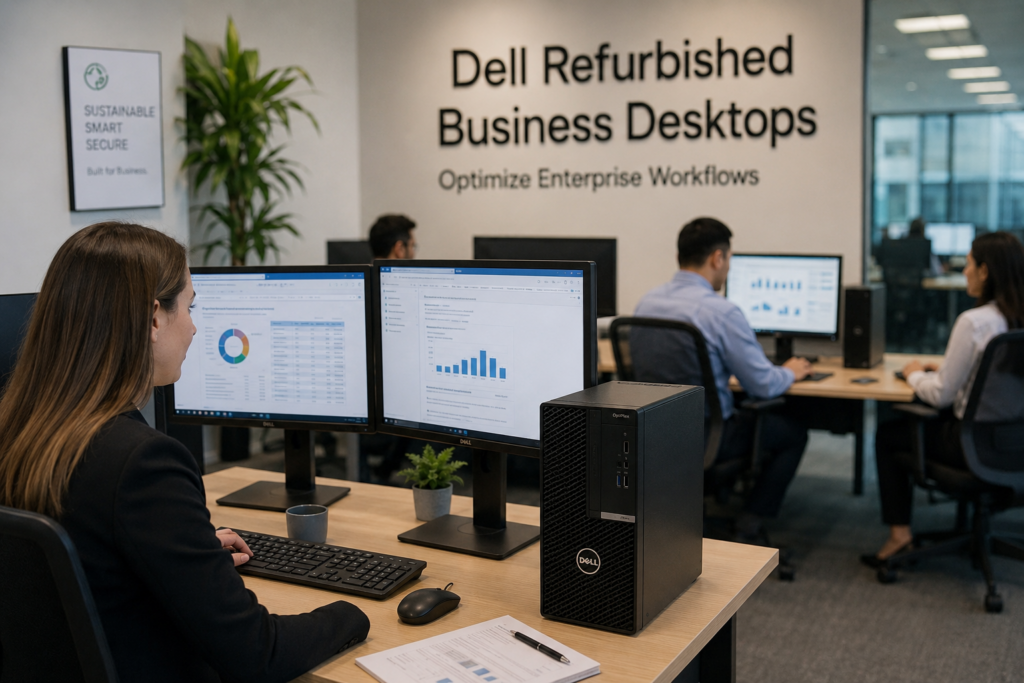
The optimization of enterprise workflows hinges heavily on hardware reliability and predictability. Dell refurbished business desktops are subjected to rigorous, multi-point testing protocols that often exceed the quality control standards of factory-new units. Each component, from the motherboard capacitors to the power supply, is evaluated and replaced if it shows any sign of degradation. For the end-user, this means a highly stable platform that runs complex enterprise resource planning software, virtual machines, and heavy databases without the risk of sudden hardware failure interrupting critical workflows.
Wholesale buyers specifically gravitate toward the Dell platform because of the sheer scale of customization available in the secondary market. A wholesale order of Dell refurbished business desktops can be heavily modified to suit exact workflow requirements. An accounting firm might request units configured with dual-monitor capable graphics and massive storage arrays, while a marketing agency might prioritize high-speed NVMe drives and maximum RAM capacities. This ability to order custom-tailored Dell fleets ensures that the hardware acts as a catalyst for workflow efficiency rather than a bottleneck.
Industry data from early 2025 highlights that enterprises utilizing standardized, refurbished Dell hardware reported a 22% reduction in workflow interruptions related to hardware incompatibility. As we look toward 2026, the integration of AI-driven analytics into enterprise workflows will demand reliable, predictable hardware bases. Preparing for this future by deploying robust, customized Dell platforms ensures that businesses have the necessary foundation to adopt next-generation software tools without facing a sudden, budget-breaking mandate for entirely new hardware infrastructure.
2.1 Which Customization Options Enhance Dell Hardware for Bulk Buyers
The true value of sourcing Dell hardware through the secondary market lies in the granular customization available to bulk buyers. Unlike purchasing new units that come in rigid, pre-configured tiers, wholesale refurbished Dell systems and refurbished mini computer solutions can be modified at the component level before shipment. Buyers can specify exact brands of RAM, specific capacities and types of solid-state drives, and even request particular Wi-Fi or Bluetooth card modules for every refurbished mini computer. This ensures complete hardware homogeneity across a global deployment, which is a critical requirement for large-scale IT troubleshooting and system imaging.
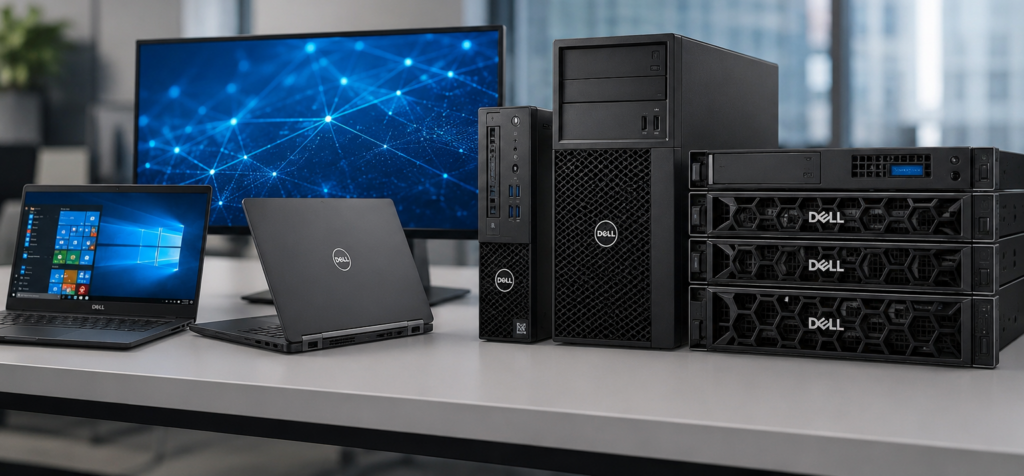
Advanced BIOS and firmware customization represents another vital option for enterprise bulk buyers. When ordering Dell refurbished business desktops or a refurbished mini computer in large quantities, procurers can request specific BIOS versions to be flashed, security features like TPM to be activated, and custom boot sequences to be implemented. This pre-staging of firmware means that when the hardware arrives at the end-user’s desk, it is entirely ready for the corporate software deployment process. Eliminating the need for on-site IT staff to manually configure individual BIOS settings saves hundreds of hours of labor across a large fleet.
Physical branding and asset management customization further enhance the wholesale experience. Bulk buyers frequently request custom asset tags laser-etched onto the chassis, specific color coding for different departments, and even the removal or replacement of original Dell branding with corporate logos on every refurbished mini computer. While seemingly cosmetic, these physical customizations drastically improve inventory management and loss prevention. In environments with high employee turnover, being able to visually identify which department a machine belongs to streamlines the physical auditing process significantly.
Finally, peripheral bundling serves as a highly effective customization strategy for streamlining deployments. Wholesale buyers can configure their orders to include customized monitor mounts, enterprise-grade keyboards, and specialized cabling tailored to the specific Dell models being purchased. Receiving a complete, customized kit centered around a refurbished mini computer rather than a disparate collection of components means that internal deployment teams can unbox a single package and set up a fully functional workstation in minutes. This holistic approach to customization is what ultimately drives the superior ROI associated with bulk refurbished purchases.
2.2 How Wholesale Pricing Structures Favor Large-Scale IT Refreshes
The financial architecture of wholesale pricing in the refurbished market is inherently designed to reward volume, making it the ideal vehicle for large-scale IT refreshes. When procuring Dell refurbished business desktops or a refurbished mini computer, the per-unit cost decreases exponentially as the order volume increases. This tiered pricing structure allows IT directors to present highly attractive cost-benefit analyses to their C-suite, demonstrating how refreshing an entire department or global office simultaneously yields massive savings compared to piecemeal replacements over several years. The economics of scale turn a capital-heavy project into a highly manageable operational expense.
This favorable pricing affects buyers by liberating portions of their IT budget that can be immediately reinvested into other areas of the business. The capital saved by utilizing wholesale pricing structures on a thousand-unit order of refurbished mini computer systems can easily fund the required software licenses, cybersecurity upgrades, or employee training programs necessary to make the new hardware truly productive. Instead of viewing the hardware refresh as a financial burden, leadership can view it as a strategic reallocation of resources that uplifts the entire technological ecosystem of the organization.
Establishing long-term wholesale agreements with refurbishers adds another layer of financial predictability. B2B buyers can negotiate fixed pricing tiers for future refreshes, locking in current market rates to protect against future supply chain fluctuations or inflation. In the volatile landscape of global semiconductor manufacturing, having a locked-in wholesale price for a refurbished mini computer and other high-quality refurbished enterprise gear provides an unmatched strategic advantage. It allows businesses to plan their three-to-five-year IT roadmaps with absolute certainty regarding hardware costs.
Market insights for 2026 suggest that the supply of off-lease enterprise hardware will peak, creating a highly favorable buyer’s market in the wholesale sector. Organizations that establish their wholesale partnerships and customize their IT refresh strategies now will be perfectly positioned to capitalize on this incoming surge of inventory. By securing favorable pricing structures early, businesses can ensure they consistently receive the highest-grade refurbished mini computer units and components before the broader market absorbs the excess supply, maintaining their competitive edge through superior cost management.
3. Why Refurbished HP Computers for Sale Represent a Strategic Asset
Hewlett-Packard has cultivated a legacy of engineering hardware that excels in stability, security, and long-term durability, making refurbished HP computers for sale a highly strategic asset for risk-averse organizations. HP’s proprietary security features, such as HP Sure Start and secure BIOS environments, remain highly effective even on previous-generation hardware. For businesses operating in highly regulated industries like finance or legal, acquiring these robust security platforms at a reduced cost ensures compliance with stringent data protection mandates without necessitating a top-to-bottom purchase of new equipment, while a refurbished mini computer provides the same enterprise-grade value in a compact form factor.
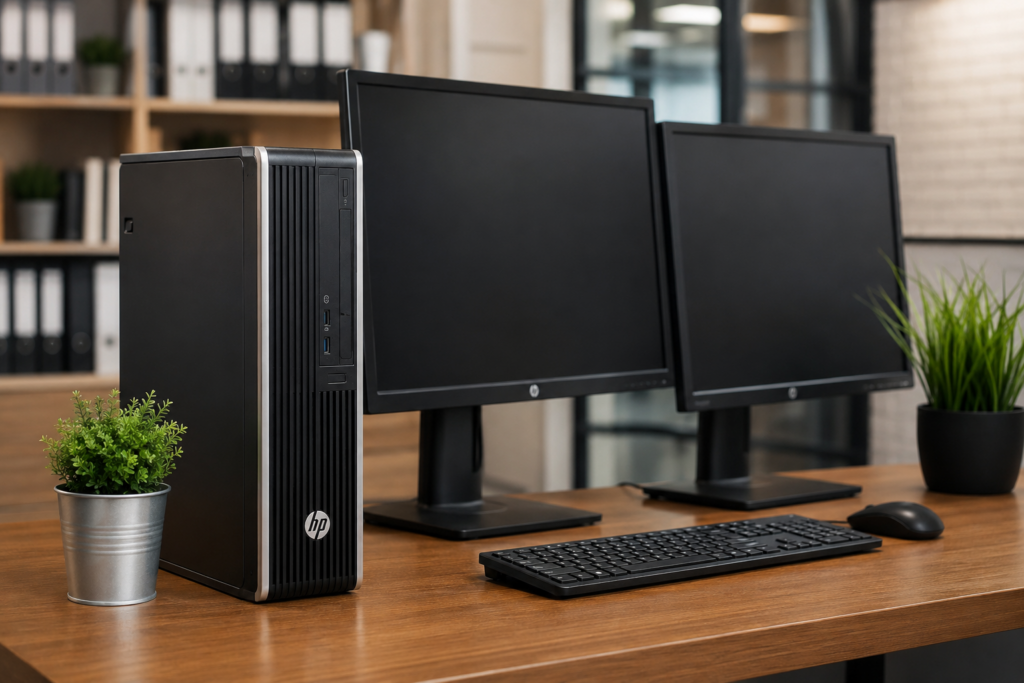
The strategic value of these units becomes particularly evident when considering the total lifespan of the hardware. HP business-class machines are famously over-engineered, meaning their physical chassis, cooling systems, and internal connectors are built to withstand years of continuous operation. When a refurbisher sources refurbished HP computers for sale, they are starting with a foundation that has vastly more usable life left than consumer-grade alternatives. This inherent durability translates directly into a longer depreciation schedule for the purchasing business, maximizing the return on every dollar invested in the IT fleet.
From a wholesale and customization perspective, HP hardware offers a highly modular architecture that refurbishers love to work with. This modularity allows bulk buyers to request highly specific configurations that blend different generations of components seamlessly. A buyer might request an HP chassis equipped with a newer generation processor but retain the original, highly reliable HP power supply and motherboard. This ability to mix and match components during the wholesale customization process results in a machine that feels brand new but costs a fraction of the OEM price.
Looking at 2025 utilization metrics, businesses deploying refurbished HP systems reported a 15% lower annual maintenance cost compared to mixed-brand environments, due largely to the standardized parts ecosystem. As we project into 2026, the strategic importance of maintaining a secure, stable hardware baseline will only increase as cyber threats become more sophisticated. Investing in HP’s proven security architecture through the refurbished channel provides businesses with a formidable defensive posture, proving that high-level security does not require an exorbitant capital outlay.
3.1 How HP’s Legacy Platforms Support Specialized Industry Needs
Specialized industries such as healthcare, manufacturing, and logistics have highly specific computing requirements that often cannot be met by standard consumer hardware. HP’s legacy platforms are uniquely suited to these environments due to their extensive certification for industrial and medical use. When sourcing refurbished HP computers for sale, system integrators can select specific legacy models known for their compatibility with specialized medical imaging cards, industrial automation interfaces, or legacy serial port requirements. This backward compatibility is a lifesaver for industries that rely on specialized software that cannot run on modern, consumer-focused operating systems.
The physical design of many legacy HP platforms also supports these specialized needs in ways that modern ultra-thin PCs cannot. Industrial environments require hardware with reinforced chassis, advanced passive cooling systems that prevent dust ingestion, and mounting options suited for harsh conditions. A customized refurbished HP unit can be outfitted with specialized fan filters, ruggedized external casings, and vibration-resistant mounting kits at the wholesale level. This ensures that the computer can survive in a factory floor or a cleanroom environment without sacrificing the processing power needed to run complex diagnostic or automation software.
For the healthcare sector, patient privacy and data security are paramount, and HP’s legacy platforms excel in this area. Wholesale buyers servicing the medical industry frequently order batches of refurbished HP computers for sale with strict customization parameters: disabled USB ports to prevent data theft, encrypted hard drives, and pre-installed healthcare-specific firewall software. The ability to order these highly specific, security-hardened configurations in bulk allows hospital IT departments to deploy new check-in kiosks or nursing stations rapidly, knowing the hardware is already compliant with industry regulations.
By 2026, the integration of IoT devices in specialized industries will require stable edge-computing nodes, a role perfectly suited for customized HP legacy hardware. Instead of investing in expensive, unproven new edge devices, businesses can utilize ruggedized, refurbished HP mini desktops as local processing hubs. These proven platforms can be customized to run specific IoT data aggregation software, providing a reliable, cost-effective bridge between legacy industrial equipment and modern cloud analytics platforms.
3.2 Which Procurement Channels Guarantee Authentic Bulk Refurbishments
Navigating the secondary market requires diligence, as the quality of refurbishment can vary wildly depending on the source. To guarantee authentic, high-quality bulk refurbishments, B2B buyers must bypass generic online marketplaces and partner directly with Microsoft Authorized Refurbishers (MARs) or OEM-certified vendors. These certified procurement channels are subject to strict audits, ensuring that when they sell refurbished HP computers for sale, the units have been genuinely stripped down, cleaned, tested, and rebuilt to meet rigorous enterprise standards. This certification is the ultimate safeguard against the risk of purchasing counterfeit parts or poorly repaired “as-is” junk.
The choice of procurement channel directly affects the buyer’s operational workflow and risk profile. Certified wholesale channels provide detailed testing logs, hardware guarantees, and explicit warranties for every single unit in a bulk order. If an IT department receives a pallet of a thousand customized units, they have the assurance that each machine has passed the same rigorous benchmark tests. This eliminates the nightmare scenario of IT staff having to triage a new deployment, testing each machine individually to weed out defective units before rolling them out to end-users.
Furthermore, specialized B2B procurement channels offer dedicated account management and post-sale support that generic retailers simply cannot match. When ordering highly customized hardware, inevitable questions arise regarding specific driver implementations, BIOS configurations, or warranty claims. A dedicated wholesale partner assigns a specific representative to manage the order from the initial customization spec sheet through the final delivery. This high-touch service model ensures that the complex logistics of a large-scale IT refresh are handled professionally, keeping the buyer’s project on schedule and within budget.
As the market matures into 2026, industry analysts predict a consolidation of the secondary market, where only the most rigorously certified wholesale providers will survive regulatory scrutiny. Businesses that establish relationships with these top-tier procurement channels now will benefit from priority allocation during times of hardware shortage. Securing a reliable, authentic supply chain for refurbished enterprise gear is rapidly becoming a core competency for forward-thinking IT leaders, transforming hardware procurement from a transactional chore into a strategic partnership.
4. How to Implement a Wholesale Customization Strategy for Mini PCs
Implementing a successful wholesale customization strategy begins with a comprehensive internal audit of actual workforce computing needs. Procurement teams must move beyond generic specs and analyze exactly which software suites, browser-based applications, and peripheral connections each department utilizes daily. Once this data is gathered, it can be translated into precise hardware profiles—for example, identifying that the accounting department requires a minimum of 16GB of RAM and dual-monitor support, while the reception staff needs only 8GB and robust Wi-Fi. These profiles form the blueprint for ordering a customized refurbished mini computer.
The next phase involves engaging with the wholesale refurbisher to translate these internal requirements into actionable production specifications. This is where the true value of the B2B secondary market shines. Buyers can submit their ideal configurations and request that the refurbisher source specific components, such as enterprise-grade Intel SSDs or specific brands of memory known for their reliability. The customization strategy relies on treating the wholesale partner not as a vendor, but as an extension of the company’s own IT hardware engineering team, collaborating to build the exact machine required.
Prototyping is a critical, yet often overlooked, step in the wholesale customization process. Before green-lighting an order of five hundred units, the buyer should request three fully customized samples to undergo internal stress testing. This testing phase ensures that the specific combination of refurbished motherboard, new storage, and upgraded memory functions flawlessly under the company’s specific software load. Discovering a driver conflict or a thermal issue on three prototype units saves the organization from a massive logistical headache that would occur if the issue was found after five hundred units had been deployed.
The final implementation step focuses on logistics and deployment readiness. A sophisticated wholesale customization strategy dictates that the refurbished mini computer should arrive at the company’s loading dock completely ready for the end-user. This means the refurbisher has applied the company’s asset tags, installed the correct operating system image, and configured the BIOS settings prior to shipping. Receiving plug-and-play units drastically reduces the deployment time from weeks to days, allowing the business to realize the productivity benefits of the new hardware almost immediately.
4.1 Why Standardizing Hardware Lowers Long-Term Maintenance Costs
The hidden costs of IT management are almost entirely tied to the complexity and heterogeneity of the hardware fleet. When a business allows a mix of different brands, models, and generations of computers to accumulate over time, the IT department is forced to maintain a vast library of different drivers, imaging scripts, and physical spare parts. Standardizing the entire workforce on a single, customized model of refurbished mini computer eliminates this complexity. IT staff only need to support one hardware profile, drastically reducing the time required to diagnose and resolve technical issues.
This standardization affects the end-users by creating a perfectly uniform experience across the organization. When an employee moves from one desk to another, or transitions to a different department, they encounter the exact same computer interface and performance capabilities. This consistency reduces the number of helpdesk tickets related to user error or confusion regarding different software installations. Over the course of a year, the cumulative hours saved by avoiding these minor, repetitive support calls represent a significant reduction in operational costs.
From an inventory management perspective, standardizing on a wholesale customized mini PC allows businesses to maintain a remarkably lean spare parts inventory. Instead of stocking dozens of different power supplies, RAM sticks, and motherboards, the IT department only needs to keep a small cache of components compatible with that specific standardized model. In the event of a hardware failure, the repair is executed in minutes using on-hand parts, minimizing employee downtime. This lean inventory approach frees up capital that would otherwise be tied up in unused spare parts sitting on a warehouse shelf.
Looking at 2025 enterprise support metrics, companies that standardized their hardware fleets reported a 30% reduction in per-unit support costs compared to their heterogeneous peers. As predictive maintenance and AI-driven IT support tools become prevalent in 2026, having a standardized hardware base will become a prerequisite for utilizing these advanced technologies effectively. AI support systems require large datasets of uniform hardware behavior to accurately predict failures; a standardized fleet of customized mini PCs provides the perfect environment to leverage these next-generation cost-saving tools.
4.2 Which Future-Proofing Tactics Should Buyers Demand in 2026
Future-proofing in the context of refurbished technology does not mean buying hardware that will last forever; it means ensuring the hardware remains highly functional and secure for the entirety of its projected lifecycle. When ordering customized mini PCs for 2026 deployments, buyers must prioritize connectivity standards that are just now becoming ubiquitous. Demanding units equipped with Wi-Fi 6E, multiple USB-C/Thunderbolt ports, and DisplayPort 1.4 ensures that the refurbished machines can interface seamlessly with modern peripherals, high-resolution monitors, and next-generation network infrastructure without requiring external dongles.
Another critical future-proofing tactic is insisting on modular storage and memory configurations. While the processor on a refurbished motherboard is fixed, the RAM and storage should be easily accessible and upgradeable. Wholesale buyers should work with refurbishers to select chassis designs that allow tool-less access to these components. If a department’s workload increases in 2027, the IT team can inexpensively double the RAM or swap in a larger SSD, instantly extending the useful life of the machine without having to replace the entire unit.
Software compatibility and security architecture represent the most vital elements of future-proofing. Buyers must ensure that any customized refurbished mini computer ordered today includes modern Trusted Platform Modules (TPM 2.0) and processors capable of supporting Windows 11 and subsequent future operating systems. Furthermore, requesting that the refurbisher update the system firmware to the latest available version prior to shipment protects against newly discovered vulnerabilities in older firmware builds, ensuring the hardware remains secure against modern threat vectors.
Industry projections for 2026 indicate a massive shift toward cloud-native operating systems and containerized application environments. To prepare for this, wholesale buyers should request hardware configurations that prioritize high-speed solid-state storage and robust multi-threading capabilities over raw single-core clock speeds. By customizing refurbished hardware to excel in these specific cloud-integration metrics, businesses ensure that their budget-friendly IT investments today will seamlessly support the software paradigms of tomorrow.
5. How to Maximize ROI When Upgrading Your Workforce Infrastructure
Maximizing the return on investment for a hardware upgrade requires looking beyond the initial purchase price and analyzing the total impact on organizational productivity. Deploying a refurbished mini computer fundamentally alters the ROI equation by drastically lowering the depreciation curve. Because the organization is purchasing the hardware at a significant discount, the asset loses very little value over its functional lifespan. This financial efficiency means that when the hardware is eventually retired, the residual value represents a much smaller loss compared to a newly purchased asset, protecting the company’s overall balance sheet.
The ROI is further amplified by the wholesale customization process, which ensures that the hardware precisely matches the workflow requirements. When employees are given machines that are explicitly configured to handle their specific software loads, their individual productivity increases. A data analyst processing datasets on a machine with ample, high-speed customized RAM will complete tasks significantly faster than if they were using an under-spec, off-the-shelf unit. This incremental increase in daily employee output, multiplied across an entire organization, generates a financial return that far exceeds the cost of the hardware itself.
This strategic approach to infrastructure upgrading also yields significant savings in reduced downtime and deployment labor. The combination of rigorous refurbishing standards and pre-configured custom imaging means the failure rate of these machines is exceptionally low. IT departments spend less time fixing broken hardware and more time on strategic projects that drive revenue. The speed at which a customized, plug-and-play wholesale order can be deployed means the business transitions from old, slow hardware to highly productive new setups in a fraction of the time required by traditional IT refreshes.
By 2026, the companies that will demonstrate the highest operational margins will be those that mastered the art of financial efficiency in their IT procurement. Upgrading workforce infrastructure using customized, refurbished mini PCs is not merely a cost-cutting measure; it is a strategic maneuver that frees up capital, increases employee output, and reduces support overhead. This holistic approach to ROI ensures that the technology department shifts from being perceived as a cost center to being recognized as a primary driver of corporate profitability.
5.1 Why Partnering with Specialized Refurbishers Ensures Scalability
Scalability is the ultimate test of an IT procurement strategy, as a solution that works for fifty employees must seamlessly expand to five hundred. Partnering with specialized B2B refurbishers, rather than generic electronics recyclers, provides the infrastructure necessary to support explosive organizational growth. Specialized partners maintain massive, carefully categorized inventories and have production lines capable of configuring thousands of identical units simultaneously. This industrial-scale capacity ensures that as a business grows, its hardware supplier can keep pace without compromising on the exacting customization standards required by the enterprise.
This partnership affects the buyer by providing immense agility in project management. If a company secures a sudden, large contract that requires doubling its call center staff, a specialized refurbisher can rapidly fulfill a massive, customized order of mini PCs to equip the new hires. Because the partner already understands the buyer’s exact configuration specs, BIOS settings, and imaging requirements, this rapid scaling does not require a lengthy renegotiation or redesign phase. The ability to scale the workforce hardware almost instantaneously provides a massive competitive advantage in fast-moving markets.
Furthermore, specialized refurbishers offer scalable support services that align with enterprise growth. This includes extended warranty programs that can be adjusted as the fleet grows, advanced replacement services that ship a new unit before the broken one is returned, and dedicated logistics coordination for multi-site rollouts. As the deployment scales from a single building to a national network of offices, the specialized partner takes on the complex logistical burden, ensuring that customized hardware arrives at regional offices fully configured and ready for local deployment.
Market dynamics heading into 2026 suggest that supply chain disruptions will continue to plague the new hardware market, making scalability incredibly difficult for businesses reliant on OEMs. In contrast, the secondary market, managed by specialized refurbishers, operates on a highly localized and agile supply chain, largely insulated from global semiconductor shortages. By cementing a partnership with a specialized refurbisher now, businesses secure a reliable, scalable pipeline of customized technology that will remain robust regardless of global manufacturing volatility.
5.2 How to Initiate Your Custom Wholesale Order Today
Transitioning to a highly productive, budget-friendly IT infrastructure begins with a definitive, actionable step toward engaging a wholesale customization partner. The initial phase requires the internal IT and procurement teams to consolidate their hardware requirements into a single, cohesive specification document. This document should detail the exact processor generations desired, the minimum RAM and storage configurations for different user tiers, and any specific peripheral or connectivity requirements. Having this detailed blueprint prepared before reaching out ensures that the subsequent conversations with refurbishers are highly focused and productive.
The next step involves vetting potential wholesale partners to ensure they possess the technical capabilities and certifications necessary to execute the customized order. Procurement officers should request evidence of industry certifications, inquire about their specific testing protocols for enterprise-grade hardware, and ask for case studies of similar large-scale deployments. It is highly recommended to request a small batch of sample units to be built to the exact specification, allowing the internal IT team to validate the build quality, thermal performance, and software compatibility before committing to a massive fleet order.
Once a partner is selected and the prototype is approved, the initiation of the full wholesale order requires clear communication regarding logistics, staging, and warranty parameters. The buyer must establish clear milestones for the production process, define the exact custom imaging requirements, and coordinate the shipping schedules to align with internal deployment windows. Negotiating a comprehensive warranty that covers the customized components—not just the original refurbished base unit—is critical for protecting the organization’s investment over the long term.
The final step is executing the purchase order and preparing the internal deployment teams to receive the plug-and-play hardware. By taking action today and initiating a custom wholesale order for a refurbished mini computer, businesses can immediately halt the waste associated with overpriced new hardware. This proactive approach not only equips the current workforce with the tools they need to excel but also establishes a sustainable, highly efficient procurement model that will serve the organization’s financial and operational goals well into 2026 and beyond.
Frequently Asked Questions
1. How does a refurbished mini computer improve overall ROI? A refurbished mini computer improves overall ROI by drastically lowering the initial depreciation curve and reducing the total cost of ownership. Because the hardware is acquired at a fraction of the cost of new equipment, businesses can allocate saved capital toward software, training, or scaling operations. Furthermore, when these units are bulk-customized to meet exact departmental needs, they eliminate the bottleneck of underpowered machines, directly translating to increased employee output and a faster realization of the technology investment.
2. Why are Dell refurbished business desktops preferred for enterprise environments? Dell refurbished business desktops are preferred because they seamlessly integrate into existing enterprise management ecosystems like Dell Command. This integration ensures IT teams do not need to learn new management protocols, maintaining workflow continuity. Additionally, the robust build quality of Dell enterprise hardware, combined with rigorous multi-point testing in the refurbishment process, provides a highly stable platform that minimizes workflow interruptions and supports complex enterprise resource planning software.
3. Which industries benefit most from refurbished HP computers for sale? Specialized industries such as healthcare, manufacturing, and logistics benefit significantly from refurbished HP computers for sale due to HP’s legacy of over-engineered durability and backward compatibility. These sectors often require specific legacy ports, industrial certifications, or reinforced chassis that modern consumer PCs lack. Customizing these HP platforms at the wholesale level allows system integrators to deploy ruggedized, secure nodes in harsh environments or medical facilities without compromising on processing power.
4. How does wholesale customization work for bulk hardware orders? Wholesale customization begins with an internal IT audit to define exact hardware profiles for different departments. These profiles are then submitted to a certified refurbisher, who sources specific enterprise-grade components—such as NVMe drives or exact RAM brands—to build the machines to precise specifications. The process extends beyond internal components to include custom BIOS configurations, asset tagging, and pre-loading the company’s operating system image, resulting in a plug-and-play fleet tailored entirely to the buyer’s operational needs.
5. Why does standardizing on a single refurbished model lower maintenance costs? Standardizing on a single refurbished model allows IT departments to maintain a unified library of drivers, system images, and diagnostic tools. This homogeneity drastically reduces the time required to troubleshoot and resolve technical issues. It also enables a lean spare parts inventory, as the organization only needs to stock components compatible with that specific standardized chassis, freeing up capital and minimizing the labor hours associated with managing a heterogeneous mix of hardware.
6. What future-proofing tactics should buyers request in 2026 hardware deployments? Buyers should demand hardware equipped with modern connectivity standards like Wi-Fi 6E, USB-C, and Thunderbolt to ensure seamless integration with next-generation peripherals. Insisting on modular chassis designs that allow tool-less upgrades to RAM and storage is also critical for extending the hardware lifecycle. Additionally, ensuring the inclusion of TPM 2.0 and updated firmware guarantees compatibility with future operating systems and protects against evolving cybersecurity threats.
7. How do space-saving mini PCs impact daily operational output? Space-saving mini PCs impact daily operational output by enabling highly optimized, clutter-free workspaces through VESA mounting and custom bracket solutions. A reduction in physical desk clutter promotes better employee focus and minimizes the micro-interruptions caused by navigating bulky towers and tangled cables. In high-density environments like call centers, the spatial efficiency also allows facility managers to accommodate more staff without expanding real estate, directly improving the organization’s revenue-generating capacity per square foot.
8. Which procurement channels guarantee the authenticity of bulk refurbished hardware? Procuring hardware through Microsoft Authorized Refurbishers (MARs) or OEM-certified vendors guarantees authenticity and enterprise-grade quality. These certified channels are subject to strict, independent audits that ensure every unit is genuinely stripped down, tested, and rebuilt using authentic parts. Partnering with these specialized B2B providers also ensures that buyers receive detailed testing logs, comprehensive warranties, and dedicated account management, eliminating the risks associated with generic online marketplaces.
9. How do customized wholesale orders reduce IT deployment time? Customized wholesale orders reduce deployment time by shifting the staging and configuration burden from the buyer’s internal IT team to the refurbisher. When units arrive pre-configured with the correct BIOS settings, activated security features like TPM, and the company’s specific software image, internal staff do not need to manually set up individual machines. This plug-and-play delivery model allows deployment teams to unbox a complete workstation and have it fully operational in minutes rather than hours.
10. Why is partnering with a specialized refurbisher essential for scaling business operations? Specialized refurbishers possess the industrial-scale inventory and production lines necessary to fulfill rapid, massive increases in hardware demand without sacrificing customization quality. If a business secures a large contract and needs to double its workforce, a specialized partner can rapidly produce thousands of identically configured units based on existing specifications. This agility ensures that hardware procurement never becomes a bottleneck for corporate growth, providing a reliable supply chain insulated from the global shortages that often plague new OEM hardware.
add space between faqs questiosn and answers Thought Process
1. How does a refurbished mini computer improve overall ROI?
A refurbished mini computer improves overall ROI by drastically lowering the initial depreciation curve and reducing the total cost of ownership. Because the hardware is acquired at a fraction of the cost of new equipment, businesses can allocate saved capital toward software, training, or scaling operations. Furthermore, when these units are bulk-customized to meet exact departmental needs, they eliminate the bottleneck of underpowered machines, directly translating to increased employee output and a faster realization of the technology investment.
2. Why are Dell refurbished business desktops preferred for enterprise environments?
Dell refurbished business desktops are preferred because they seamlessly integrate into existing enterprise management ecosystems like Dell Command. This integration ensures IT teams do not need to learn new management protocols, maintaining workflow continuity. Additionally, the robust build quality of Dell enterprise hardware, combined with rigorous multi-point testing in the refurbishment process, provides a highly stable platform that minimizes workflow interruptions and supports complex enterprise resource planning software.
3. Which industries benefit most from refurbished HP computers for sale?
Specialized industries such as healthcare, manufacturing, and logistics benefit significantly from refurbished HP computers for sale due to HP’s legacy of over-engineered durability and backward compatibility. These sectors often require specific legacy ports, industrial certifications, or reinforced chassis that modern consumer PCs lack. Customizing these HP platforms at the wholesale level allows system integrators to deploy ruggedized, secure nodes in harsh environments or medical facilities without compromising on processing power.
4. How does wholesale customization work for bulk hardware orders?
Wholesale customization begins with an internal IT audit to define exact hardware profiles for different departments. These profiles are then submitted to a certified refurbisher, who sources specific enterprise-grade components—such as NVMe drives or exact RAM brands—to build the machines to precise specifications. The process extends beyond internal components to include custom BIOS configurations, asset tagging, and pre-loading the company’s operating system image, resulting in a plug-and-play fleet tailored entirely to the buyer’s operational needs.
5. Why does standardizing on a single refurbished model lower maintenance costs?
Standardizing on a single refurbished model allows IT departments to maintain a unified library of drivers, system images, and diagnostic tools. This homogeneity drastically reduces the time required to troubleshoot and resolve technical issues. It also enables a lean spare parts inventory, as the organization only needs to stock components compatible with that specific standardized chassis, freeing up capital and minimizing the labor hours associated with managing a heterogeneous mix of hardware.
6. What future-proofing tactics should buyers request in 2026 hardware deployments?
Buyers should demand hardware equipped with modern connectivity standards like Wi-Fi 6E, USB-C, and Thunderbolt to ensure seamless integration with next-generation peripherals. Insisting on modular chassis designs that allow tool-less upgrades to RAM and storage is also critical for extending the hardware lifecycle. Additionally, ensuring the inclusion of TPM 2.0 and updated firmware guarantees compatibility with future operating systems and protects against evolving cybersecurity threats.
7. How do space-saving mini PCs impact daily operational output?
Space-saving mini PCs impact daily operational output by enabling highly optimized, clutter-free workspaces through VESA mounting and custom bracket solutions. A reduction in physical desk clutter promotes better employee focus and minimizes the micro-interruptions caused by navigating bulky towers and tangled cables. In high-density environments like call centers, the spatial efficiency also allows facility managers to accommodate more staff without expanding real estate, directly improving the organization’s revenue-generating capacity per square foot.
8. Which procurement channels guarantee the authenticity of bulk refurbished hardware?
Procuring hardware through Microsoft Authorized Refurbishers (MARs) or OEM-certified vendors guarantees authenticity and enterprise-grade quality. These certified channels are subject to strict, independent audits that ensure every unit is genuinely stripped down, tested, and rebuilt using authentic parts. Partnering with these specialized B2B providers also ensures that buyers receive detailed testing logs, comprehensive warranties, and dedicated account management, eliminating the risks associated with generic online marketplaces.
9. How do customized wholesale orders reduce IT deployment time?
Customized wholesale orders reduce deployment time by shifting the staging and configuration burden from the buyer’s internal IT team to the refurbisher. When units arrive pre-configured with the correct BIOS settings, activated security features like TPM, and the company’s specific software image, internal staff do not need to manually set up individual machines. This plug-and-play delivery model allows deployment teams to unbox a complete workstation and have it fully operational in minutes rather than hours.
10. Why is partnering with a specialized refurbisher essential for scaling business operations?
Specialized refurbishers possess the industrial-scale inventory and production lines necessary to fulfill rapid, massive increases in hardware demand without sacrificing customization quality. If a business secures a large contract and needs to double its workforce, a specialized partner can rapidly produce thousands of identically configured units based on existing specifications. This agility ensures that hardware procurement never becomes a bottleneck for corporate growth, providing a reliable supply chain insulated from the global shortages that often plague new OEM hardware.